Business
4 Best Practices for Choosing a PCI Compliance Consultant
Published March 9, 2026
Introduction
Navigating the complexities of PCI compliance is crucial for organizations that handle credit card information, particularly as cyber threats and regulatory demands escalate. The selection of an appropriate PCI compliance consultant can profoundly influence an organization’s capacity to adhere to these rigorous standards and safeguard sensitive data. Given the multitude of options available, how can businesses ensure they choose a consultant who not only comprehends the intricacies of PCI DSS but also aligns with their specific needs? This article examines best practices for selecting a PCI compliance consultant, providing insights that can assist organizations in protecting their operations and maintaining customer trust in an increasingly digital landscape.
Understand PCI Compliance Fundamentals
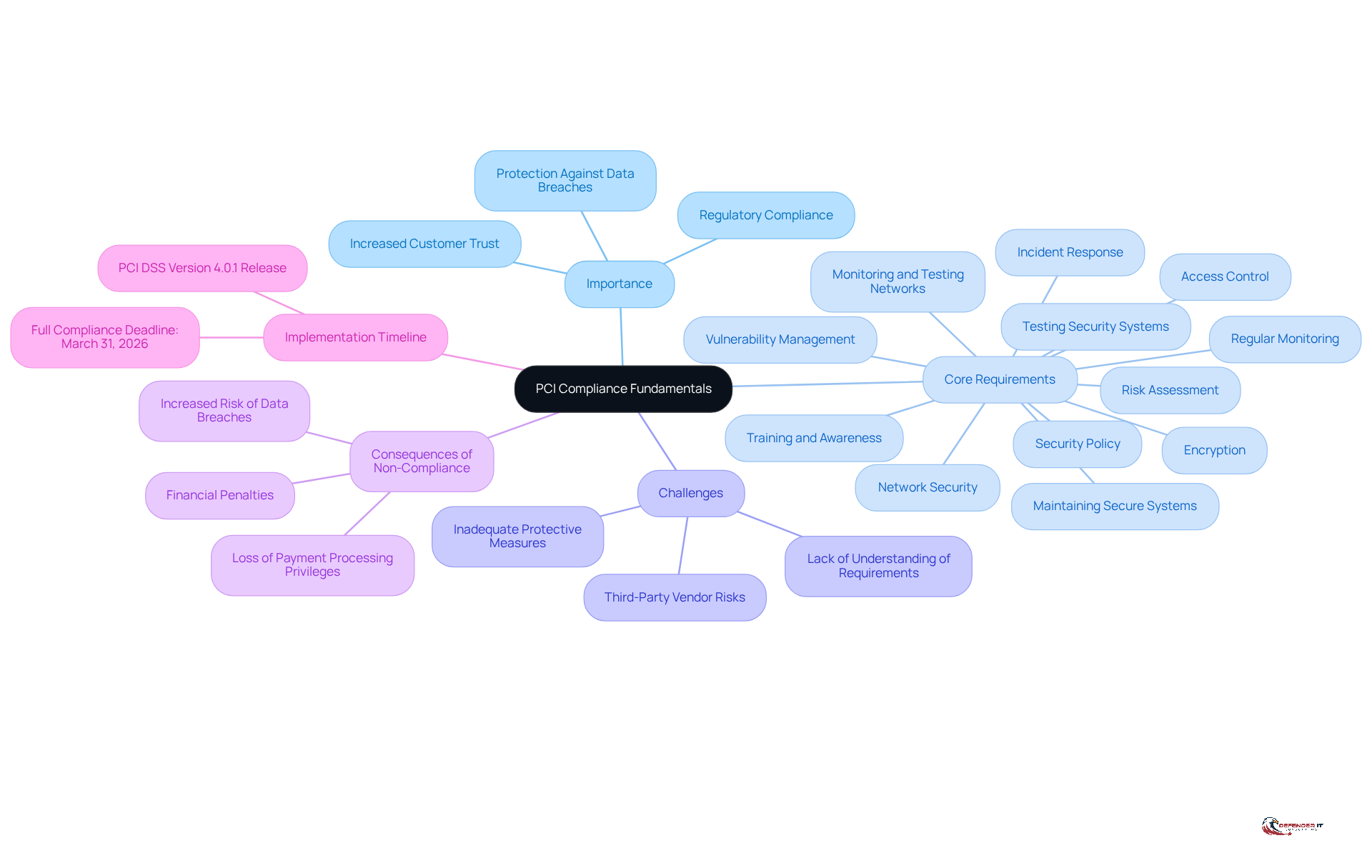
is crucial for organizations involved in accepting, processing, storing, or transmitting credit card information, as it pertains to the Payment Card Industry Data Security Standard. This framework of safety standards is designed to ensure a secure environment, especially in 2026, when businesses face escalating and increased regulatory scrutiny.
The framework consists of requirements that cover various security aspects, including:
- Network security
- Encryption
- Access control
- Regular monitoring
Organizations must implement these requirements to effectively protect cardholder data. Importantly, adherence is not a one-time effort; it necessitates ongoing commitment. Research indicates that organizations are 50% more likely to withstand attempted data breaches, underscoring the tangible benefits of maintaining these standards.
Despite the evident advantages, many organizations encounter challenges with PCI regulations. Statistics reveal that a significant number of businesses fail to comply, often due to inadequate protective measures or a lack of understanding of the requirements. A notable example is the breach at Canadian Tire in October 2025, which compromised 38 million customer accounts, illustrating the severe consequences of non-compliance and the vulnerabilities linked to third-party vendors.
Organizations that do not adhere to PCI standards may face penalties until compliance is achieved, highlighting the financial repercussions of non-adherence. Real-world examples from regulated industries showcase successful compliance efforts. Companies have adopted advanced protective measures, such as tokenization, which replaces sensitive card data with unique tokens, significantly reducing fraud losses. As the payment security landscape continues to evolve, understanding the fundamentals of PCI regulations is vital for organizations aiming to safeguard their operations and maintain customer trust. Furthermore, with the updated version 4.0.1 launched in June 2024, companies must fully implement it by March 31, 2026, emphasizing that in 2026, compliance is not optional; it is essential.
Identify Key PCI Compliance Requirements
To effectively select a consultant, organizations must first identify the key requirements relevant to their operations. These include:
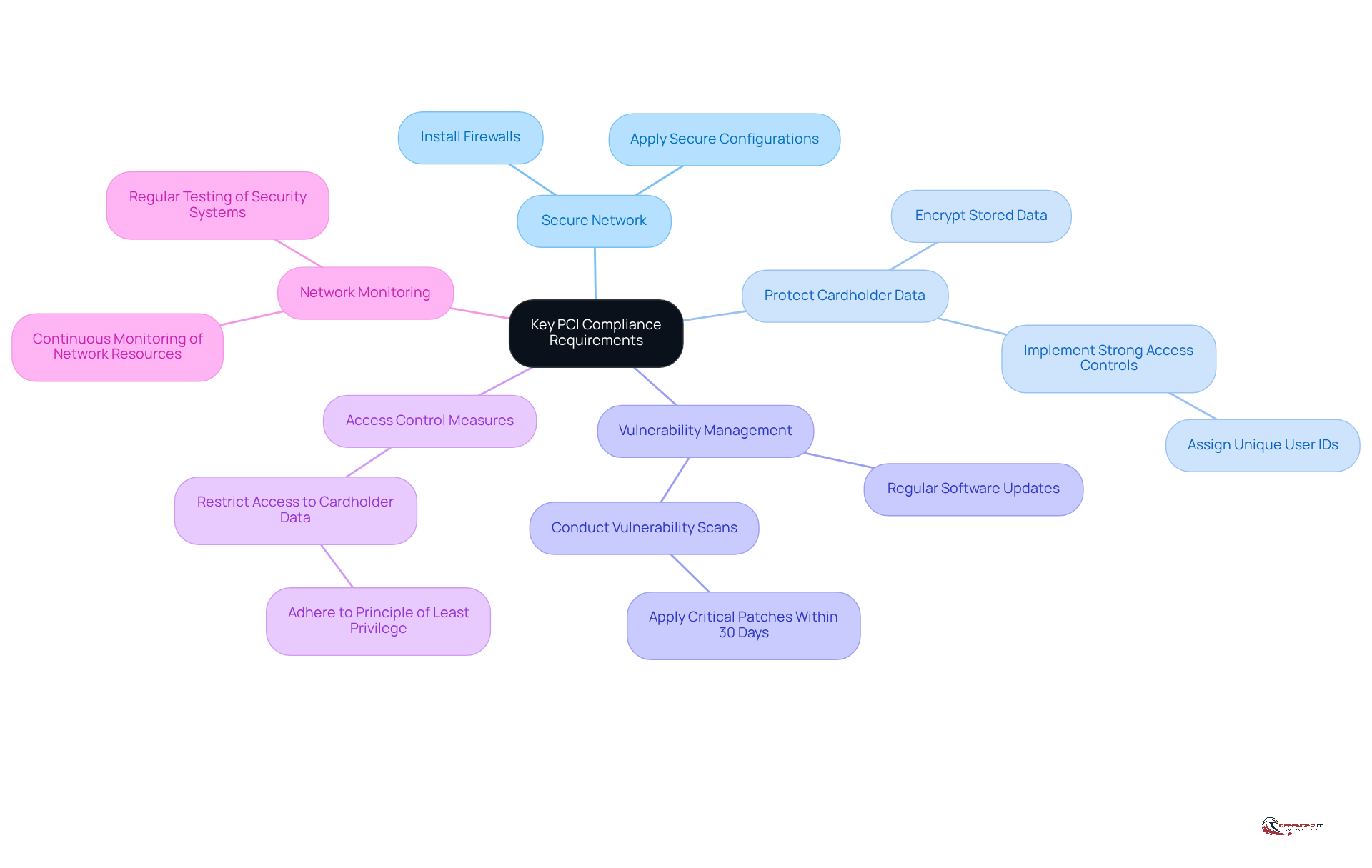
- Network security: This involves installing firewalls and applying secure configurations to prevent unauthorized access.
- Data protection: Organizations must ensure that stored data is encrypted and implement strong authentication measures, with unique user IDs assigned to all individuals accessing sensitive information.
- Sustaining a secure environment: Regular software updates and vulnerability assessments are essential to identify and mitigate potential threats. Organizations must apply patches, such as within 30 days.
- Implementing strong access controls: Access to cardholder data should be restricted to individuals whose job responsibilities require it, adhering to the principle of least privilege.
- Continuous monitoring: Continuous monitoring of network resources and regular testing of security systems are crucial for detecting and responding to abnormal activities.
Additionally, organizations should be aware that consulting fees can range from $5,000 to $100,000 per month. Grasping these requirements will allow organizations to effectively assess the abilities of prospective consultants, ensuring they can meet the changing needs of PCI regulations.
Evaluate and Select the Right PCI Compliance Consultant
When selecting a consultant, organizations should consider the following steps:
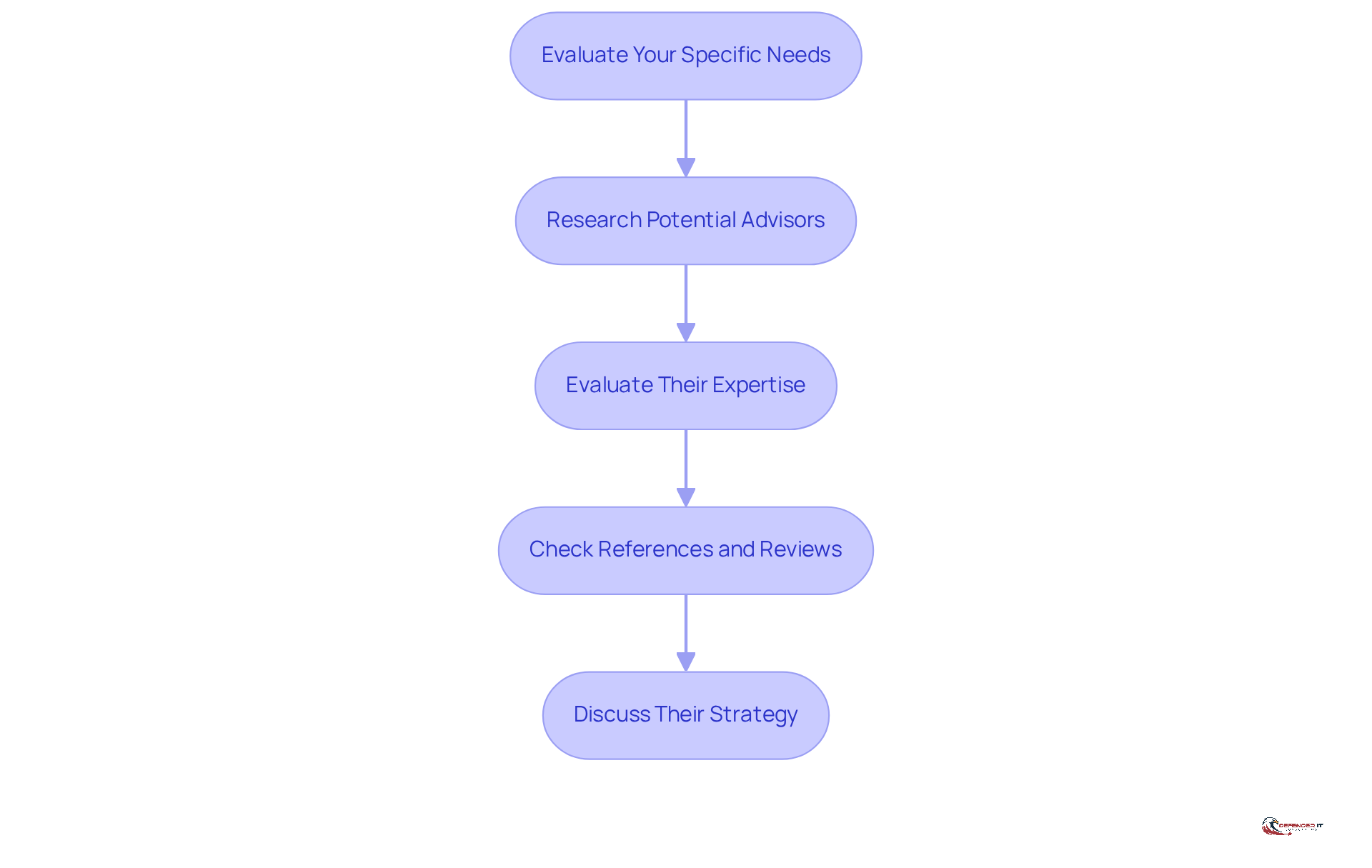
- Evaluate your specific needs: Begin by determining the scope of your PCI regulations, which should align with your business goals.
- Research potential advisors by seeking out firms who have a proven track record in compliance, particularly within your industry.
- Evaluate their expertise as a consultant: It is crucial to ensure that the advisor possesses a strong understanding of PCI standards and can demonstrate results.
- Check references and reviews: Engage with former clients to assess their satisfaction and the advisor’s effectiveness in delivering results.
- Discuss their strategy: Gain insight into how the advisor plans to assist you in achieving adherence to regulations and their methodology for addressing challenges.
By following these steps, organizations can select an advisor who not only meets their regulatory requirements but also aligns with their business objectives.
Foster Effective Collaboration with Your Consultant
To cultivate a successful partnership with your consultant, it is essential to implement the following best practices:
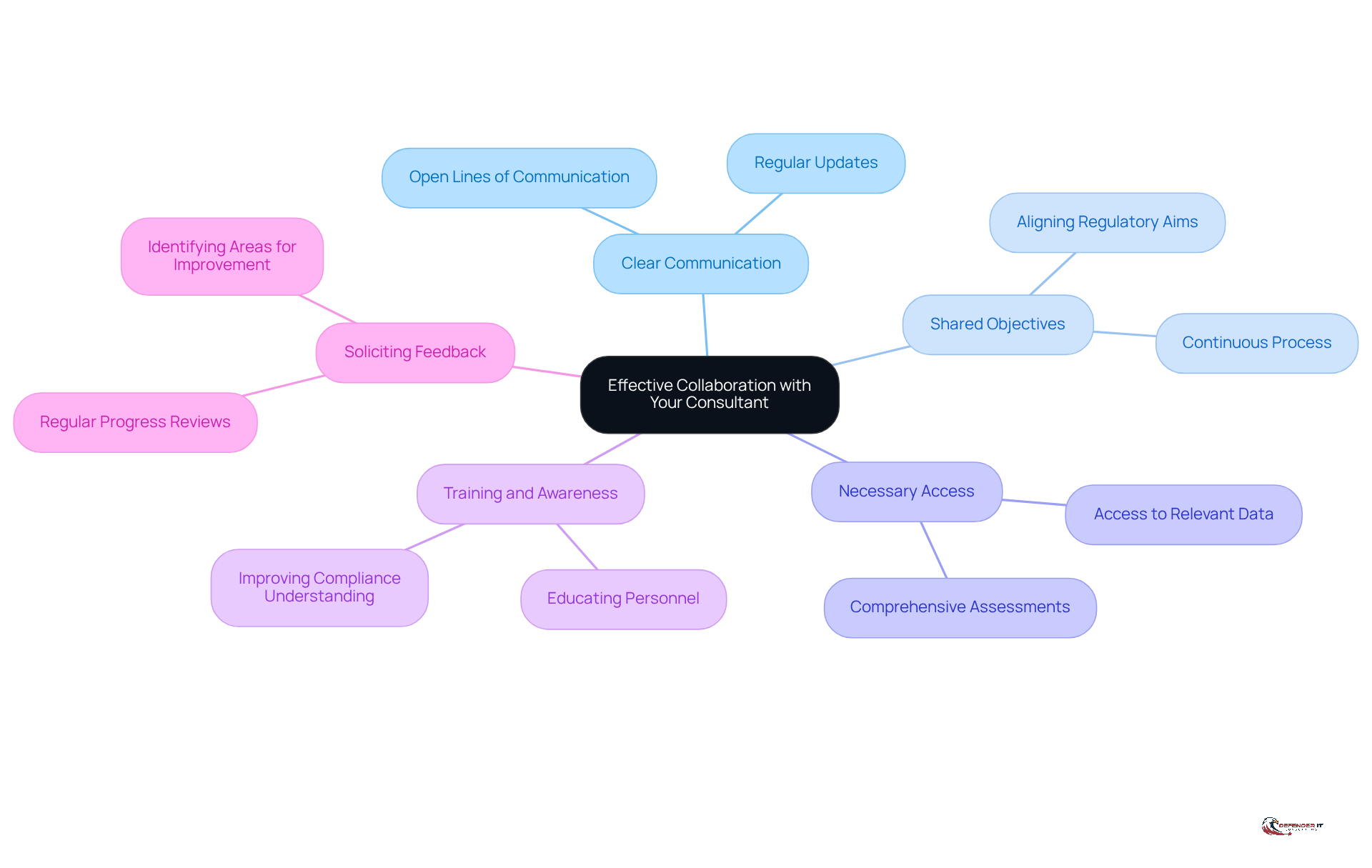
- Establish communication: Regular updates and open lines of communication are vital for promptly addressing any issues that arise. As we approach 2026, with regulators and payment providers becoming less tolerant of security negligence, effective communication is more critical than ever.
- Establish objectives: Aligning your goals with those of your advisor ensures a unified approach toward achieving desired outcomes. Recognizing that PCI adherence is a continual process that evolves alongside your business will assist in establishing these objectives.
- Provide access: Granting the advisor access to relevant data and systems enables comprehensive assessments. This access is crucial for identifying potential gaps in adherence that could lead to non-compliance.
- Participate in training: Collaborate with your advisor to educate personnel on regulatory necessities and optimal methods, thereby enhancing compliance and adherence. This training is essential as it prepares your team to adapt to the evolving landscape of PCI regulations.
- Request feedback: Regularly requesting feedback from your consultant regarding your progress and areas for improvement aids in upholding regulations and reduces the financial risks linked to non-adherence, which can often exceed the perceived costs of compliance.
By fostering a collaborative environment, organizations can significantly enhance their chances of achieving and maintaining PCI compliance, ultimately protecting their operations and reputation in an increasingly digital landscape.
Conclusion
Choosing the right PCI compliance consultant is a crucial decision for organizations seeking to protect sensitive payment information. Understanding the fundamentals of PCI compliance and the specific requirements of the PCI DSS framework is essential for any business involved in credit card transactions. As cyber threats and regulatory scrutiny intensify, the need for ongoing compliance and vigilance is paramount.
Key insights include:
- The necessity of identifying specific PCI requirements
- Evaluating potential consultants based on their expertise and track record
- Fostering a collaborative relationship
Establishing clear communication, shared objectives, and providing necessary access to data are vital for a successful partnership. Organizations that implement these strategies not only enhance their chances of compliance but also safeguard their reputation and customer trust.
In a landscape where non-compliance can result in severe financial penalties and data breaches, prioritizing PCI compliance transcends mere regulatory obligation; it is a fundamental aspect of business integrity. By adhering to the best practices outlined, organizations can effectively navigate the complexities of PCI compliance, ensuring resilience against evolving threats while maintaining customer confidence.
Frequently Asked Questions
What is PCI compliance and why is it important?
PCI compliance refers to adherence to the Payment Card Industry Data Security Standard (PCI DSS), which is crucial for organizations that accept, process, store, or transmit credit card information. It ensures a secure environment, especially in light of increasing cyber threats and regulatory scrutiny.
What are the core requirements of PCI DSS?
The PCI DSS consists of 12 core requirements that cover various security aspects, including network security, encryption, access control, and regular monitoring.
Is PCI compliance a one-time effort?
No, PCI compliance is not a one-time effort. It requires ongoing vigilance and adaptation to evolving threats to effectively protect cardholder data.
What are the benefits of complying with PCI DSS?
Organizations that comply with PCI DSS are 50% more likely to withstand attempted data breaches, highlighting the tangible benefits of maintaining these standards.
What challenges do organizations face with PCI compliance?
Many organizations struggle with PCI regulations, often failing adherence evaluations due to inadequate protective measures or a lack of understanding of the requirements.
Can you provide an example of the consequences of non-compliance?
A notable example is the breach at Canadian Tire in October 2025, which compromised 38 million customer accounts, illustrating the severe consequences of non-compliance and vulnerabilities linked to third-party vendors.
What are the financial repercussions of failing to adhere to PCI DSS?
Organizations that do not adhere to PCI DSS may face fines ranging from $5,000 to $100,000 monthly until compliance is achieved.
What measures can organizations adopt to enhance PCI compliance?
Companies can adopt advanced protective measures such as tokenization, which replaces sensitive card data with unique tokens, significantly reducing fraud losses.
When was the updated version of PCI DSS released, and what is the deadline for implementation?
The updated PCI DSS version 4.0.1 was launched in June 2024, and companies must fully implement it by March 31, 2026.
Why is understanding PCI regulations vital for organizations?
Understanding PCI regulations is essential for organizations aiming to safeguard their operations and maintain customer trust, especially as the payment security landscape continues to evolve.
List of Sources
- Understand PCI Compliance Fundamentals
- v-comply.com (https://v-comply.com/blog/pci-compliance-law-guide)
- destinationcrm.com (https://destinationcrm.com/Articles/Editorial/Magazine-Features/New-PCI-Enforcement-Starts-Later-This-Month-173702.aspx)
- medium.com (https://medium.com/the-fintech-guide/pci-dss-in-2026-fortifying-your-digital-wallet-against-cyber-predators-tales-from-the-breach-0ad71bb1fa3f)
- silver-lining.com (https://silver-lining.com/why-pci-compliance-matters-more-than-ever-in-2026-a-complete-guide-for-businesses)
- Identify Key PCI Compliance Requirements
- telnyx.com (https://telnyx.com/resources/pci-compliance-checklist)
- venn.com (https://venn.com/learn/pci-dss-compliance)
- stratica.com.au (https://stratica.com.au/how-to-become-pci-dss-compliant-in-2026)
- destinationcrm.com (https://destinationcrm.com/Articles/Editorial/Magazine-Features/New-PCI-Enforcement-Starts-Later-This-Month-173702.aspx)
- ignyteplatform.com (https://ignyteplatform.com/blog/security/pci-dss-requirements-checklist)
- Evaluate and Select the Right PCI Compliance Consultant
- integricom.net (https://integricom.net/blog/how-to-choose-the-best-pci-compliance-service-provider)
- goanywhere.com (https://goanywhere.com/blog/8-shocking-pci-compliance-statistics)
- sisainfosec.com (https://sisainfosec.com/blogs/how-to-select-the-best-pci-compliance-service-provider)
- getastra.com (https://getastra.com/blog/compliance/pci/pci-service-provider)
- qualysec.com (https://qualysec.com/pci-compliance-companies)
- Foster Effective Collaboration with Your Consultant
- complianceweek.com (https://complianceweek.com/opinion/experts-outline-core-skills-compliance-teams-need-to-develop-in-2026/36434.article)
- silver-lining.com (https://silver-lining.com/why-pci-compliance-matters-more-than-ever-in-2026-a-complete-guide-for-businesses)
- heightscg.com (https://heightscg.com/2026/01/13/navigating-the-evolving-landscape-of-regulatory-compliance-essential-insights-for-executives)
- linkedin.com (https://linkedin.com/pulse/pci-dss-40-lessons-learned-your-2026-roadmap-chetan-sheladiya-psqbf)
- finextra.com (https://finextra.com/blogposting/31043/compliance-culture-reset-2026, from-gatekeepers-to-growth-enablers)