Business
4 Best Practices for Choosing AI Data Center Companies
Published July 1, 2026
Introduction
Organizations are increasingly challenged by the overwhelming number of AI data center providers as they seek to leverage advanced computing capabilities. These specialized facilities not only support the demanding processing needs of AI applications but also play a critical role in ensuring operational efficiency and security. Organizations often struggle to identify the most suitable AI data center provider due to the overwhelming number of options available. Understanding the key criteria and best practices for evaluating these providers is crucial for making informed decisions that align with both technological needs and sustainability goals. Ultimately, the right choice can significantly impact an organization’s operational efficiency and its commitment to sustainability.
Define AI Data Centers and Their Importance
AI computing facilities are not just advanced data centers; they are pivotal in shaping the future of artificial intelligence. These specialized establishments are designed to meet the processing requirements of AI applications. Unlike conventional computing facilities that primarily handle general processing tasks, AI hubs are tailored for high-performance computing, enabling rapid information processing and analysis. Equipped with advanced hardware like GPUs and TPUs, these facilities play a crucial role in training machine learning models and running complex algorithms.
The significance of AI facilities is underscored by their capacity to meet the growing demand for AI technologies across various sectors. As organizations increasingly depend on AI for decision-making, customer insights, and operational efficiency, the need for robust, scalable, and secure information hubs becomes essential. They enhance computational capabilities while ensuring secure information processing, which helps mitigate risks associated with cyber threats.
For instance, the development of Microsoft’s AI facility campus in Wisconsin, now fully operational, exemplifies the industry’s shift towards infrastructure that supports advanced AI workloads. This facility is designed to handle over 2 million read/write transactions per second, showcasing the immense processing power required for modern AI applications. Furthermore, as AI workloads are projected to drive a 165% increase in global computing facility power demand by 2030, the role of AI facilities in maintaining operational efficiency and cybersecurity is more crucial than ever.
Despite their advantages, AI facilities face significant scrutiny over their environmental impact. A recent survey revealed that 46% of participants are concerned about this issue, highlighting the necessity for sustainable practices in facility construction and operation. As Dan Diorio, vice president of state policy for the Coalition of Information Hubs, noted, the competitive nature of information hub projects demands transparency and community involvement to effectively address these challenges. Understanding the demographic resistance to information hubs, particularly among those concerned about environmental quality, is vital for developers aiming to navigate the complexities of public opinion and regulatory hurdles.
Ultimately, the success of AI facilities hinges on their ability to balance technological advancement with environmental responsibility.

Differentiate AI Data Centers from Traditional Models
AI facilities require specialized designs and operational strategies that set them apart from traditional server facilities. One of the most significant distinctions lies in power capacity; AI facilities are designed to support high-density workloads, often requiring power capacities that can exceed 40 kW per rack. In contrast, conventional server facilities typically function within the range of 5-10 kW per rack. This increase in power demand stems from the high computational needs of AI workloads that require advanced processing capabilities. As Isaac Douglas, Chief Revenue Officer, observes, “With AI-enabled racks requiring up to six times more power than their conventional equivalents, facility developers are increasingly prioritizing sites where renewable energy is plentiful and climates are inherently cooler.” This highlights just how crucial a reliable power supply is for AI facilities.
Cooling solutions also differ markedly between the two types of facilities. Conventional server facilities primarily depend on air cooling systems, which may not be adequate for the heat produced by high-performance GPUs utilized in AI applications. Consequently, AI facilities are progressively embracing advanced cooling technologies, such as liquid cooling, to improve operational efficiency and sustainability. Significantly, a recent survey shows that 21% of enterprise facility decision-makers intend to transition to liquid cooling within the next year, highlighting the trend towards more efficient cooling solutions. This shift not only improves cooling performance but also impacts overall energy consumption, making it a critical consideration for organizations.
Moreover, the networking framework in AI facilities is specifically optimized for low-latency and high-throughput transfers, essential for real-time AI applications. This differs from conventional information hubs, where networking may not emphasize these performance metrics. The need for rapid information exchange is paramount in AI environments, necessitating a reevaluation of existing networking strategies.
Understanding these distinctions is vital for investors in AI facilities, as they directly influence selection standards and operational strategies. For example, the swift expansion of AI facilities is anticipated to result in a considerable rise in electricity demand, with worldwide consumption predicted to double by 2030, reaching approximately 945 TWh. This rapid expansion necessitates a reevaluation of energy strategies to accommodate the anticipated increase in consumption, especially considering the environmental concerns associated with water consumption for cooling systems in water-stressed regions.

Establish Key Selection Criteria for AI Data Center Providers
Choosing an AI data center companies provider is a complex decision that can significantly impact an organization’s operational efficiency and security posture. Organizations should consider several key criteria:
- Scalability: The provider must offer scalable solutions capable of expanding power, cooling, and storage capacity in response to increasing demands for AI applications. As AI workloads surge, the ability to adapt quickly is paramount.
- Security Measures: Given the sensitive nature of information processed in AI environments, robust security protocols are essential. Organizations should prioritize providers that implement advanced security measures, including encryption, access controls, and continuous monitoring to safeguard against cyber threats.
- Compliance: It is crucial to ensure that the provider adheres to relevant regulatory standards, especially in highly regulated industries such as finance and healthcare. Adherence to privacy protection laws and industry-specific regulations is non-negotiable for maintaining operational integrity.
- Performance Metrics: Evaluating the provider’s performance metrics is vital. Key indicators such as uptime guarantees, latency, and throughput capabilities directly impact the efficiency of AI applications. High-performance metrics are essential for seamless operations.
- Support and Maintenance: Consider the level of support and maintenance offered by the provider. Ongoing support is critical for addressing issues that may arise and ensuring optimal performance of AI workloads.
Organizations often struggle to identify the right AI data center companies because of the complexity of their needs and the variety of options available. By setting these standards, companies can simplify their supplier selection process. Ultimately, the right choice can safeguard an organization’s data integrity and enhance its operational capabilities in a competitive landscape.

Implement Due Diligence in Vendor Assessment
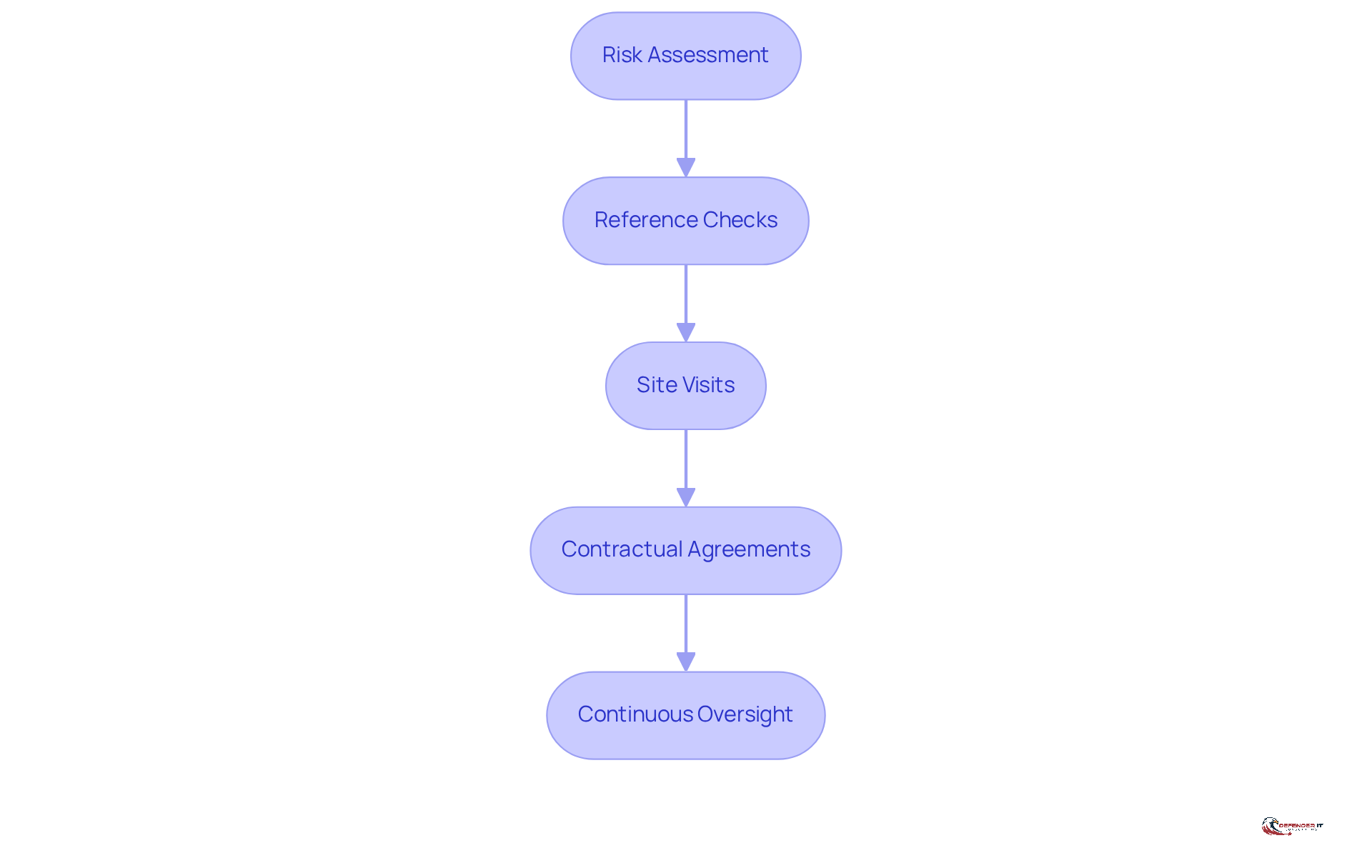
Effective vendor assessment is crucial for mitigating risks in supplier relationships. Conducting due diligence in vendor assessment involves several critical steps:
- Risk Assessment: Begin by identifying potential risks associated with the supplier’s operations. This includes evaluating their security posture, data handling practices, and compliance with relevant regulations. A thorough risk assessment reveals vulnerabilities that self-evaluations often overlook, as over 80% of designs assessed have significant issues overlooked by internal evaluations, according to the Uptime Institute.
- Reference Checks: Reach out to current clients of the supplier to gather insights into their experiences. This can offer valuable insights regarding the supplier’s reliability, support, and performance, aiding in the establishment of trust and transparency in the supplier relationship.
- Site Visits: If possible, conduct site visits to the provider’s data center facilities. This enables organizations to directly evaluate the infrastructure, security measures, and operational practices. An infrastructure review can ensure compliance with industry standards and identify potential weaknesses in the supplier’s setup.
- Contractual Agreements: Review the vendor’s contractual agreements carefully. Ensure that they include clear terms regarding service level agreements (SLAs), data ownership, and exit strategies. Contracts should also address compliance with evolving AI regulations, which are critical for organizations using third-party AI solutions.
- Continuous Oversight: After choosing a supplier, implement continuous oversight to ensure they continue to meet performance and security standards. This can include regular audits and performance reviews. Recording responses to key inquiries concerning information and model responsibilities is crucial for upholding oversight and guaranteeing adherence to AI governance frameworks.
By implementing these due diligence steps, organizations can safeguard their operations and enhance their vendor partnerships.
Conclusion
AI data centers are a critical necessity for organizations aiming to excel in artificial intelligence. Their specialized design and operational strategies distinguish them from traditional data centers, making them essential for enhancing decision-making and operational efficiency. As reliance on AI continues to grow, understanding the unique characteristics and requirements of these facilities becomes increasingly important.
Key factors for selecting AI data center providers include:
- Scalability
- Security measures
- Compliance with regulations
- Performance metrics
- Ongoing support
Each of these criteria plays a vital role in ensuring that organizations can effectively manage their AI workloads while safeguarding data integrity. Additionally, conducting thorough due diligence in vendor assessment is crucial. This includes risk assessments, reference checks, site visits, and continuous oversight to foster strong supplier relationships.
In a rapidly evolving technological landscape, the choice of an AI data center provider can significantly impact an organization’s success. Failure to choose wisely can lead to operational inefficiencies and security vulnerabilities. By prioritizing the right selection criteria and implementing diligent assessment practices, organizations can enhance their operational capabilities and contribute to a more sustainable and secure future in AI technology. Ultimately, the right AI data center provider can be the difference between innovation and stagnation in a competitive landscape.
Frequently Asked Questions
What are AI data centers?
AI data centers are specialized computing facilities designed to meet the processing requirements of artificial intelligence applications. They are tailored for high-performance computing, enabling rapid information processing and analysis.
How do AI data centers differ from conventional data centers?
Unlike conventional data centers that primarily handle general processing tasks, AI data centers are equipped with advanced hardware like GPUs and TPUs, specifically designed to support the training of machine learning models and the execution of complex algorithms.
Why are AI data centers important?
AI data centers are crucial for meeting the growing demand for AI technologies across various sectors. They enhance computational capabilities, support decision-making, provide customer insights, and improve operational efficiency while ensuring secure information processing.
Can you provide an example of an AI data center?
An example is Microsoft’s AI facility campus in Wisconsin, which is designed to handle over 2 million read/write transactions per second, showcasing the immense processing power required for modern AI applications.
What is the projected impact of AI workloads on global computing facility power demand?
AI workloads are projected to drive a 165% increase in global computing facility power demand by 2030, highlighting the growing importance of AI facilities in maintaining operational efficiency and cybersecurity.
What environmental concerns are associated with AI data centers?
There is significant scrutiny over the environmental impact of AI facilities, with a recent survey indicating that 46% of participants are concerned about this issue. This underscores the necessity for sustainable practices in facility construction and operation.
How can developers address public concerns about AI data centers?
Developers can address public concerns by ensuring transparency and community involvement in the planning and operation of AI facilities, particularly in relation to environmental quality and sustainability.
What is the key to the success of AI data centers?
The success of AI data centers hinges on their ability to balance technological advancement with environmental responsibility, addressing both the demand for AI capabilities and the need for sustainable practices.
List of Sources
- Define AI Data Centers and Their Importance
- Inside the world’s most powerful AI datacenter – The Official Microsoft Blog (https://blogs.microsoft.com/blog/2025/09/18/inside-the-worlds-most-powerful-ai-datacenter)
- AI Data Centers Recent News | Data Center Knowledge (https://datacenterknowledge.com/next-gen-data-centers/ai-data-centers)
- Americans Oppose AI Data Centers in Their Area (https://news.gallup.com/poll/709772/americans-oppose-data-centers-area.aspx)
- AI Era Data Centers: Power & Security Challenges (https://govconwire.com/articles/chuck-brooks-govcon-expert-ai-data-centers-power-security)
- AI Data Centers: Big Tech’s Impact on Electric Bills, Water, and More – Consumer Reports (https://consumerreports.org/data-centers/ai-data-centers-impact-on-electric-bills-water-and-more-a1040338678)
- Differentiate AI Data Centers from Traditional Models
- Energy demand from AI – Energy and AI – Analysis – IEA (https://iea.org/reports/energy-and-ai/energy-demand-from-ai)
- Data centers are booming. But there are big energy and environmental risks (https://npr.org/2025/10/14/nx-s1-5565147/google-ai-data-centers-growth-environment-electricity)
- 2026 Trends in Data Center Services & Infrastructure (https://spglobal.com/energy/en/news-research/special-reports/energy-transition/2026-trends-in-data-center-services-infrastructure)
- Electricity Demand and Grid Impacts of AI Data Centers: Challenges and Prospects (https://arxiv.org/html/2509.07218v3)
- How does AI data center infrastructure differ from traditional data center workloads? (https://datacenterdynamics.com/en/opinions/how-does-ai-data-center-infrastructure-differ-from-traditional-data-center-workloads)
- Establish Key Selection Criteria for AI Data Center Providers
- Can US infrastructure keep up with the AI economy? (https://deloitte.com/us/en/insights/industry/power-and-utilities/data-center-infrastructure-artificial-intelligence.html)
- Measuring the Data Center Boom: Facts and Statistics (2026) (https://programs.com/resources/data-center-statistics)
- The future of data centers | Brookings (https://brookings.edu/articles/the-future-of-data-centers)
- Scaling for AI: The Rise of Modular Data Centers (https://wwt.com/article/scaling-for-ai-the-rise-of-modular-data-centers)
- DOE Announces Site Selection for AI Data Center and Energy Infrastructure Development on Federal Lands (https://energy.gov/articles/doe-announces-site-selection-ai-data-center-and-energy-infrastructure-development-federal)
- Implement Due Diligence in Vendor Assessment
- Third-party AI risk: A holistic approach to vendor assessment (https://onetrust.com/blog/third-party-ai-risk-a-holistic-approach-to-vendor-assessment)
- Data Center Risk Assessment (https://h5datacenters.com/data-center-risk-assessment.html)
- Data Center Risk Assessment (https://uptimeinstitute.com/professional-services/data-center-risk-assessment)
- AI Vendor Risk Assessment Questionnaire for Compliance (2026) (https://atlassystems.com/blog/ai-vendor-risk-questionnaire)
- March 2026 Vendor Management News (https://ncontracts.com/nsight-blog/march-2026-vendor-management-news)