Business
4 Best Practices for Cloud Implementation Consultation Success
Published June 1, 2026
Introduction
Organizations are increasingly adopting cloud solutions to improve operational efficiency and scalability; however, many face significant challenges in implementation. This article delves into four best practices essential for achieving success in cloud implementation consultation, offering insights into:
- Strategic planning
- Governance
- Effective collaboration
- Continuous improvement
The challenge lies in effectively aligning cloud strategies with overarching organizational goals while mitigating risks and ensuring compliance.
Establish a Comprehensive Cloud Strategy
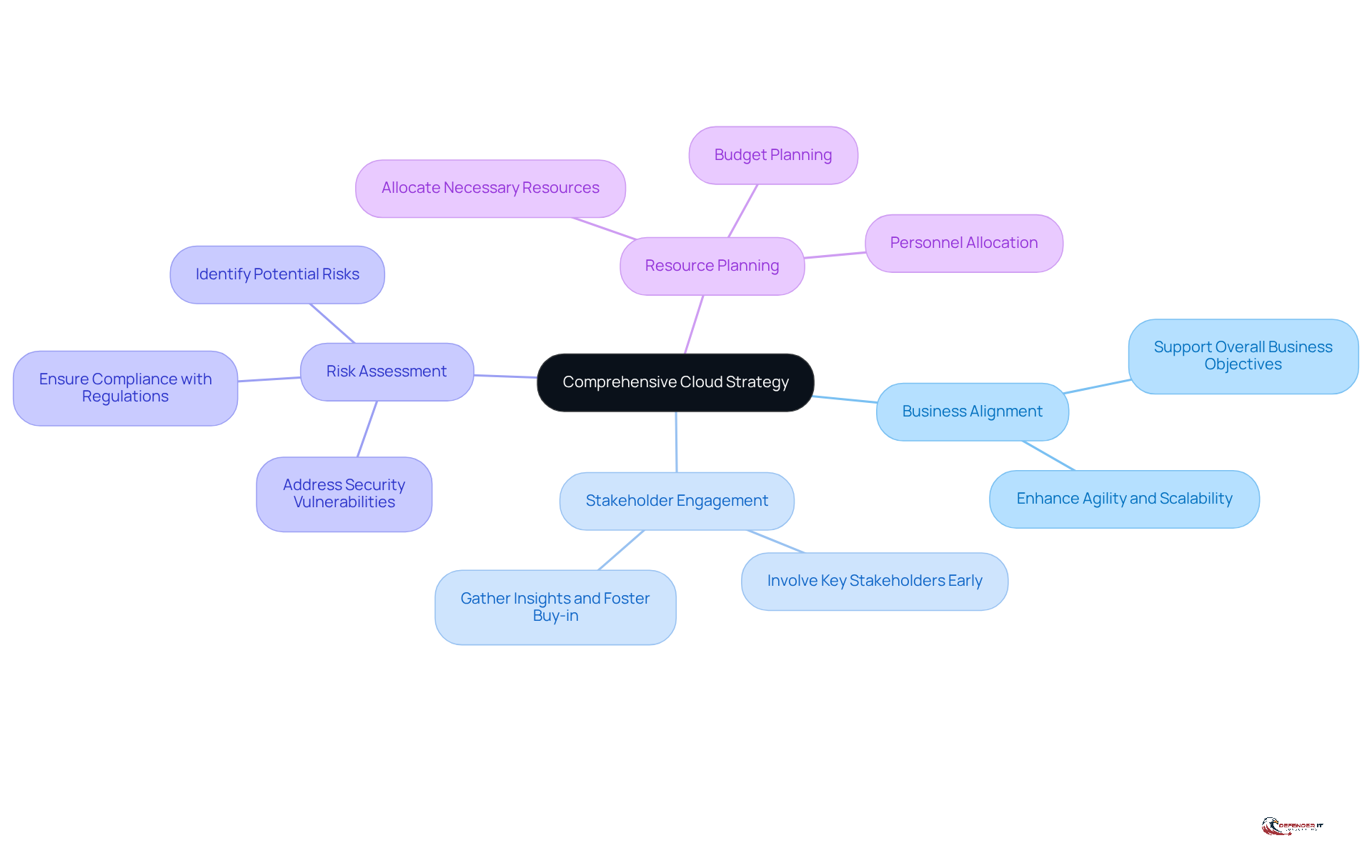
Organizations must establish a comprehensive strategy that aligns with their business objectives for successful online infrastructure implementation. This involves evaluating the current IT framework and identifying specific requirements. Organizations must then choose the appropriate model: public, private, or hybrid. A strategic framework should include:
- Business Alignment: Ensure that the cloud strategy supports overall business objectives, enhancing agility and scalability.
- Stakeholder Engagement: Involve key stakeholders early in the process to gather insights and foster buy-in.
- Risk Assessment: Identify potential risks related to adopting online services, including security vulnerabilities and compliance issues.
- Resource Planning: Allocate necessary resources, including budget and personnel, to support the online strategy.
A well-defined strategy not only guides the digital journey but also mitigates risks associated with implementation.
Integrate Governance and Compliance Frameworks
Effective governance and regulatory frameworks are essential for successful digital implementations, as they directly influence risk management and compliance adherence. Key components include:
- Policy Development: When organizations prioritize clear policies, they often see a significant drop in violations. Establishing clear policies that outline acceptable cloud usage, data management, and security protocols is essential for operational discipline in cloud implementation consultation. For instance, organizations that engage in cloud implementation consultation with thorough cloud usage policies report fewer regulatory violations, underscoring the importance of well-defined guidelines.
- Regulation Monitoring: By continuously monitoring adherence, organizations can cut audit preparation time by up to two-thirds, easing the burden of compliance. Implementing tools and processes to oversee adherence to industry regulations such as GDPR and HIPAA, as well as internal policies, ensures that organizations remain audit-ready without the pressure of last-minute evidence collection. Customers of FireMon, for example, have reported measurable outcomes, including faster remediation and fewer compliance violations, highlighting the effectiveness of continuous compliance tools.
- Access Control: Defining and enforcing access controls is crucial for maintaining data protection in digital environments. Efficient access management guarantees that only authorized individuals can provision and alter resources, significantly lowering the risk of data breaches. Stringent access controls are vital for preserving data protection across digital environments.
- Incident Response Planning: Creating a detailed incident response strategy that specifies procedures for handling breaches and regulatory violations is essential. Organizations with well-defined incident response strategies are better equipped to mitigate the impact of breaches, ensuring swift recovery and maintaining customer trust. As noted by FireMon, continuous monitoring and automated checks are critical in online deployments to enhance incident response capabilities.
By strategically integrating governance and compliance, organizations not only safeguard their operations but also leverage compliance as a competitive advantage.

Execute with Effective Tools and Team Collaboration
Effective online implementation is contingent upon the strategic use of collaboration tools and robust team dynamics. To achieve successful online implementation, organizations must focus on several key strategies:
- Tool Selection: Organizations should opt for cloud management tools that enhance monitoring, automation, and security. Prominent choices encompass AWS CloudFormation, Azure DevOps, and Terraform, which enable efficient operations and strong protective measures.
- Collaboration Platforms: Leveraging collaboration tools such as Microsoft Teams and Slack can significantly improve communication among team members and streamline project management. These platforms are essential for maintaining engagement and ensuring that all team members are aligned on project goals.
- Training and Support: Ongoing training is crucial to ensure that staff are proficient in using online tools and understand best practices for security and compliance, as evidenced by organizations that report improved outcomes and reduced risks. Indeed, more than 90% of firms now utilize some type of online computing, highlighting the need for efficient collaboration tools in this context.
- Agile Methodologies: Implementing agile methodologies fosters flexibility and responsiveness in project execution. This methodology enables teams to respond swiftly to evolving requirements, which is vital for project success. Significantly, over 80% of entities mention scalability and flexibility as primary advantages of adopting such solutions, which can be realized through efficient collaboration.
By concentrating on these efficient resources and promoting teamwork, companies can greatly enhance their implementation processes, resulting in increased productivity and improved overall results. As Alicia Raeburn notes, “Collaboration software brings teams together by connecting their work, communication, and goals across different departments.” Furthermore, the case study of Cipher International demonstrates how successful team collaboration during their cloud implementation consultation resulted in improved operational efficiency and strengthened data protection. Ultimately, the integration of these strategies can significantly transform organizational performance and resilience in a digital landscape.

Ensure Continuous Improvement and Support
Organizations face significant challenges in cloud implementation consultation, particularly in adapting to rapid technological changes and evolving security threats. To ensure a successful cloud implementation, organizations must prioritize continuous improvement and support through several key practices:
- Regular Assessments: Conduct periodic evaluations of cloud performance, security, and compliance. These assessments are crucial for identifying areas needing enhancement and ensuring alignment with evolving regulatory standards. It is advised to conduct security evaluations of the infrastructure at least once a year to uphold strong protections against new threats.
- Feedback Mechanisms: Create efficient feedback loops with users and stakeholders to collect insights on usage. This approach aids in recognizing potential problems and areas for enhancement, fostering a responsive online environment. Statistics suggest that organizations that actively seek user feedback can significantly improve their performance and user satisfaction. For instance, it is noted that 1,000 alerts can lead to 999 false positives, leaving only one real breach to identify, underscoring the importance of effective feedback mechanisms.
- Training Updates: Provide regular training sessions to keep staff informed about new tools, features, and best practices. Ongoing education ensures that employees are prepared to utilize online services effectively, which is crucial for maximizing return on investment.
- Adaptation to Change: Stay informed about emerging technologies and evolving threats. Organizations must be agile in adapting their strategies for online services to incorporate advancements in AI, quantum computing, and other relevant technologies, ensuring they remain competitive and secure.
Ultimately, organizations that prioritize continuous improvement and proactive adaptation will not only enhance their cloud capabilities but also secure their position in a competitive digital landscape. As Scott Charney, corporate vice president for trustworthy computing, emphasizes, integrating security into the normal workflow is essential for effective cloud management.

Conclusion
Establishing a successful cloud implementation consultation is fraught with challenges that require a multifaceted approach. Aligning cloud strategies with specific business objectives is essential for enhancing agility and scalability, while also mitigating risks. This foundation is crucial for navigating the complexities of cloud adoption and ensuring that all stakeholders are engaged and informed throughout the process.
Key practices include:
- Developing robust governance frameworks
- Leveraging effective collaboration tools
- Fostering a culture of continuous feedback and training
These elements are essential for achieving optimal results. Organizations that prioritize these practices not only safeguard their operations but also position themselves to adapt to the rapidly changing technological landscape. Integrating these strategies not only boosts operational efficiency but also strengthens competitive advantage in the digital marketplace.
In conclusion, cloud implementation requires continuous engagement and adaptability to navigate its complexities effectively. By embracing best practices and committing to continuous improvement, organizations can transform challenges into opportunities, ensuring they remain resilient and successful in an ever-evolving digital environment. Organizations that delay in prioritizing these strategies risk falling behind in the competitive digital landscape.
Frequently Asked Questions
What is the purpose of establishing a comprehensive cloud strategy?
The purpose is to align the cloud strategy with business objectives, ensuring successful implementation of online infrastructure that enhances agility and scalability.
What steps are involved in creating a cloud strategy?
Steps include evaluating the current IT framework, identifying specific requirements, choosing the appropriate cloud model (public, private, or hybrid), and developing a strategic framework.
Why is business alignment important in a cloud strategy?
Business alignment ensures that the cloud strategy supports overall business objectives, which helps in enhancing organizational agility and scalability.
How can stakeholder engagement benefit the cloud strategy development?
Involving key stakeholders early in the process helps gather valuable insights and fosters buy-in, which is crucial for successful implementation.
What should be included in a risk assessment for cloud adoption?
A risk assessment should identify potential risks, including security vulnerabilities and compliance issues related to adopting online services.
What is the significance of resource planning in a cloud strategy?
Resource planning is essential to allocate necessary resources, including budget and personnel, to effectively support the online strategy.
How does a well-defined cloud strategy impact digital transformation?
A well-defined strategy guides the digital journey and helps mitigate risks associated with the implementation of cloud services.
List of Sources
- Establish a Comprehensive Cloud Strategy
- How can rethinking your cloud strategy help you reshape your business? (https://ey.com/en\_gl/insights/consulting/how-can-rethinking-your-cloud-strategy-help-you-reshape-your-business)
- Aligning your cloud strategy with your business objectives (https://redcentricplc.com/cloud/aligning-your-cloud-strategy-with-your-business-objectives)
- A pivotal 2026 for cloud strategy (https://cloudcomputing-news.net/news/cloud-strategy-uk-2026-market-changes-dynamics)
- Cloud Computing and Business Strategy: How to Align for Maximum Impact – Dataversity (https://dataversity.net/articles/cloud-computing-and-business-strategy-how-to-align-for-maximum-impact)
- Align Cloud Strategy with Business Goals | VaporVM (https://vaporvm.com/how-to-align-cloud-strategy-with-business-objectives)
- Integrate Governance and Compliance Frameworks
- Cloud Security and Compliance Updates Expected in 2026 (https://databank.com/resources/blogs/cloud-security-and-compliance-updates-expected-in-2026)
- Understanding IT Compliance: Key Regulations for 2026 | Prime Secured (https://primesecured.com/it-compliance-key-regulations-2026)
- What “Good” Data Governance Looks Like in 2026 (https://acceldata.io/blog/what-modern-data-governance-actually-looks-like-in-2026)
- Cloud Governance: Best Practices 2026 | CloudQuery Blog (https://cloudquery.io/blog/what-is-cloud-governance)
- Cloud Security and Compliance: What It Is & Why It Matters (https://firemon.com/blog/cloud-security-and-compliance)
- Execute with Effective Tools and Team Collaboration
- Latest Cloud Solution Statistics | IT Desk (https://itdeskuk.com/latest-cloud-statistics)
- Top 11 team collaboration tools in 2023 [2026] (https://asana.com/resources/best-team-collaboration-software)
- 17 Best Cloud Collaboration Tools Reviewed For 2026 (https://thedigitalprojectmanager.com/tools/best-cloud-collaboration-tools)
- The 12 best cloud collaboration tools in 2026 (https://lucidlink.com/blog/cloud-collaboration-tools)
- Best Collaboration Tools for Remote Teams (https://panopto.com/blog/collaboration-tools-for-remote-teams)
- Ensure Continuous Improvement and Support
- Ways to Optimize Your Cloud Strategy in 2026 | Business Performance (https://executive-briefing.freshgiggle.com/international-expansion/ways-to-optimize-your-cloud-strategy-in-2026)
- The Biggest Data Center Trends of the First Half of 2026 (https://datacenters.com/news/the-biggest-data-center-trends-of-the-first-half-of-2026)
- 360 Degree Feedback Software Market Set for Robust Expansion as Enterprises Prioritize Continuous Performance Management, and Employee Engagement – Market Research Intellect (https://prnewswire.com/news-releases/360-degree-feedback-software-market-set-for-robust-expansion-as-enterprises-prioritize-continuous-performance-management-and-employee-engagement, market-research-intellect-302676229.html)
- Securing the cloud | Microsoft Story Labs (https://news.microsoft.com/stories/cloud-security)
- A pivotal 2026 for cloud strategy (https://cloudcomputing-news.net/news/cloud-strategy-uk-2026-market-changes-dynamics)
- What is the Need for Regular Cloud Security Assessments? | Power Consulting (https://powerconsulting.com/blog/cloud-security-assessments)
- 50+ Cloud Security Statistics in 2026 (https://sentinelone.com/cybersecurity-101/cloud-security/cloud-security-statistics)