Business
4 Best Practices for Digital Consulting Services in Cybersecurity
Published June 5, 2026
Introduction
Organizations struggle to safeguard their digital assets against sophisticated cyber threats. The need for tailored cybersecurity solutions has never been more critical, as businesses navigate the intricate nature of risk assessments, vulnerability management, and compliance obligations. This article explores essential best practices for digital consulting services in cybersecurity, offering insights into effective strategies that can fortify an organization’s defenses. Companies must adopt proactive measures to not only meet compliance standards but also build resilience against evolving cyber threats.
Assess Organizational Needs for Tailored Cybersecurity Solutions
To effectively safeguard digital assets, organizations must conduct a thorough risk assessment tailored to their unique cybersecurity needs. This process identifies essential assets, possible risks, and existing vulnerabilities. Key steps include:
- Identify Critical Assets: Determine which data and systems are essential to your operations, such as customer information, financial records, and proprietary data. Classifying assets based on their criticality helps direct resources toward protecting the most important information.
- Evaluate Current Security Posture: Review existing security measures to identify gaps. This encompasses evaluations of existing policies, technologies, and staff training initiatives, ensuring adherence to regulatory standards and boosting resilience against cyber risks.
- Engage Stakeholders: Involve key personnel from various departments to gain insights into operational risks and security challenges. Engaging various departments helps build a culture of cybersecurity awareness and equips employees to recognize and prevent security incidents.
- Prioritize Risks: Utilize a risk matrix to categorize threats based on their likelihood and potential impact. This structured approach enables entities to concentrate resources on high-priority risks, ensuring that critical vulnerabilities are addressed effectively.
Understanding these elements enables organizations to create customized cybersecurity strategies that effectively mitigate risks and strengthen their security posture. Regular evaluations are essential, as they assist entities in staying ahead of emerging threats and adjusting to evolving regulatory requirements. Notably, 78 percent of SMB owners believe a serious cyberattack could jeopardize their business, underscoring the urgency of conducting these assessments. Additionally, the cost of cybersecurity risk assessments can vary significantly, ranging from a few thousand dollars for simple self-assessments to hundreds of thousands for comprehensive audits. Failing to conduct these assessments exposes organizations to substantial risks. This oversight can jeopardize both financial stability and the integrity of the organization, making it essential for companies to prioritize this crucial process.

Implement Comprehensive Vulnerability Assessments and Penetration Testing
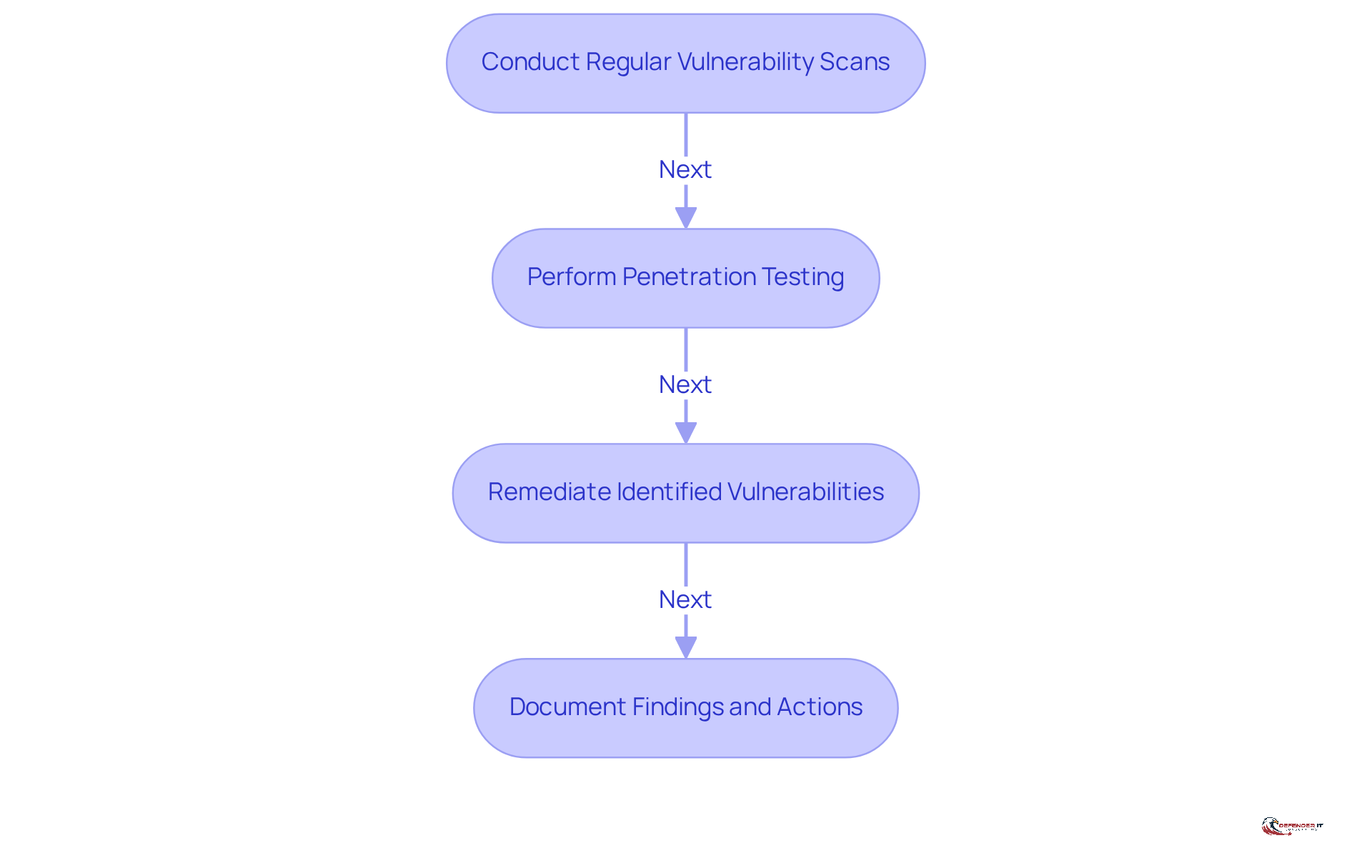
Organizations often struggle to keep up with the evolving landscape of cybersecurity threats, making regular vulnerability assessments and penetration testing essential. To establish a robust cybersecurity strategy, organizations should:
- Conduct Regular Vulnerability Scans: Utilize automated tools to identify known vulnerabilities in systems and applications. Schedule these scans quarterly or after significant changes to the IT environment.
- Perform Penetration Testing: Engage ethical hackers to simulate attacks on your systems. This approach helps uncover vulnerabilities that automated scans might miss, providing a real-world perspective on security weaknesses.
- Remediate Identified Vulnerabilities: Develop a remediation plan that prioritizes fixing vulnerabilities based on their risk level. Ensure that patches and updates are applied promptly.
- Document Findings and Actions: Maintain detailed records of assessments and remediation efforts to track progress and demonstrate compliance with regulatory requirements.
Failure to conduct these assessments can lead to significant security breaches and financial losses. Without these proactive measures, organizations risk exposing themselves to severe security breaches and potential financial repercussions.
Establish Threat Intelligence and Incident Response Protocols
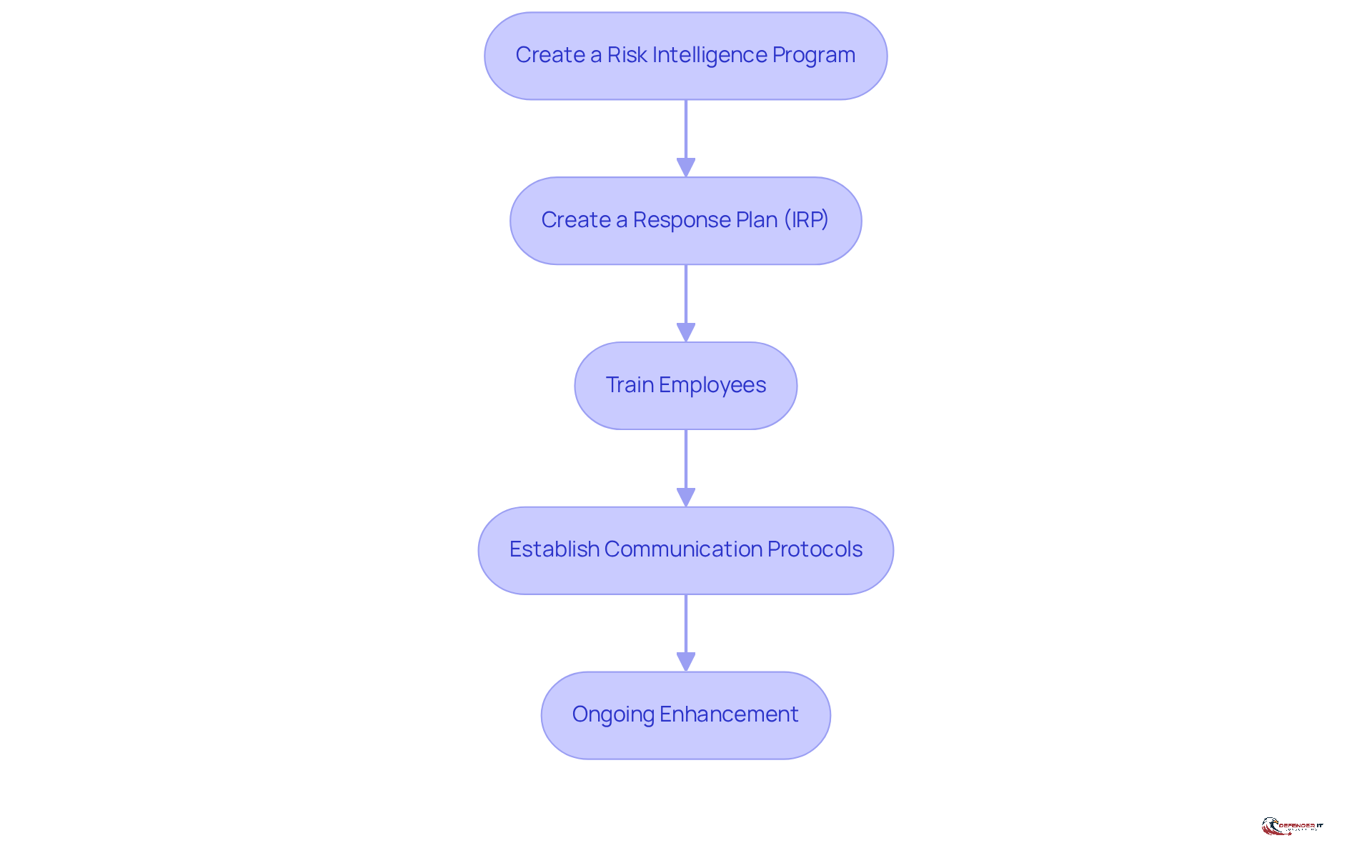
Organizations face escalating cyber threats that demand robust intelligence and incident response protocols to mitigate risks effectively. Key steps include:
- Create a Risk Intelligence Program: Gather and examine information on emerging dangers specific to your industry. This may involve subscribing to risk intelligence feeds and collaborating with industry peers to stay informed about the latest dangers. Recent reports indicate that phishing attacks are becoming more prevalent and sophisticated, underscoring the need for organizations to remain vigilant about these trends.
- Create a Response Plan (IRP): Develop a comprehensive IRP that clearly outlines roles, responsibilities, and procedures for addressing occurrences. Frequent updates and evaluations through tabletop exercises are crucial to guarantee the plan stays effective against changing challenges. Significantly, 73% of entities are unready for cyber events due to major errors in their response strategies, highlighting the necessity of comprehensive preparation.
- Train Employees: Conduct regular training sessions to ensure all employees understand their roles in the event response process and are aware of common threats, such as phishing attacks. Inadequate security training for developers and engineers has been identified as a top challenge in implementing effective cybersecurity measures, making this training crucial for fostering a culture of security awareness within the organization.
- Establish Communication Protocols: Define clear communication channels for reporting events and sharing information with stakeholders, including law enforcement and regulatory bodies. Efficient communication is essential for coordinating response efforts and preserving stakeholder trust during events.
Implementing these protocols significantly enhances an organization’s ability to identify, respond to, and recover from cyber events, ultimately safeguarding against potential harm and ensuring business continuity. Ongoing enhancement in incident response skills is essential to adjust to the changing threat environment, ensuring that entities stay ready for future challenges.
Navigate Compliance Requirements with Expert Consulting
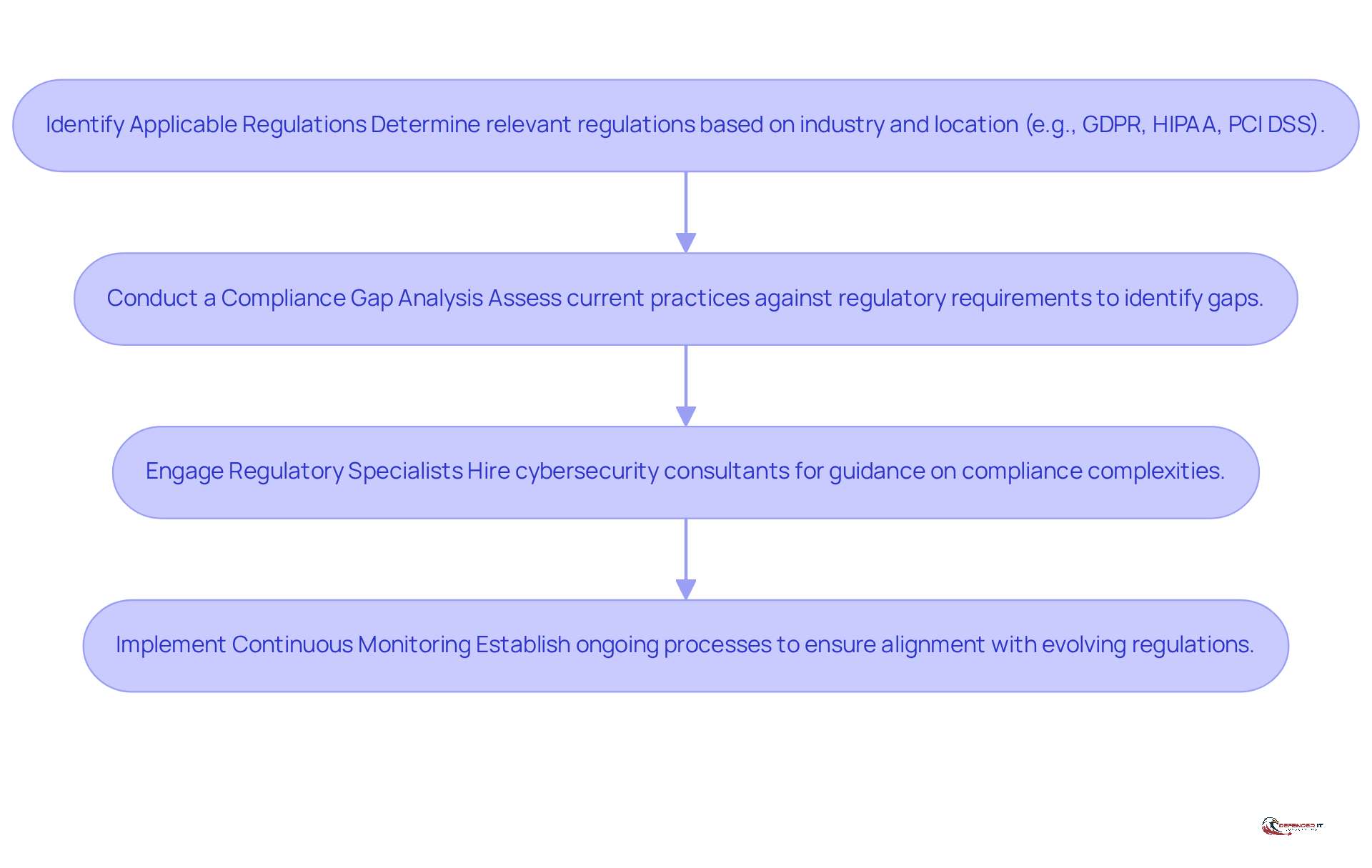
Effective cybersecurity strategies hinge on strict compliance with relevant regulations. Organizations should take the following steps:
- Identify Applicable Regulations: Determine which regulations are relevant to your entity based on industry and geographic location. Common regulations include GDPR, HIPAA, and PCI DSS, each with specific requirements that must be adhered to.
- Conduct a Compliance Gap Analysis: Assess current practices against regulatory requirements to identify gaps. This analysis should encompass policies, procedures, and technical controls. Many organizations struggle with overlapping regulatory frameworks, complicating their compliance efforts. According to regulation expert Ezra D. Church, “A thorough gap analysis is essential for understanding adherence status and addressing vulnerabilities effectively.”
- Engage Regulatory Specialists: Hiring cybersecurity consultants who focus on adherence can provide invaluable guidance through the complexities of regulatory requirements. A comprehensive gap analysis is crucial for understanding adherence status and addressing vulnerabilities.
- Implement Continuous Monitoring: Establish processes for ongoing adherence monitoring to ensure that your entity remains aligned as regulations evolve. Automated evaluations and real-time dashboards can greatly improve visibility into adherence status, enabling entities to react proactively to changes.
Successfully navigating these requirements not only reduces legal risks but also strengthens stakeholder trust, ultimately fostering resilience in an increasingly regulated environment.
Conclusion
In an era where cyber threats are increasingly sophisticated, organizations face significant challenges in safeguarding their digital assets. By evaluating their unique needs and vulnerabilities, companies can create tailored strategies that mitigate risks and strengthen their security posture. Such a proactive approach is vital, especially as cyber threats continue to evolve and become more sophisticated.
The article outlines several best practices for digital consulting services in cybersecurity, including:
- The importance of conducting thorough risk assessments
- Implementing regular vulnerability assessments and penetration testing
- Establishing robust threat intelligence and incident response protocols
- Navigating compliance requirements with expert guidance
Each of these elements plays a crucial role in creating a comprehensive cybersecurity strategy that safeguards against potential breaches and ensures business continuity.
As the cyber threat landscape continues to evolve, organizations must remain vigilant and adaptive. Investing in tailored cybersecurity solutions and expert consulting goes beyond mere defense; it’s a key part of a sustainable business strategy. By committing to ongoing assessments and compliance monitoring, businesses can build resilience, foster stakeholder trust, and ultimately thrive in an increasingly regulated and risk-laden environment.
Frequently Asked Questions
Why is it important for organizations to conduct a risk assessment for cybersecurity?
Conducting a risk assessment is crucial for organizations to identify essential assets, possible risks, and existing vulnerabilities, which helps in effectively safeguarding digital assets.
What are the key steps involved in assessing organizational cybersecurity needs?
The key steps include identifying critical assets, evaluating the current security posture, engaging stakeholders, and prioritizing risks using a risk matrix.
How can organizations identify their critical assets?
Organizations can identify critical assets by determining which data and systems are essential to their operations, such as customer information, financial records, and proprietary data.
What does evaluating the current security posture entail?
Evaluating the current security posture involves reviewing existing security measures, identifying gaps, and ensuring adherence to regulatory standards while boosting resilience against cyber risks.
Why is stakeholder engagement important in the risk assessment process?
Engaging stakeholders from various departments provides insights into operational risks and security challenges, fostering a culture of cybersecurity awareness and equipping employees to recognize and prevent security incidents.
How can organizations prioritize risks effectively?
Organizations can prioritize risks by utilizing a risk matrix to categorize threats based on their likelihood and potential impact, allowing them to focus resources on high-priority risks.
How often should organizations conduct cybersecurity assessments?
Regular evaluations are essential to stay ahead of emerging threats and adjust to evolving regulatory requirements.
What is the potential financial impact of failing to conduct cybersecurity assessments?
Failing to conduct these assessments can expose organizations to substantial risks, jeopardizing both their financial stability and integrity.
What is the cost range for cybersecurity risk assessments?
The cost of cybersecurity risk assessments can vary significantly, ranging from a few thousand dollars for simple self-assessments to hundreds of thousands for comprehensive audits.
What percentage of small and medium-sized business owners believe a serious cyberattack could jeopardize their business?
78 percent of SMB owners believe that a serious cyberattack could jeopardize their business, highlighting the urgency of conducting cybersecurity assessments.
List of Sources
- Assess Organizational Needs for Tailored Cybersecurity Solutions
- business.com (https://business.com/articles/cybersecurity-risk-assessment)
- industrialcyber.co (https://industrialcyber.co/features/rising-cybersecurity-threats-continue-to-highlight-need-for-rigorous-risk-assessment-across-industrial-sectors)
- 5 cybersecurity trends to watch in 2026 (https://cybersecuritydive.com/news/5-cybersecurity-trends-2026/810354)
- ermprotect.com (https://ermprotect.com/blog/the-importance-of-risk-assessment-services-in-cybersecurity)
- maddevs.io (https://maddevs.io/blog/how-to-perform-cybersecurity-risk-assessments)
- Implement Comprehensive Vulnerability Assessments and Penetration Testing
- thecyphere.com (https://thecyphere.com/blog/penetration-testing-statistics)
- halock.com (https://halock.com/penetration-testing-requirement-what-u-s-rules-mandate-it-in-2026)
- capturethebug.xyz (https://capturethebug.xyz/blogs/Pentesting-in-2026-Insights-Trends-and-Predictions)
- secarma.com (https://secarma.com/future-of-penetration-testing)
- linkedin.com (https://linkedin.com/posts/cobalt\_io\_cybersecurity-pentesting-infosec-activity-7459650664596647938-jOTv)
- Establish Threat Intelligence and Incident Response Protocols
- paloaltonetworks.com (https://paloaltonetworks.com/unit42/transform/incident-response-plan-development-review)
- sygnia.co (https://sygnia.co/blog/incident-response-best-practices)
- statista.com (https://statista.com/topics/10666/cyber-threat-intelligence-cti?srsltid=AfmBOorMRvjlzytKeGtfKTC6LIhoMG\_XEI6KcSrTPhxQQ2mQ7A\_rsqR-)
- radiantsecurity.ai (https://radiantsecurity.ai/learn/incident-response-in-2026-process-frameworks-and-the-role-of-ai)
- sygnia.co (https://sygnia.co/blog/critical-importance-incident-response-plan)
- Navigate Compliance Requirements with Expert Consulting
- aikido.dev (https://aikido.dev/blog/trump-cybersecurity-strategy-2026)
- Cybersecurity & Privacy 2026: Enforcement & Regulatory Trends (https://morganlewis.com/pubs/2026/03/cybersecurity-privacy-2026-enforcement-regulatory-trends)
- How to Handle Cybersecurity Compliance in 2026 – Aperitisoft (https://aperitisoft.com/how-to-handle-cybersecurity-compliance-in-2026)
- atlassystems.com (https://atlassystems.com/blog/cybersecurity-regulations)
- darkreading.com (https://darkreading.com/cyber-risk/navigating-privacy-and-cybersecurity-laws-in-2026-will-prove-difficult)