Cyber Insurance
4 Best Practices for Implementing an EDR Solution in Manufacturing
Published May 13, 2026
Introduction
As cyber threats continue to escalate, the manufacturing sector faces unprecedented risks to its operational integrity. Implementing an Endpoint Detection and Response (EDR) solution offers a robust defense mechanism, enabling organizations to proactively identify and mitigate risks before they escalate into costly disruptions. However, organizations must navigate the complexities of EDR deployment to identify best practices that ensure successful implementation in this high-stakes environment.
Define Endpoint Detection and Response (EDR)
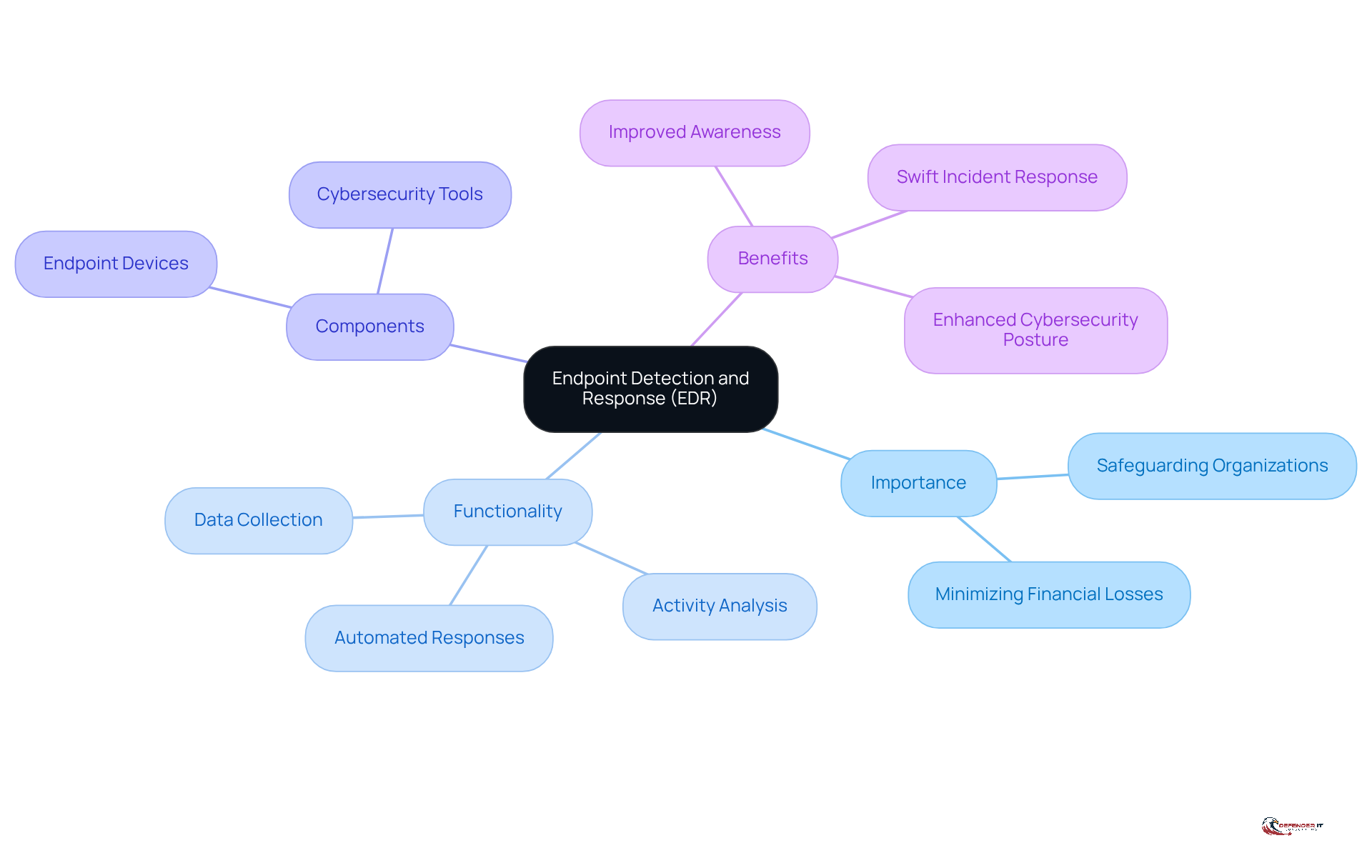
Endpoint Detection and Response (EDR) is crucial for safeguarding organizations against cyber threats that can lead to significant operational disruptions and financial losses. EDR pertains to a collection of cybersecurity tools and practices intended to monitor, detect, and respond to risks on endpoint devices such as computers, servers, and mobile devices. This proactive approach is particularly vital in manufacturing, as downtime can result in substantial financial losses and operational disruptions.
An EDR solution continuously collects data from endpoints, analyzes it for any unusual activity, and provides automated responses to mitigate potential risks. This not only improves awareness of endpoint activities but also enables organizations to react swiftly to incidents, thereby minimizing the impact of cyber risks.
By adopting an EDR solution, organizations can enhance their cybersecurity posture and ensure business continuity in the face of evolving cyber threats.
Identify Threats Detected by EDR
An edr solution plays a pivotal role in identifying diverse cyber risks that can severely impact manufacturing operations. Key threats identified by EDR include:
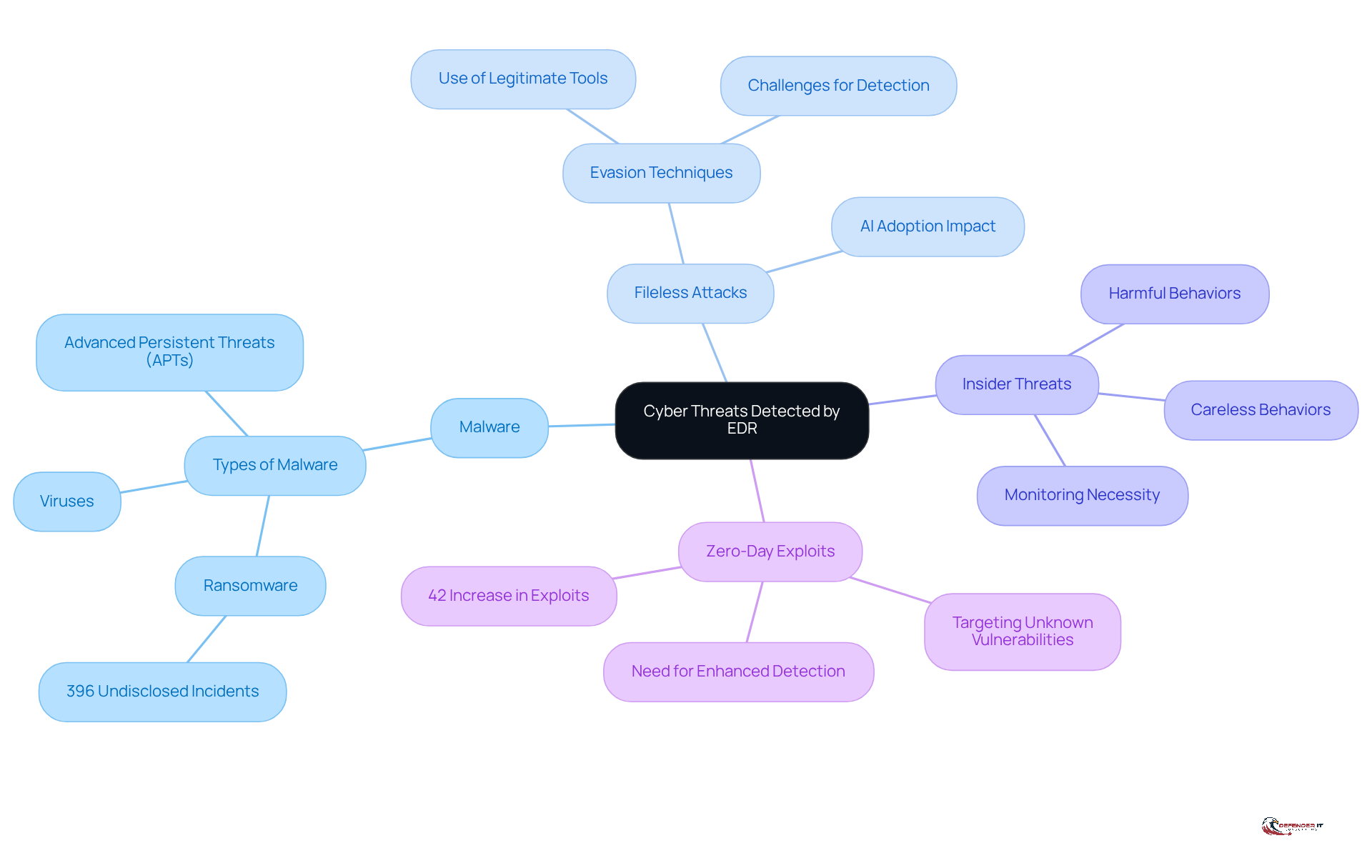
- Malware: This encompasses traditional viruses, ransomware, and advanced persistent threats (APTs) that pose significant risks to endpoint security. The manufacturing sector has seen a notable increase in ransomware incidents, with 396 undisclosed attacks recorded in the first half of 2024 alone, representing 17% of all undisclosed attacks during that period.
- Fileless Attacks: These sophisticated attacks utilize legitimate tools and processes to carry out malicious activities, evading traditional detection methods and posing significant challenges for organizations. As adversaries increasingly adopt AI technologies, the threat landscape evolves, necessitating advanced detection capabilities.
- Insider Threats: Both harmful and careless behaviors by employees can result in data breaches or system compromises, highlighting the necessity for thorough monitoring and recovery strategies.
- Zero-Day Exploits: These attacks target vulnerabilities that are not yet known to software vendors, rendering them especially dangerous. This rise in zero-day vulnerabilities necessitates immediate action to enhance detection and response capabilities.
Recent reports emphasize that cybersecurity now extends beyond just protecting systems; it is about ensuring industrial continuity. By effectively recognizing these risks, manufacturing organizations can utilize EDR solutions to carry out prompt and efficient responses, thereby protecting their vital operations and sensitive data in an increasingly perilous cyber landscape.
Understand Key Components of EDR Solutions
Understanding the key components of an EDR solution is essential for organizations aiming to bolster their cybersecurity posture.
- Data Collection Agents play a crucial role by being installed on endpoints to gather data on system activities, processes, and network connections. For instance, agents like CrowdStrike Falcon and Acronis Cyber Protect Cloud are known for their lightweight footprint and effective monitoring capabilities, making them suitable for manufacturing environments.
- Risk Detection Engine utilizes machine learning and behavioral analysis to identify anomalies and potential risks based on collected data. Recent developments in risk detection technologies, especially in 2026, emphasize the role of AI in improving detection capabilities, with the EDR market anticipated to expand at a CAGR of 24.16%.
- Incident Management Capabilities: An EDR solution offers both automated and manual action options that empower security teams to swiftly contain and resolve dangers. This rapid response is crucial in minimizing the impact of attacks, especially in manufacturing environments where operational continuity is critical.
- Threat Intelligence Integration incorporates external threat data to enhance detection capabilities and provide context for incidents. This integration helps organizations stay updated on the latest attack vectors and techniques, greatly improving their overall security posture.
Comprehending these elements assists entities in ensuring they select an EDR solution that meets their specific security requirements and integrates effectively with existing systems. As Ken Underhill, a cybersecurity specialist, observes, ‘The efficiency of threat detection systems is crucial in today’s changing cyber environment, where prompt actions can significantly impact risk reduction.’ Furthermore, entities often struggle with inadequate training for security teams, which can lead to ineffective use of the EDR solution. A successful case study involves a manufacturing firm that achieved a 40% reduction in incident response time by implementing an EDR solution. This improvement not only enhances security but also ensures operational continuity in critical environments. Recognizing these elements can empower organizations to make informed decisions that significantly enhance their security frameworks.

Implement Best Practices for EDR Deployment
To effectively implement an Endpoint Detection and Response (EDR) solution, organizations must follow a structured approach that addresses their unique cybersecurity needs:
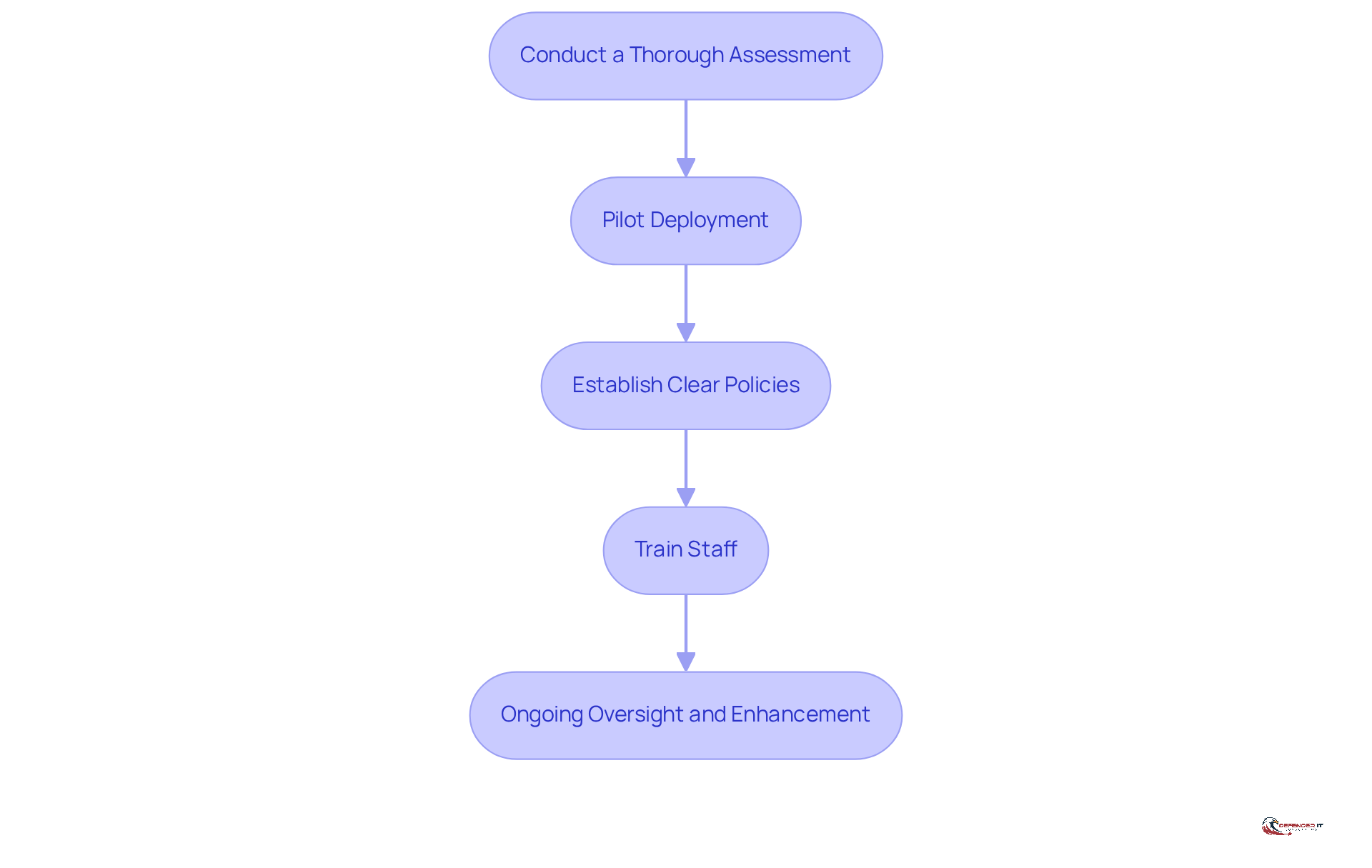
- Conduct a Thorough Assessment: Begin by evaluating the existing IT infrastructure to identify which endpoints require monitoring. This assessment is crucial for understanding the entity’s unique risk landscape and ensuring that the assessment of the EDR solution is tailored to specific needs. Understanding these risks is increasingly critical as cyberattacks grow more sophisticated.
- Pilot Deployment: Initiate the deployment with a small group of endpoints. This controlled environment allows for testing the EDR solution’s capabilities and making necessary adjustments before a full-scale rollout. Success rates for pilot deployments in manufacturing organizations have demonstrated notable advancements in threat detection and reaction times, highlighting the significance of this step.
- Establish Clear Policies: Define detection and reaction policies that align with organizational goals and compliance requirements. Clear policies assist in optimizing incident management and ensure that all team members comprehend their roles in maintaining security through the implementation of an EDR solution. Additionally, organizations should define coverage requirements before reviewing EDR vendors to make informed decisions.
- Train Staff: Provide thorough training for IT and security teams on effectively utilizing the EDR solution, which includes incident management protocols. Given the global shortage of skilled cybersecurity professionals, well-trained staff are essential for maximizing the benefits of EDR technology and minimizing response times during incidents.
- Ongoing Oversight and Enhancement: Frequently assess and revise the EDR setup and guidelines to adjust to new risks and organizational shifts. Continuous monitoring ensures that the effectiveness of the EDR solution is maintained against evolving cyber threats. Integrating EDR with existing IT infrastructure presents challenges that organizations must navigate.
Successful EDR deployment leads to enhanced cybersecurity defenses and resilience against attacks. In today’s digital landscape, neglecting effective endpoint detection and response can jeopardize an organization’s operational integrity.
Conclusion
In an era where cyber threats are increasingly sophisticated, manufacturing organizations must prioritize the implementation of effective Endpoint Detection and Response (EDR) solutions to protect their operations. Continuous monitoring and rapid response are critical components of an effective EDR solution, enhancing security and ensuring uninterrupted production processes amid potential attacks.
The article outlines critical best practices for deploying EDR solutions, including:
- Conducting thorough assessments of existing infrastructures
- Initiating pilot deployments
- Establishing clear policies
- Training staff
- Maintaining ongoing oversight
These steps are essential for customizing EDR implementation to meet organizational needs, enabling effective detection and response to various threats, including malware, fileless attacks, insider threats, and zero-day exploits, which have increased by X% in recent years.
Given the escalating cyber risks in the manufacturing sector, a robust EDR strategy is essential for safeguarding operations. Organizations must prioritize their cybersecurity frameworks to foster resilience against attacks, thereby protecting both their operational integrity and sensitive data. Ultimately, the proactive adoption of EDR solutions is not merely a strategic advantage; it is a critical necessity for safeguarding the future of manufacturing operations in a digital age.
Frequently Asked Questions
What is Endpoint Detection and Response (EDR)?
Endpoint Detection and Response (EDR) refers to a set of cybersecurity tools and practices designed to monitor, detect, and respond to risks on endpoint devices such as computers, servers, and mobile devices.
Why is EDR important for organizations?
EDR is crucial for safeguarding organizations against cyber threats that can cause significant operational disruptions and financial losses, particularly in sectors like manufacturing where downtime can have severe consequences.
How does an EDR solution work?
An EDR solution continuously collects data from endpoints, analyzes it for unusual activity, and provides automated responses to mitigate potential risks, enhancing awareness of endpoint activities and enabling swift incident response.
What are the benefits of adopting an EDR solution?
By adopting an EDR solution, organizations can improve their cybersecurity posture, ensure business continuity, and minimize the impact of evolving cyber threats.
List of Sources
- Define Endpoint Detection and Response (EDR)
- 7 Key Manufacturing Cybersecurity Trends for 2026 | Huntress (https://huntress.com/blog/manufacturing-cybersecurity-trends)
- Endpoint Detection and Response Market Report 2026 (https://researchandmarkets.com/reports/5980425/endpoint-detection-response-market-report?srsltid=AfmBOop-3Fh6uyyKfl0dmU4O0u4wYiO3mPn8leuzdfBqzaQQqU4WBsUt)
- Best EDR (endpoint detection and response) solutions in 2026 (https://acronis.com/en/blog/posts/best-edr-endpoint-detection-and-response-solutions-in-2026)
- Endpoint Detection and Response Market Size, Industry Share, Forecast to 2034 (https://fortunebusinessinsights.com/endpoint-detection-and-response-market-107235)
- Identify Threats Detected by EDR
- Qilin and Warlock Ransomware Use Vulnerable Drivers to Disable 300+ EDR Tools (https://thehackernews.com/2026/04/qilin-and-warlock-ransomware-use.html)
- Manufacturing Industry Faces Surge in Ransomware Attacks in 2024 | BlackFog (https://blackfog.com/manufacturing-industry-faces-surge-in-ransomware-attacks-in-2024)
- 2026 Global Threat Report | Latest Cybersecurity Trends & Insights | CrowdStrike (https://crowdstrike.com/en-us/global-threat-report)
- TCS Cyber Threat Landscape Report 2026 (https://tcs.com/what-we-do/industries/manufacturing/tcs-manufacturing-cyber-threat-outlook-2026)
- 7 Key Manufacturing Cybersecurity Trends for 2026 | Huntress (https://huntress.com/blog/manufacturing-cybersecurity-trends)
- Understand Key Components of EDR Solutions
- What to Expect from Leading EDR Solution Providers (https://clearnetwork.com/what-to-expect-from-leading-edr-solution-providers-in-2026)
- How AI Enhances Endpoint Detection and Response (EDR) for Stronger Cybersecurity (https://cloudwars.com/cybersecurity/how-ai-enhances-endpoint-detection-and-response-edr-for-stronger-cybersecurity)
- Top 8 Endpoint Detection & Response (EDR) Solutions in 2026 (https://esecurityplanet.com/products/edr-solutions)
- How Does EDR Leverage Machine Learning? (https://paloaltonetworks.com/cyberpedia/how-edr-leverages-machine-learning)
- Best EDR (endpoint detection and response) solutions in 2026 (https://acronis.com/en/blog/posts/best-edr-endpoint-detection-and-response-solutions-in-2026)
- Implement Best Practices for EDR Deployment
- Endpoint Detection and Response Market Report 2026 (https://researchandmarkets.com/reports/5980425/endpoint-detection-response-market-report?srsltid=AfmBOoran4dr4fQjV\_vxLfxo8PmqBkPWEnwU6VQ69JagCjpej9Ij9Q\_e)
- What to Expect from Leading EDR Solution Providers (https://clearnetwork.com/what-to-expect-from-leading-edr-solution-providers-in-2026)
- Endpoint Detection and Response Market Size, Industry Share, Forecast to 2034 (https://fortunebusinessinsights.com/endpoint-detection-and-response-market-107235)
- Best EDR (endpoint detection and response) solutions in 2026 (https://acronis.com/en/blog/posts/best-edr-endpoint-detection-and-response-solutions-in-2026)
- 8 EDR Best Practices You Need to Pay Attention to in 2026 (https://heimdalsecurity.com/blog/edr-best-practices)