General
4 Proven IT Cost Cutting Strategies for Security Leaders
Published March 21, 2026
Introduction
In an environment where cybersecurity threats are on the rise and budgets are becoming increasingly constrained, IT cost-cutting has emerged as a pivotal focus for security leaders. By strategically reducing expenses without sacrificing service quality, organizations can navigate financial limitations while simultaneously enhancing their security posture.
The challenge, however, lies in pinpointing the most effective strategies that achieve a balance between cost optimization and robust security measures.
How can security leaders implement proven cost-cutting strategies while ensuring their organizations remain resilient against evolving threats?
Define IT Cost Cutting and Its Importance
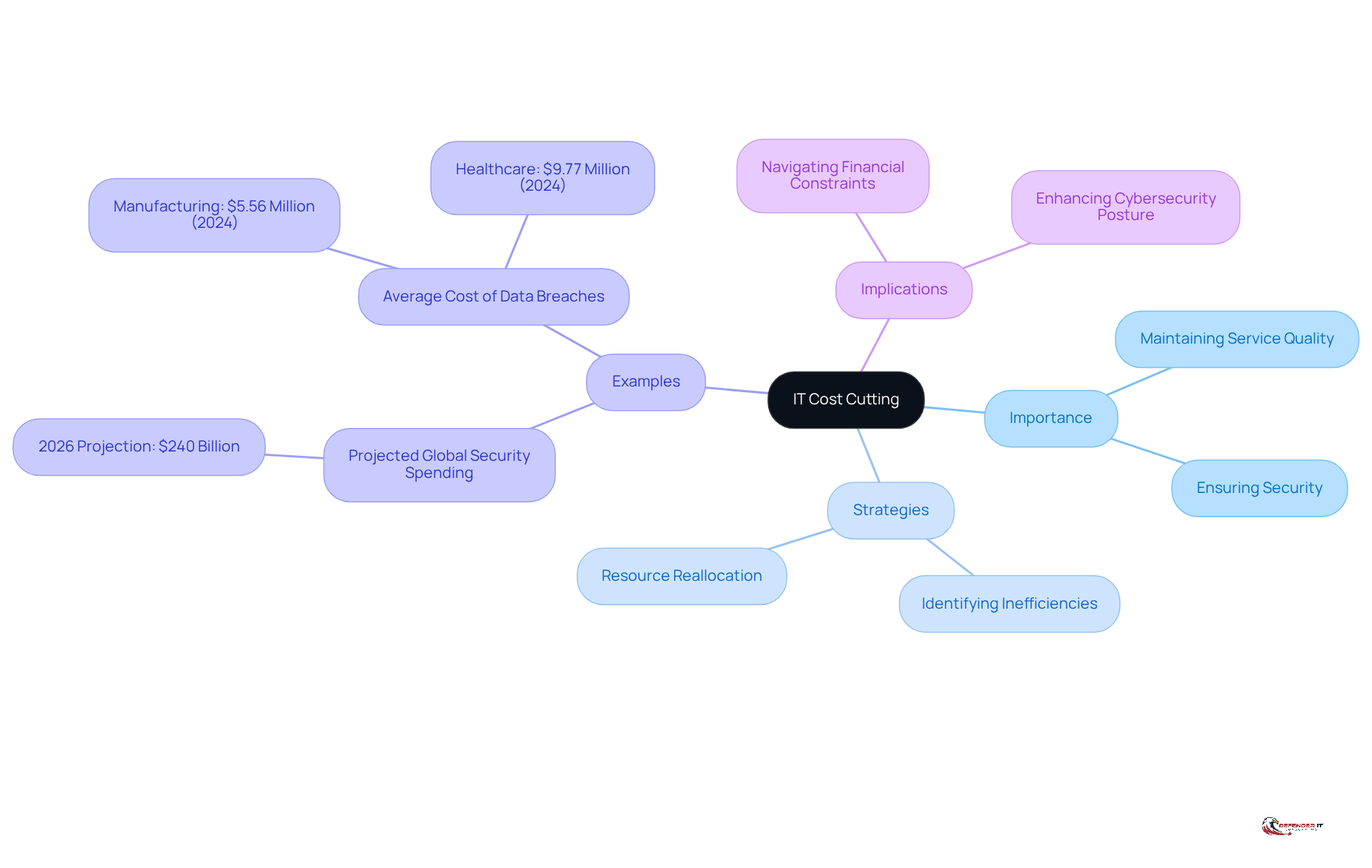
IT is centered around cost management, which involves strategically decreasing expenditures related to information technology operations while enhancing efficiency and security. In today’s economic climate, organizations face increasing pressure to optimize budgets without sacrificing robust security measures. Effective cost cutting involves strategic planning, as it goes beyond simple budget cuts and necessitates a careful approach to identify inefficiencies and reallocate resources to enhance overall security posture.
For example, Gartner’s research indicates that IT spending will increase, reflecting a significant 12.5% increase from the baseline of 2025. Additionally, the report highlights the financial implications of investing in digital security. This underscores the importance for security leaders to grasp the financial landscape, enabling them to navigate financial constraints while implementing comprehensive security strategies.
By focusing on strategic reductions, organizations can maintain a strong protective framework that adapts to evolving threats.
Prioritize Cost Optimization Over Simple Reduction
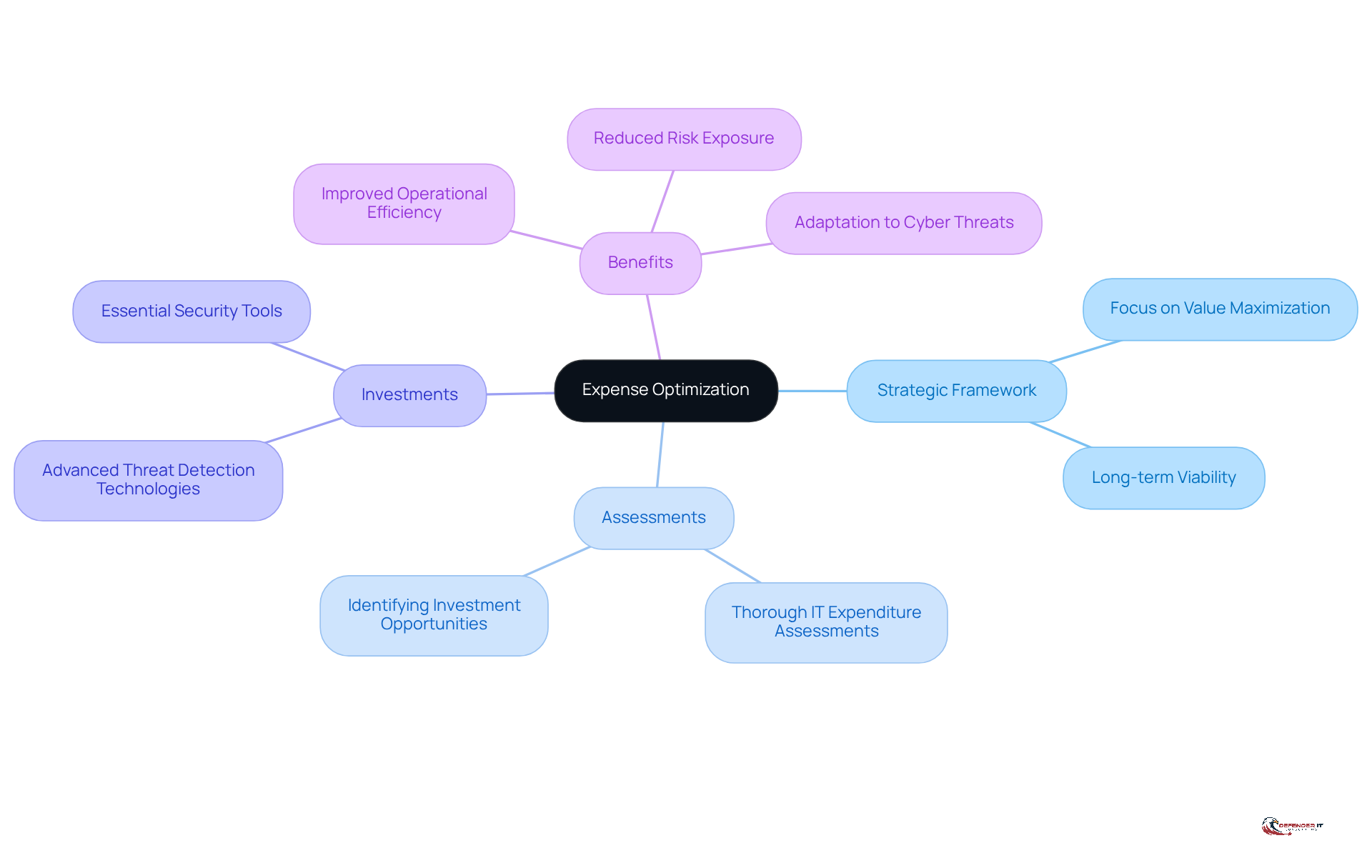
Expense optimization serves as a strategic framework for managing IT expenditures, focusing on cost efficiency. Security leaders must conduct thorough assessments to identify opportunities where investments can yield greater returns. For example, investing in advanced technologies may prove more advantageous than cutting back on essential security tools.
Organizations that have embraced cost optimization have demonstrated improved performance and a significant reduction in risk exposure. A recent case study indicates that entities prioritizing ongoing expense optimization are better positioned to adapt to evolving cyber threats, with enhanced resilience.
By prioritizing expense optimization, security leaders can fortify their organizations against advancing cyber threats while ensuring effective budget oversight. As Diana Kelley notes, security teams are frequently tasked with achieving more with the same number of personnel, making it crucial to focus on maximizing the value of every dollar spent.
Implement Effective IT Cost Reduction Strategies
To efficiently lower IT expenses while preserving security, companies can implement several strategies:
- Consolidate Vendors: Reducing the number of vendors streamlines operations and minimizes expenses related to managing multiple contracts. This approach not only enhances organizational efficiency but also increases cyber risk resiliency, enabling quicker responses to supply chain disruptions. In fact, 75% of organizations pursued consolidation in 2022, a significant increase from 29% in 2020, highlighting a growing trend among CIOs.
- Automation Tools: Implementing automation tools can substantially lower labor expenses and improve efficiency in routine tasks. Organizations that leverage automation report productivity improvements ranging from 10% to 300%, depending on job function, allowing teams to concentrate on more strategic initiatives.
- Cloud Services: Transitioning to cloud services can reduce infrastructure expenses and provide scalable solutions. By maximizing cloud-native application providers to three, as forecasted by Gartner, companies can avoid the challenges and costs associated with managing various platforms.
- Software Audits: Conducting audits of software licenses helps eliminate unused or redundant licenses, freeing up budget for more critical security investments. This practice is particularly important during periods when inefficiencies become more apparent.
By utilizing these strategies, organizations can achieve significant savings while enhancing their security posture. As Geert Leeman, Chief Revenue Officer of SAP Customer Experience, emphasizes, “The urgency for CIOs to transform their vendor landscape is palpable across all sectors and industries.”

Evaluate and Adjust Cost-Cutting Strategies Continuously
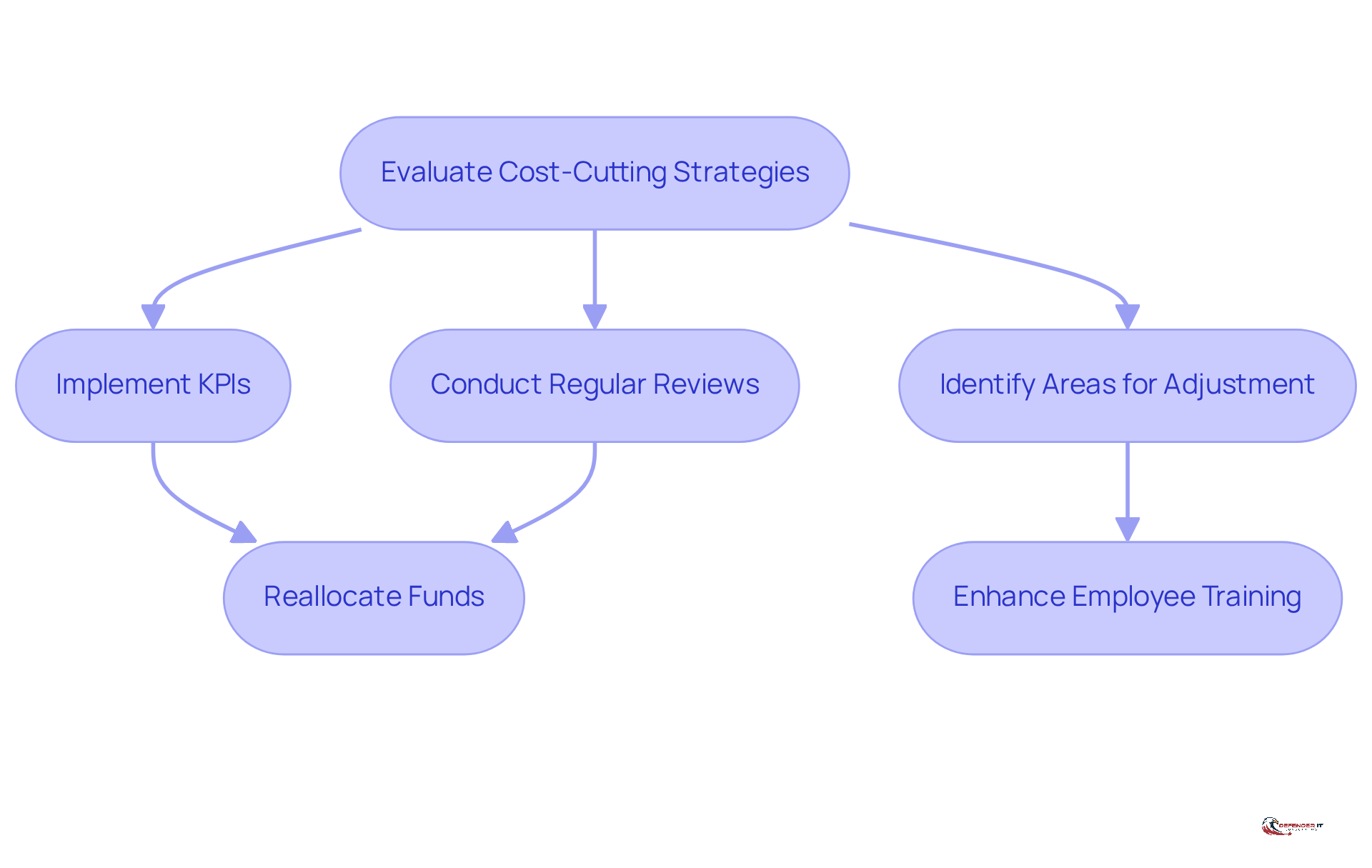
In the ever-evolving realm of cybersecurity, strategies must be continuously evaluated. Organizations must implement key performance indicators (KPIs) to gauge the effectiveness of their cost reduction initiatives. Regular reviews facilitate the identification of areas requiring adjustment, such as reallocating funds toward technology upgrades or enhancing employee training. Notably, 46% of companies prioritize employee training, which can reduce successful phishing attempts by over 60%.
Moreover, with global digital security spending projected to reach approximately $240 billion by 2026, it is imperative for companies to ensure their investments yield tangible returns. By fostering a culture of security awareness and remaining vigilant about risks such as overemphasizing compliance at the expense of security benefits, organizations can align their cost-cutting measures with business objectives, effectively implementing cost cutting. This alignment ultimately bolsters their security posture. As Ginni Rometty aptly stated, “Cybercrime is the single biggest threat to every company on earth,” highlighting the urgency of proactive measures.
Conclusion
In conclusion, strategic IT cost cutting is vital for organizations seeking to strengthen their security posture amidst financial constraints. By prioritizing expense optimization over mere budget reductions, security leaders can ensure their organizations remain resilient against evolving cyber threats. This strategy not only maintains the quality of security measures but also equips businesses to adapt effectively to future challenges.
Key strategies include vendor consolidation, process automation, and cloud migration, all of which yield significant cost savings while enhancing security capabilities. Regular reviews of software licenses and ongoing evaluations of cost-cutting strategies further empower organizations to respond to changing needs and allocate resources efficiently. The anticipated rise in global security spending highlights the necessity for a thoughtful approach to managing IT expenses.
The significance of effective IT cost management cannot be overstated. Organizations must cultivate a culture of continuous improvement, aligning budgetary decisions with long-term security objectives. By doing so, they not only protect their assets but also improve overall operational efficiency. Security leaders are urged to take proactive measures in implementing these best practices, ensuring their organizations not only survive but thrive in the face of cyber threats.
Frequently Asked Questions
What is IT cost cutting?
IT cost cutting involves strategically reducing expenditures related to information technology operations while maintaining service quality and security.
Why is IT cost cutting important?
IT cost cutting is important because it helps organizations optimize budgets in a challenging economic climate without sacrificing security measures, enabling them to navigate financial constraints while implementing effective cybersecurity solutions.
How does IT cost cutting differ from simple budget cuts?
IT cost cutting goes beyond simple budget cuts; it requires a careful approach to identifying inefficiencies and reallocating resources to enhance the overall security posture of an organization.
What are some financial implications of not investing in digital security?
The average cost of a data breach in the manufacturing sector was $5.56 million in 2024, highlighting the significant financial risks associated with inadequate digital security investments.
What is the projected global security spending trend?
Gartner’s research indicates that global security spending is projected to reach approximately $240 billion in 2026, reflecting a significant 12.5% increase from the baseline of 2025.
How can organizations maintain a strong security framework while cutting costs?
By focusing on strategic reductions, organizations can maintain a strong protective framework that adapts to evolving threats while still managing their budgets effectively.
List of Sources
- Define IT Cost Cutting and Its Importance
- How to Optimize Cybersecurity Budget in 2026? (https://picussecurity.com/resource/blog/optimize-cybersecurity-budget)
- Gartner Forecasts Worldwide IT Spending to Grow 10.8% in 2026, Totaling $6.15 Trillion (https://gartner.com/en/newsroom/press-releases/2026-02-03-gartner-forecasts-worldwide-it-spending-to-grow-10-point-8-percent-in-2026-totaling-6-point-15-trillion-dollars)
- 205 Cybersecurity Stats and Facts for 2026 (https://vikingcloud.com/blog/cybersecurity-statistics)
- Key Cyber Security Statistics for 2026 (https://sentinelone.com/cybersecurity-101/cybersecurity/cyber-security-statistics)
- Cybersecurity Budget 2026: Benchmarks & Spending Trends (https://elisity.com/blog/2026-cybersecurity-budget-complete-enterprise-planning-guide)
- Prioritize Cost Optimization Over Simple Reduction
- Cybersecurity spending boom projected, but security pros are skeptical (https://scworld.com/news/cyber-spending-boom-projected-in-2026-but-security-pros-are-skeptical)
- How to Optimize Cybersecurity Budget in 2026? (https://picussecurity.com/resource/blog/optimize-cybersecurity-budget)
- The Top 25 Investing Quotes of All Time (https://investopedia.com/financial-edge/0511/the-top-17-investing-quotes-of-all-time.aspx)
- Prioritize Cost Optimization Over Cost Cutting To Achieve Meaningful Results (https://forbes.com/sites/jimdeloach/2025/06/02/prioritize-cost-optimization-over-cost-cutting-to-achieve-meaningful-results)
- goodreads.com (https://goodreads.com/quotes/tag/budgeting)
- Implement Effective IT Cost Reduction Strategies
- CIO Trends 2025: The Consolidation Imperative Takes Center Stage (https://news.sap.com/2025/08/cio-trends-2025-the-consolidation-imperative-takes-center-stage)
- Why software vendor consolidation is more critical than ever: Cost savings, security and efficiency head the list (https://diligent.com/resources/blog/why-vendor-consolidation-is-critical)
- Evaluate and Adjust Cost-Cutting Strategies Continuously
- 41 Cybersecurity Quotes to Protect Your Digital Life (https://acecloudhosting.com/blog/cybersecurity-quotes)
- Cybersecurity Budget 2026: Benchmarks & Spending Trends (https://elisity.com/blog/2026-cybersecurity-budget-complete-enterprise-planning-guide)
- Cybersecurity Quotes That Define the Future of Digital Protection (https://medium.com/@cyberpromagazine/cybersecurity-quotes-that-define-the-future-of-digital-protection-64897c07bfc6)
- solutionsreview.com (https://solutionsreview.com/cybersecurity-awareness-month-quotes-and-commentary-from-industry-experts-in-2025)
- How to Optimize Cybersecurity Budget in 2026? (https://picussecurity.com/resource/blog/optimize-cybersecurity-budget)