General
5 Key Roles Who Can Control CUI in Your Organization
Published February 13, 2026
Introduction
Understanding Controlled Unclassified Information (CUI) is crucial for organizations that handle sensitive data, particularly those engaged in government contracts. This guide outlines the essential roles required for effective CUI management, providing insights into how organizations can protect their information while ensuring compliance with regulatory standards. As the complexity of data protection continues to grow, it raises an important question: who should be responsible for CUI within an organization, and how can these roles be clearly defined and effectively implemented?
Define Controlled Unclassified Information (CUI)
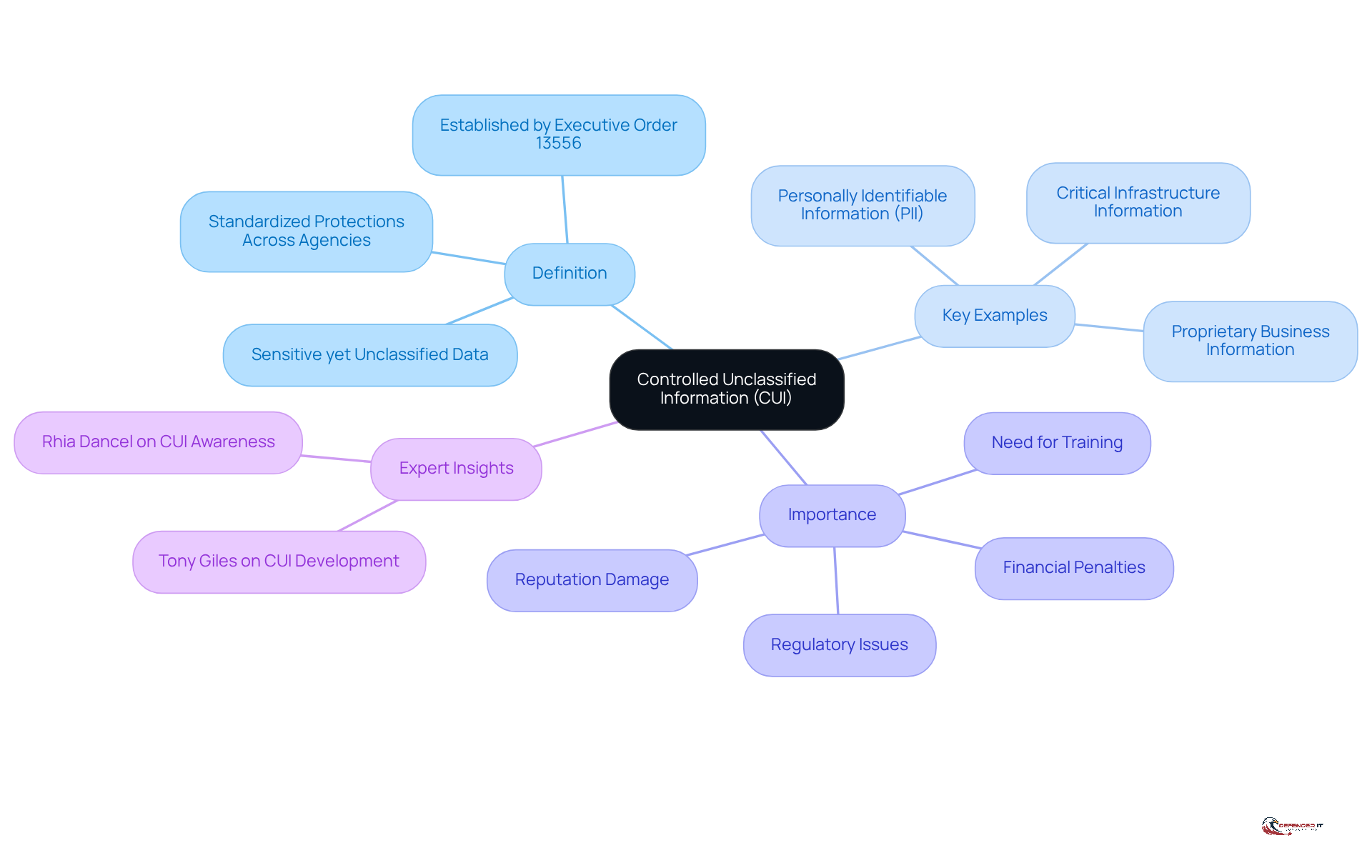
refers to sensitive yet unclassified data that requires specific protections as mandated by law, regulation, or government-wide policy. Established by Executive Order 13556 and implemented through 32 CFR part 2002, the CUI Program aims to standardize protections for sensitive information across federal agencies.
Key examples of CUI include:
- Personally identifiable information (PII)
- Proprietary business information
- Critical infrastructure information
Understanding CUI is crucial, particularly for entities engaged in government contracts or managing sensitive data. Mishandling CUI can result in legal consequences, financial penalties, and damage to reputation.
To accurately define CUI within your organization, refer to the CUI Registry, which categorizes various types of CUI and outlines the necessary protections. This foundational knowledge is essential for effectively managing CUI and ensuring compliance with regulatory standards.
As Tony Giles states, “There’s just a lot of CUI that’s been developed… It’s something that’s been communicated as Controlled Unclassified Information.” Furthermore, Rhia Dancel emphasizes the need for organizations to ask, “Do you receive any information that is marked as CUI?” This highlights the importance of training staff to mitigate risks associated with improper handling.
Identify Types of CUI in Your Organization
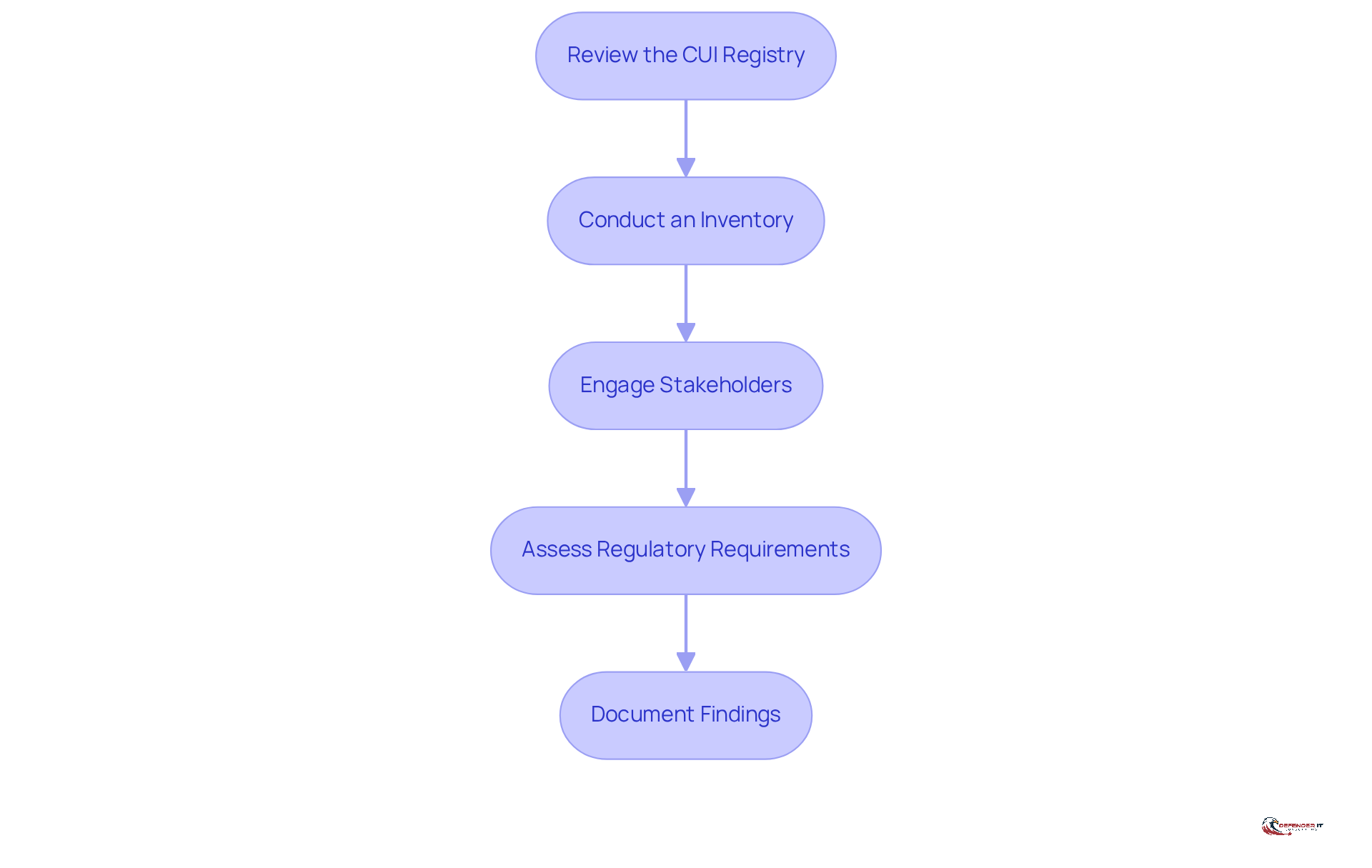
To effectively identify the types of CUI within your organization, it is essential to follow a systematic approach:
- Review the registry: Begin by familiarizing yourself with the categories outlined in the registry. This registry offers a comprehensive list of information types classified as CUI, serving as a foundational resource.
- Conduct an Inventory: Next, perform a thorough inventory of your entity’s data assets. This involves identifying documents, emails, and databases that may contain CUI, ensuring no potential CUI is overlooked.
- Collaborate: Collaborate with department heads and employees to gather insights regarding the types of information they manage. This collaboration should encompass various departments, including Human Resources, Finance, and Information Technology, to capture a holistic view of CUI handling.
- Assess regulations: It is crucial to determine which regulations apply to your entity. Assess the relevant regulations to your industry and contractual obligations, ensuring compliance with applicable standards.
- Create a report: Finally, create a detailed report outlining the identified CUI types, including their sources and specific handling requirements. This documentation will serve as a vital reference for implementing necessary controls and training staff effectively.
By systematically identifying CUI types, organizations can enhance their preparedness to manage and protect CUI.
Assign Roles for CUI Management
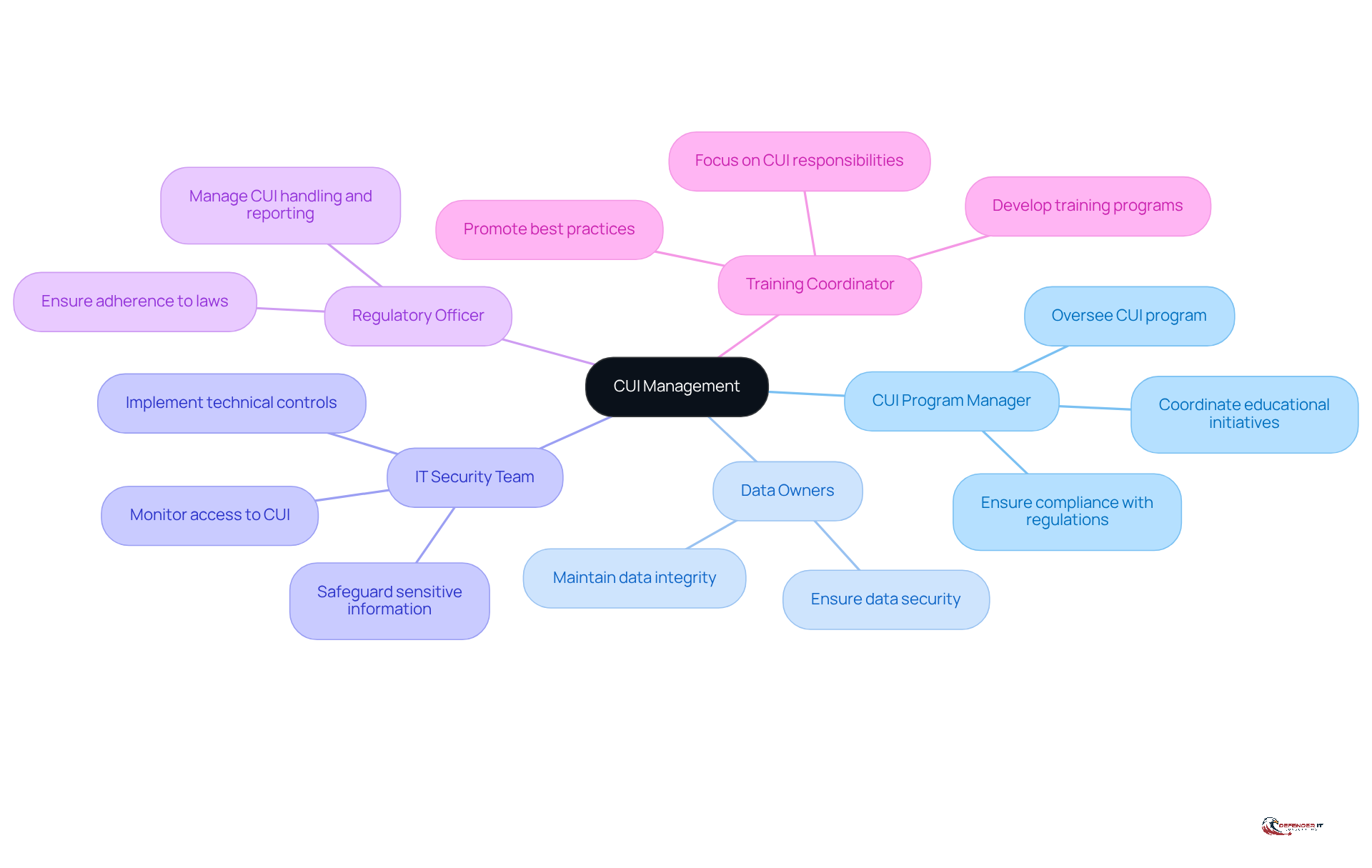
To effectively manage CUI, organizations must assign specific roles and responsibilities:
- Program Manager: A dedicated program manager should be appointed to oversee the CUI program, ensuring compliance and coordinating educational initiatives.
- Data Steward: Each type of CUI identified must have designated data stewards responsible for maintaining the integrity and security of the data within their scope.
- IT Security Officer: The IT security officer plays a crucial role in implementing technical controls and monitoring access to CUI, ensuring that appropriate security measures are in place to safeguard sensitive information.
- Compliance Officer: A compliance officer should be designated to ensure that the organization adheres to relevant laws and regulations regarding CUI handling and reporting.
- Training Coordinator: A training coordinator must be appointed to develop and implement training programs for staff, focusing on CUI responsibilities and best practices.
By clearly defining these roles, organizations can establish a structured approach to managing CUI, thereby enhancing accountability and compliance.
Implement Controls and Procedures for CUI
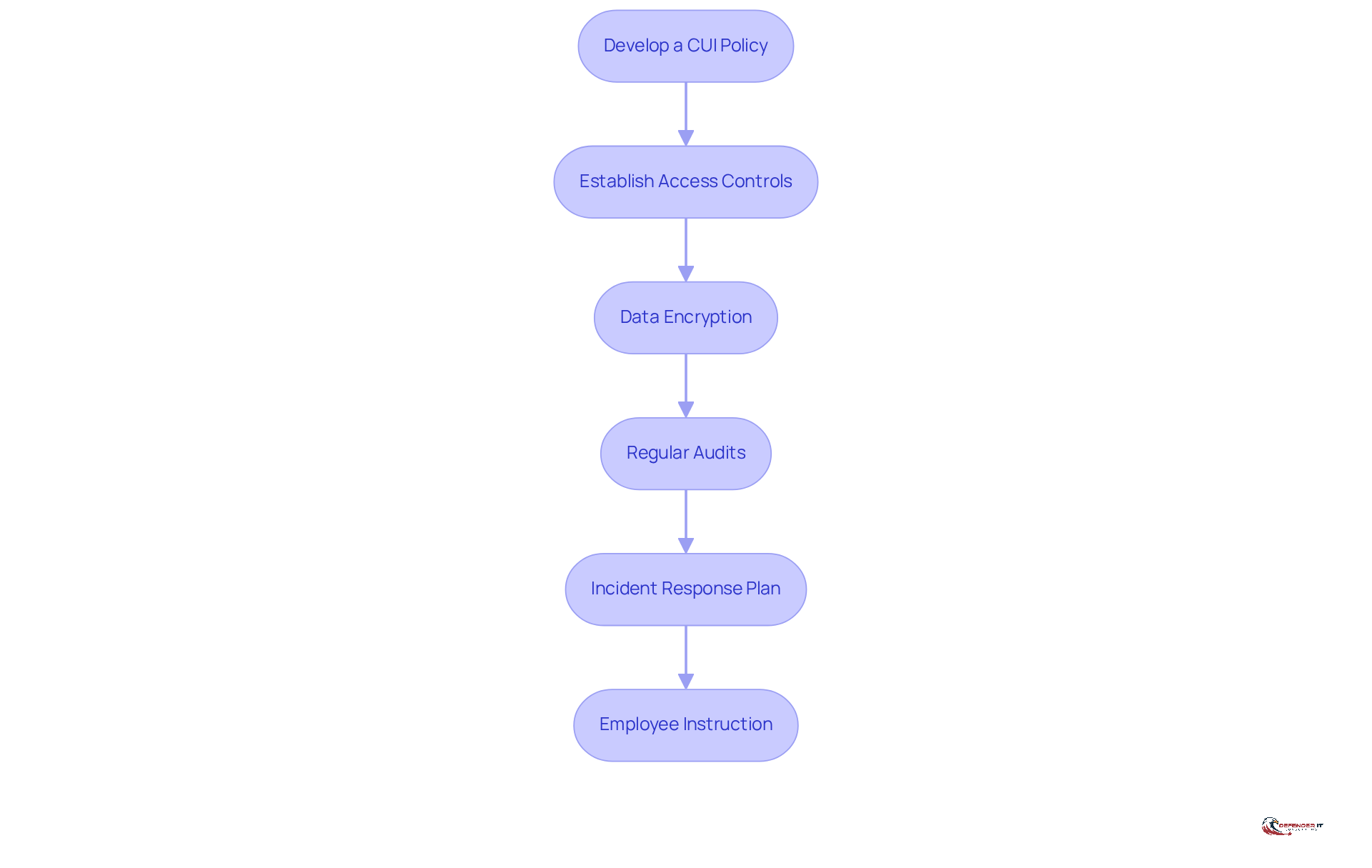
To implement effective controls and procedures for CUI, follow these steps:
- Develop a policy: Create a comprehensive policy that outlines how CUI will be handled, including marking, storage, and transmission requirements. This policy should align with the updates to SP 800-171r3, which include refinements for consistency with SP 800-53r5 and additional guidance based on public feedback.
- Establish strict access controls to define who can control CUI. Utilize role-based access control (RBAC) to ensure that only authorized personnel have access. Organizations that have implemented clear access controls have reported a significant decrease in security incidents, underscoring the effectiveness of these measures.
- Data Encryption: Implement encryption for CUI both at rest and in transit to protect sensitive information from unauthorized access. This is vital for adhering to regulations.
- Audits: Conduct audits of CUI handling practices to ensure compliance with established policies and identify areas for improvement. These audits assist entities in remaining aligned with evolving standards and best practices.
- Response Plan: Develop an incident response plan specifically for CUI breaches. This plan should outline steps to take in the event of a data breach involving CUI, ensuring a swift and effective response.
- Employee Instruction: Ensure that all employees processing, storing, or transmitting CUI complete basic CUI education. This training is crucial for adherence and improves the overall security stance of the entity.
By implementing these controls and procedures, entities can significantly enhance their ability to protect CUI and comply with regulations. For instance, the Department of Justice’s record-breaking False Claims Act recoveries in FY 2025 emphasize the significance of strong adherence strategies in reducing risks linked to CUI mishandling. Additionally, incorporating insights from experts, such as Michael J. Montalbano’s comments on best practices, can further bolster the credibility of these recommendations.
Educate Staff on CUI Responsibilities
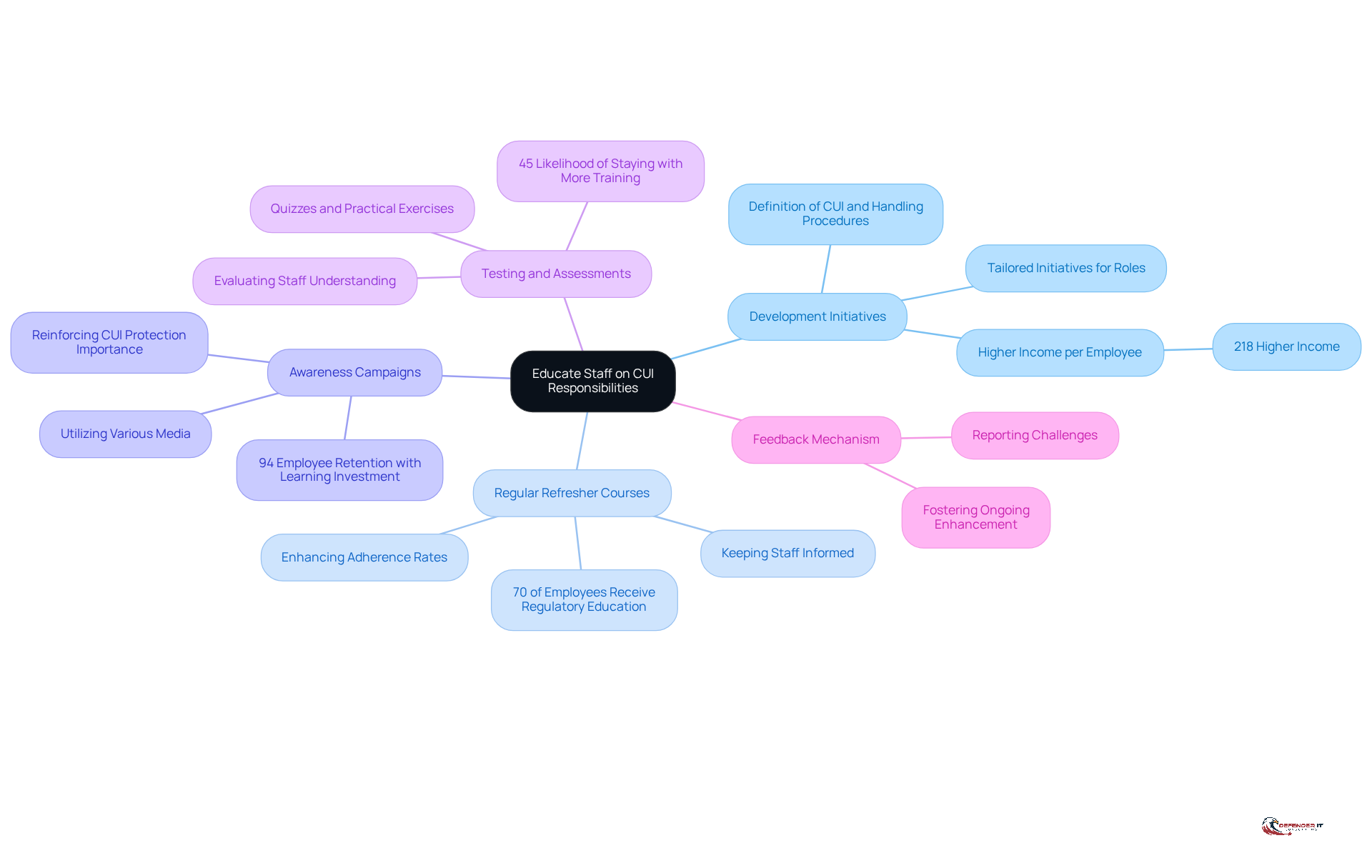
To effectively educate staff on CUI responsibilities, organizations must implement several key strategies:
- Development Initiatives: Organizations should create comprehensive development initiatives that define CUI, outline handling procedures, and emphasize the importance of training. Tailoring these initiatives for various roles within the organization ensures relevance and effectiveness. Research indicates that companies with comprehensive training programs perform better compared to those lacking formalized instruction.
- Communication: Scheduling is essential to keep staff informed about changes in regulations or organizational policies regarding CUI. This proactive approach can significantly enhance knowledge retention and reduce risks associated with outdated knowledge. Notably, communication is key, underscoring its importance in organizational contexts.
- Awareness Campaigns: Launching awareness campaigns reinforces the importance of CUI protection. Utilizing posters, newsletters, and intranet resources keeps CUI top of mind, fostering a culture of vigilance and responsibility. Given that 94% of employees would remain with a firm longer if it invested in their learning and development, these campaigns can also enhance employee retention.
- Testing and Assessments: Conducting assessments to evaluate staff understanding of CUI responsibilities is crucial. Quizzes and practical exercises can reinforce learning and identify areas needing further attention, ensuring employees are well-prepared to handle CUI appropriately. A case study reveals that 45% of employees would be more likely to stay in their roles if offered additional training, highlighting the impact of effective training programs.
- Feedback Mechanism: Establishing a feedback mechanism allows employees to report challenges or suggest improvements related to CUI handling. This fosters a culture of ongoing enhancement and involvement, which is essential for upholding regulations and improving the overall process.
By prioritizing education and awareness, organizations can cultivate a culture of adherence and responsibility regarding CUI management, ultimately safeguarding their operations and reputation. Furthermore, the FAR CUI Rule mandates mandatory training for personnel accessing CUI, making these strategies essential for compliance.
Conclusion
Effectively managing Controlled Unclassified Information (CUI) is crucial for organizations that handle sensitive data. By grasping the definition and significance of CUI, entities can prioritize compliance and protect their information. This article underscores the importance of assigning specific roles, implementing robust controls, and fostering a culture of awareness and education among staff.
Key strategies include:
- Identifying the types of CUI present within the organization
- Appointing dedicated roles such as CUI Program Managers and Data Owners
- Establishing comprehensive policies and training programs
- Conducting regular audits and refresher courses to enhance compliance and readiness
Ultimately, a commitment to managing CUI not only safeguards sensitive information but also bolsters organizational integrity and trust. By proactively educating staff and enforcing regulations, organizations can mitigate risks associated with mishandling CUI, thereby protecting their reputation and ensuring compliance with legal requirements. It is imperative for organizations to recognize the critical nature of CUI management and to act decisively in implementing these best practices.
Frequently Asked Questions
What is Controlled Unclassified Information (CUI)?
Controlled Unclassified Information (CUI) refers to sensitive but unclassified data that requires specific safeguarding and dissemination controls as mandated by law, regulation, or government-wide policy. It was established by Executive Order 13556 and is implemented through 32 CFR part 2002.
What are some examples of CUI?
Key examples of CUI include personally identifiable information (PII), proprietary business information, and critical infrastructure information.
Why is understanding CUI important for organizations?
Understanding CUI is crucial for entities engaged in government contracts or managing sensitive data because mishandling CUI can lead to significant regulatory issues, financial penalties, and damage to reputation.
How can organizations define CUI within their operations?
Organizations can define CUI by referring to the CUI Registry, which categorizes various types of CUI and outlines the handling requirements for each category.
What steps should an organization take to identify types of CUI?
To identify types of CUI, an organization should: 1. Review the CUI Registry. 2. Conduct an inventory of data assets. 3. Engage stakeholders from various departments. 4. Assess applicable regulatory requirements. 5. Document findings in a detailed report.
Who should be involved in the process of identifying CUI?
Department heads and employees from various departments, including Human Resources, Finance, and Information Technology, should be involved to gather insights on the types of information they manage.
What is the purpose of documenting identified CUI types?
Documenting identified CUI types serves as a vital reference for implementing necessary controls and effectively training staff on handling sensitive information.
List of Sources
- Define Controlled Unclassified Information (CUI)
- security.research.virginia.edu (https://security.research.virginia.edu/research-data-security-compliance/controlled-unclassified-information)
- Controlled Unclassified Information (CUI) (https://gsa.gov/reference/controlled-unclassified-information)
- nsf.org (https://nsf.org/knowledge-library/protect-controlled-unclassified-information)
- FAR Proposed Controlled Unclassified Information Rule: A Path Toward Standardization (https://cozen.com/news-resources/publications/2025/far-proposed-controlled-unclassified-information-rule-a-path-toward-standardization)
- Identify Types of CUI in Your Organization
- nsf.org (https://nsf.org/knowledge-library/protect-controlled-unclassified-information)
- GSA Introduces a New Framework for Protecting CUI in Contractor Systems (https://natlawreview.com/article/gsa-introduces-new-framework-protecting-cui-contractor-systems)
- Controlled Unclassified Information (CUI) (https://gsa.gov/reference/controlled-unclassified-information)
- Taking the Mystery Out of Controlled Unclassified Information (CUI) | MxD (https://mxdusa.org/news/taking-the-mystery-out-of-controlled-unclassified-information-cui)
- Assign Roles for CUI Management
- natlawreview.com (https://natlawreview.com/article/gsa-issues-new-framework-protecting-cui-contractor-systems)
- 350+ Cybersecurity Compliance Statistics – June 2026 (https://brightdefense.com/resources/cybersecurity-compliance-statistics)
- pivotpointsecurity.com (https://pivotpointsecurity.com/how-high-a-hurdle-is-cmmc-compliance-for-todays-dod-suppliers)
- 50+ Risk Management Statistics to Know in 2026 (https://secureframe.com/blog/risk-management-statistics)
- Implement Controls and Procedures for CUI
- NIST Issues Updated Security Requirements for Protecting CUI | CSRC (https://csrc.nist.gov/news/2024/updated-security-requirements-for-protecting-cui)
- hivesystems.com (https://hivesystems.com/blog/cuiproposedrule)
- natlawreview.com (https://natlawreview.com/article/gsa-issues-new-framework-protecting-cui-contractor-systems)
- Educate Staff on CUI Responsibilities
- 90+ Employee Training Statistics in 2025: Investing in Employee Development | Shortlister (https://myshortlister.com/insights/employee-training-statistics)
- training.safetyculture.com (https://training.safetyculture.com/blog/employee-training-statistics)
- Proposed Rule Would Impose Government-Wide Controlled Unclassified Information (CUI) Handling Requirements – ConsensusDocs (https://consensusdocs.org/news/proposed-rule-would-impose-government-wide-controlled-unclassified-information-cui-handling-requirements)
- hivesystems.com (https://hivesystems.com/blog/cuiproposedrule)
- Employee Training Statistics, Trends, and Data in 2025 | Devlin Peck (https://devlinpeck.com/content/employee-training-statistics)