Business
Best Practices for AI Data Center Infrastructure in Manufacturing
Published June 28, 2026
Introduction
The manufacturing sector stands at a pivotal moment, as the demand for artificial intelligence capabilities accelerates technological transformation. As organizations strive to harness the power of AI, the need for robust and specialized AI data center infrastructure becomes paramount. Manufacturers face significant hurdles in adopting AI technologies, including high costs and regulatory complexities. Addressing these challenges is essential for manufacturers to maintain their competitive advantage in an increasingly AI-driven market.
Define AI Data Center Infrastructure
The rapid evolution of artificial intelligence necessitates specialized AI data center infrastructure to support its computational needs. AI workloads require specialized facilities, which are part of the AI data center infrastructure, designed to accommodate their computational intensity. These information hubs are part of the AI data center infrastructure and are equipped with high-performance computing resources, such as Graphics Processing Units (GPUs) and Tensor Processing Units (TPUs), which are essential for training and executing AI models.
Unlike traditional facilities, the AI data center infrastructure prioritizes low-latency networking and sophisticated cooling systems. They also implement scalable storage solutions in their AI data center infrastructure to manage the substantial information throughput required for AI applications. Furthermore, these hubs incorporate strict protective measures to safeguard sensitive information and ensure compliance with industry regulations, particularly in highly regulated sectors like finance and healthcare.
The market for AI computing facilities is anticipated to expand considerably, with power requirements predicted to rise from 4 gigawatts in 2024 to 123 gigawatts by 2035, based on Deloitte’s analysis. Industry leaders, such as Martin Stansbury, emphasize that the power industry is no longer a peripheral player but is central to the development of the AI economy, influencing its pace and direction.
This evolution necessitates that information hubs enhance their operational capabilities while effectively addressing security concerns. Notably, 64% of surveyed executives express worries about security issues related to these hubs, underscoring the urgency of these challenges. Addressing these security concerns is not just a regulatory requirement; it is essential for the sustainable growth of the AI sector.

Identify Key Components of AI Data Centers
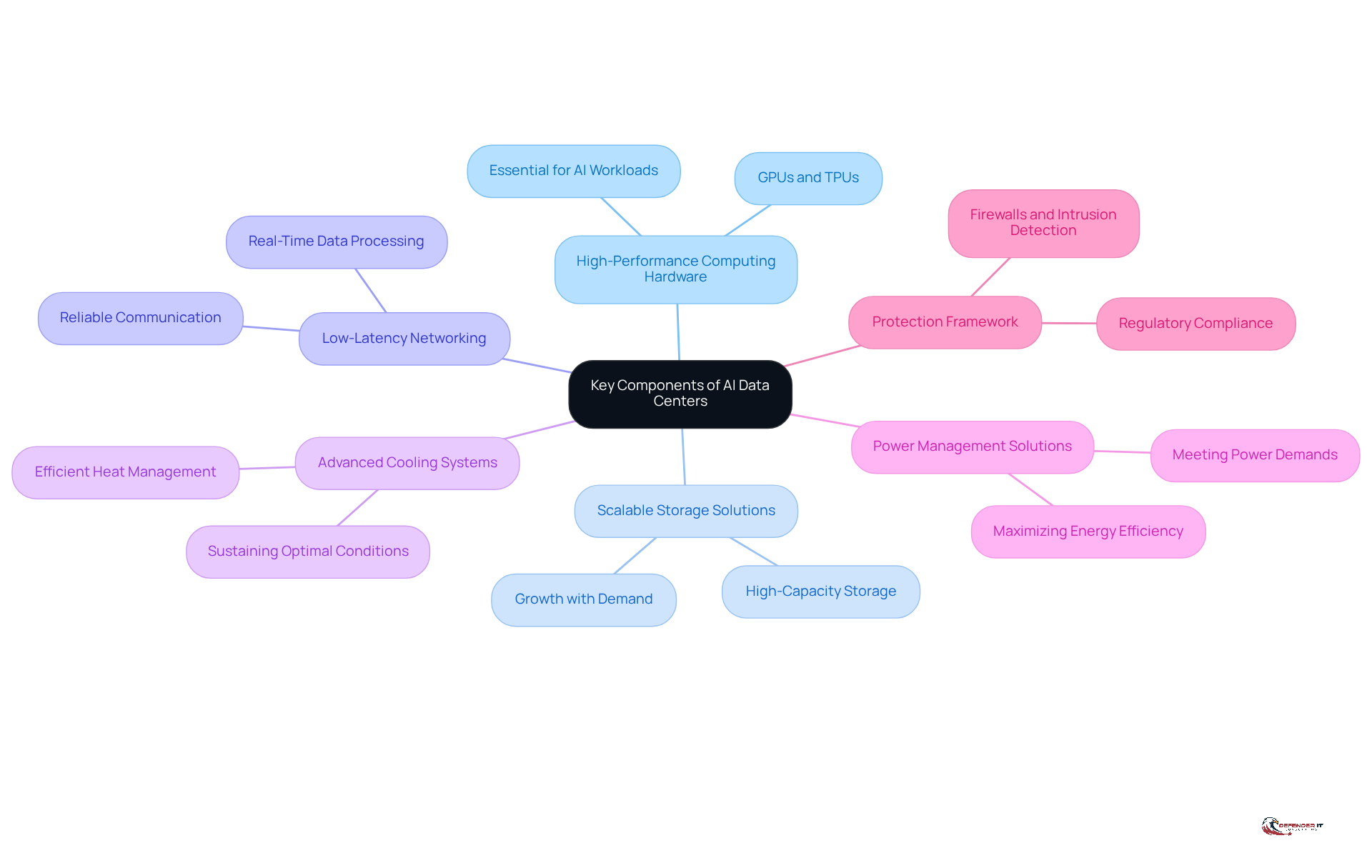
To effectively support AI operations, the ai data center infrastructure must integrate several critical components that ensure optimal performance and reliability.
- High-Performance Computing Hardware: High-Performance Computing Hardware is crucial, encompassing GPUs and TPUs that deliver the processing power essential for AI workloads.
- Scalable Storage Solutions: Scalable Storage Solutions are vital, as AI applications generate vast amounts of data, necessitating high-capacity storage infrastructures that can grow with increasing demands.
- Low-Latency Networking: Low-Latency Networking is essential, providing the quick and reliable infrastructure needed for real-time data processing and communication among AI networks.
- Advanced Cooling Systems: Advanced Cooling Systems are critical, as the high energy consumption and heat generation from AI workloads demand efficient cooling solutions to sustain optimal operating conditions.
- Power Management Solutions: Power Management Solutions are necessary to ensure that facilities can meet the substantial power demands of AI operations while maximizing energy efficiency.
- Protection Framework: A robust Protection Framework is vital, incorporating firewalls, intrusion detection systems, and encryption protocols to safeguard sensitive information and ensure regulatory compliance.
Without these essential components, organizations risk compromising their AI data center infrastructure and overall operational efficiency.
Implement Operational Best Practices for AI Data Centers
As organizations increasingly rely on AI technologies, the optimization of AI data center infrastructure has become a critical challenge that demands immediate attention. To achieve this, organizations should consider the following best practices:
- Regular Maintenance and Upgrades: Schedule routine maintenance to ensure all hardware and software components are functioning optimally. Frequent updates to the latest technologies can enhance performance and safety.
- Energy Efficiency Initiatives: Adopting energy-saving measures, like optimizing cooling systems and harnessing renewable energy sources, can significantly lower operational costs while also benefiting the environment.
- Strong Protection Protocols: Establish comprehensive policies that include access controls, information encryption, and continuous monitoring to safeguard against cyber threats.
- Information Management Strategies: Create efficient information management practices to guarantee quality and accessibility, which are essential for AI model training and inference.
- Scalability Planning: Design the infrastructure with scalability in mind, allowing for easy expansion as AI workloads grow.
- Cross-Functional Cooperation: Encourage teamwork among IT, protection, and operational groups to ensure that all elements of the information hub align with organizational objectives.
Failure to adopt these best practices may result in operational inefficiencies and heightened risks, ultimately hindering an organization’s competitive edge in the AI landscape.

Address Challenges in Transitioning to AI Data Centers
Transitioning to AI data centers can be a daunting task for organizations, fraught with challenges that require careful navigation:
- High capital expenditure presents significant financial barriers for organizations when investing in AI data center infrastructure. It’s crucial for organizations to carefully analyze costs and consider financing options to handle these expenses effectively.
- The power and cooling requirements of AI workloads highlight the need for robust AI data center infrastructure that can provide significant power and advanced cooling solutions. Organizations must assess their current power supply capabilities and consider upgrades to meet these demands.
- Skill gaps may arise in the context of AI data center infrastructure, as the complexity of AI technologies requires specialized skills that current staff may lack. By investing in training programs or hiring experts, organizations can effectively bridge this gap and enhance their AI capabilities.
- Many organizations have existing infrastructure, including AI data center infrastructure, that may not be compatible with AI technologies. A phased approach to integration can help minimize disruptions.
- Regulatory Compliance: Organizations must ensure that their AI data center infrastructure adheres to industry regulations, particularly concerning information security and privacy. Engaging with compliance experts can facilitate this process.
- Change Management: Transitioning to AI data center infrastructure often requires cultural shifts within the organization. Implementing effective change management strategies, such as clear communication and stakeholder engagement, is vital for ensuring successful adoption of AI technologies.
Failure to address these challenges could hinder an organization’s ability to leverage AI effectively, ultimately impacting its competitive edge.

Conclusion
To fully leverage artificial intelligence, the manufacturing sector must establish robust AI data center infrastructure. This specialized infrastructure supports the demanding computational needs of AI workloads. It also ensures that organizations can operate efficiently and securely in a data-driven environment.
Key components such as:
- High-performance computing hardware
- Scalable storage solutions
- Low-latency networking
- Advanced cooling systems
are critical for optimizing AI operations. Additionally, it’s crucial to tackle the challenges of transitioning to AI data centers, like high capital costs and skill shortages, to ensure a smooth integration of AI technologies. Implementing operational best practices, including:
- Regular maintenance
- Energy efficiency initiatives
- Strong protection protocols
can significantly enhance the performance and reliability of AI data centers.
Ultimately, the successful implementation of AI data center infrastructure in manufacturing drives operational efficiency and positions organizations to thrive in a competitive landscape. By addressing these challenges, manufacturers can not only enhance their operational capabilities but also drive innovation and growth in an increasingly competitive market.
Frequently Asked Questions
What is AI data center infrastructure?
AI data center infrastructure refers to specialized facilities designed to support the computational needs of artificial intelligence workloads. These infrastructures are equipped with high-performance computing resources like GPUs and TPUs, which are essential for training and executing AI models.
How does AI data center infrastructure differ from traditional data centers?
Unlike traditional data centers, AI data center infrastructure prioritizes low-latency networking, sophisticated cooling systems, and scalable storage solutions to manage the high information throughput required for AI applications.
What are the power requirements for AI data centers expected to be in the future?
The power requirements for AI computing facilities are predicted to rise significantly, from 4 gigawatts in 2024 to 123 gigawatts by 2035, according to Deloitte’s analysis.
What security concerns are associated with AI data center infrastructure?
There are significant security concerns related to AI data center infrastructure, with 64% of surveyed executives expressing worries about these issues. Addressing these concerns is crucial for regulatory compliance and the sustainable growth of the AI sector.
Why is the power industry important for the development of the AI economy?
The power industry is considered central to the development of the AI economy, influencing its pace and direction, as emphasized by industry leaders like Martin Stansbury.
List of Sources
- Define AI Data Center Infrastructure
- AI Data Centers Recent News | Data Center Knowledge (https://datacenterknowledge.com/next-gen-data-centers/ai-data-centers)
- The Impact of AI on Data Center Markets | News & Insights | Gray (https://gray.com/insights/the-impact-of-ai-on-data-center-markets)
- How AI is Driving Data Center Infrastructure Evolution (https://databank.com/resources/blogs/how-ai-is-driving-data-center-infrastructure-evolution)
- AI Data Center Growth Is Now a Power Infrastructure Problem (https://powermag.com/ai-data-center-growth-is-now-a-power-infrastructure-problem)
- Can US infrastructure keep up with the AI economy? (https://deloitte.com/us/en/insights/industry/power-and-utilities/data-center-infrastructure-artificial-intelligence.html)
- Identify Key Components of AI Data Centers
- The cost of compute: A $7 trillion race to scale data centers (https://mckinsey.com/industries/technology-media-and-telecommunications/our-insights/the-cost-of-compute-a-7-trillion-dollar-race-to-scale-data-centers)
- Energy demand from AI – Energy and AI – Analysis – IEA (https://iea.org/reports/energy-and-ai/energy-demand-from-ai)
- The 8 Data Center Trends That Will Define 2026 (https://arctiq.com/blog/the-8-data-center-trends-that-will-define-2026)
- How AI Data Centers Are Reshaping Electronic Component Supply in 2026 (https://accuristech.com/blog/ai-data-center-electronic-component-supply)
- Implement Operational Best Practices for AI Data Centers
- State Data Center Laws vs. Federal AI Push: 2026 Tracker (https://multistate.us/insider/2026/4/14/federal-ai-data-center-policy-meets-resistance-from-state-lawmakers)
- Energy Efficiency in Data Centers (https://energy.gov/cmei/femp/energy-efficiency-data-centers)
- 2026 Predictions: AI Sparks Data Center Power Revolution (https://datacenterknowledge.com/operations-and-management/2026-predictions-ai-sparks-data-center-power-revolution)
- AI Data Centers: Big Tech’s Impact on Electric Bills, Water, and More – Consumer Reports (https://consumerreports.org/data-centers/ai-data-centers-impact-on-electric-bills-water-and-more-a1040338678)
- AI a Major Challenge for Data Centers in 2026 – R&M Blog (https://rdm.com/blog/ai-boom-demands-new-strategies)