Business
Digital Transformation Agencies vs. In-House Solutions: Key Insights
Published June 5, 2026
Introduction
Organizations often struggle to determine the best approach for their digital transformation needs. As businesses navigate an increasingly digital landscape, the decision between utilizing digital transformation agencies and developing in-house solutions presents distinct advantages and challenges. This choice influences not only operational efficiency but also long-term strategic alignment.
What should organizations keep in mind when evaluating these two options? Exploring this dilemma reveals critical insights that are crucial for ensuring that transformation efforts resonate with the unique goals and culture of the organization.
Define Digital Transformation: Key Concepts and Importance
In an era where digital technology reshapes business landscapes, organizations must confront the challenges of adaptation and innovation. Digital evolution refers to the integration of digital technology into all areas of a business, fundamentally changing how it operates and delivers value to customers. This transformation goes beyond simply adopting new technologies; it requires a cultural shift where organizations must continually challenge the status quo, experiment, and learn to accept failure. Key concepts include:
- Technology Integration: Utilizing advanced technologies such as AI, cloud computing, and data analytics to streamline operations and enhance customer experiences.
- Cultural Change: Fostering a culture that embraces innovation and agility, allowing organizations to adapt quickly to market changes.
- Customer-Centric Approach: Prioritizing customer needs and experiences in every aspect of the business, leading to improved satisfaction and loyalty.
Ultimately, the importance of digital evolution is underscored by its ability to enhance efficiency, reduce costs, and create new revenue streams, positioning it as an essential strategy for businesses aiming for success in a digital-first environment.

Evaluate Digital Transformation Agencies: Pros and Cons
Digital transformation agencies can significantly accelerate a company’s transformation process, but they also present both advantages and challenges. Here are the key advantages and disadvantages of engaging these agencies:
- Expertise and Experience: Agencies typically employ diverse teams with extensive experience across various industries, enabling them to deliver innovative solutions and best practices tailored to specific business needs. Additionally, companies that adjust employee roles to match technological goals are 1.5 times more likely to succeed, emphasizing the need for internal alignment with external support. In reality, organizations that utilize external knowledge are 1.4 times more likely to succeed in their technological change efforts. One key advantage of engaging digital transformation agencies is their scalability, allowing for rapid adjustments in resources based on project demands. This flexibility is essential in a swiftly evolving online environment where 90% of organizations are experiencing some type of change. Moreover, 36% of executives identified quicker time to market as a primary advantage of technological change, emphasizing the importance of collaborating with these organizations.
- Cost-Effectiveness: Outsourcing digital change can lead to significant cost savings by reducing overhead associated with hiring, training, and maintaining an in-house team. Companies that effectively utilize outsourcing can enhance productivity and focus on core competencies, leading to improved operational efficiency.
Despite the numerous advantages, companies must navigate several challenges when engaging external agencies:
- Less Control: Engaging an external agency may result in reduced oversight of the project, potentially leading to misalignment with internal goals and company culture. Organizations that communicate a clear vision and desired outcomes before launching initiatives are 3.5 times more likely to achieve successful transformations. This underscores the necessity for clear communication to ensure alignment and success.
- Communication Challenges: Collaborating with an external organization can sometimes create communication gaps, which may negatively impact project outcomes. Regular check-ins and open dialogues are essential to mitigate these risks and ensure alignment.
- Dependency: Relying heavily on an agency can foster a dependency that may hinder the development of internal capabilities. Organizations that redefine employee roles to align with technological advancement objectives are 1.5 times more likely to succeed, highlighting the significance of developing internal expertise alongside external collaborations. Furthermore, entities must perform comprehensive vendor due diligence to reduce security risks when outsourcing IT functions, a vital aspect for those concentrated on security and compliance.
Ultimately, the decision to engage these agencies should be made with a thorough understanding of both their potential benefits and inherent risks.

Assess In-House Solutions: Advantages and Challenges
Internal solutions for technological change present significant advantages, but they also require careful consideration of resource capabilities and change readiness. The following outlines the key advantages and challenges associated with this approach:
Advantages:
- Control and Alignment: In-house teams ensure that digital transformation initiatives are closely aligned with the company’s vision and culture, fostering a cohesive strategy. A report indicates that 70% of entities that increased their digital transformation spending during the COVID-19 pandemic acknowledged the necessity for digital strategies to adjust to market pressures.
- Deep Brand Understanding: Internal teams possess a nuanced comprehension of the brand, enabling them to develop tailored and effective solutions that resonate with the entity’s identity. Such insights often translate into better customer satisfaction and loyalty, which are crucial for driving business growth.
- Long-Term Capability Building: By cultivating in-house expertise, organizations foster a culture of continuous improvement and innovation, essential for adapting to evolving market demands. Organizations with greater levels of technological maturity reported revenue increases of 445% compared to those with lower levels, emphasizing the significance of developing internal capabilities.
Challenges:
- Resource Limitations: In-house teams often struggle with specialized skills, which can impede their ability to implement comprehensive digital strategies effectively. A considerable number of entities encounter IT talent shortages, complicating their technological initiatives.
- Higher Costs: Maintaining a full-time team can be more costly than outsourcing, particularly for smaller organizations that may struggle with budget constraints. This is particularly significant as 40% of technology spending is directed towards technological changes, making cost management essential.
- Resistance to Change: Internal teams frequently face challenges in adapting to new technologies or processes, especially if there is insufficient buy-in from leadership. As noted by Sidhu, having a good PR firm during a breach is essential, emphasizing the need for strong internal communication and support during transitions. This resistance can hinder the successful execution of technological initiatives.
Ultimately, the success of in-house solutions hinges on a company’s ability to balance its strategic objectives with the realities of resource management and change adaptation.

Compare and Decide: Choosing Between Agencies and In-House Solutions
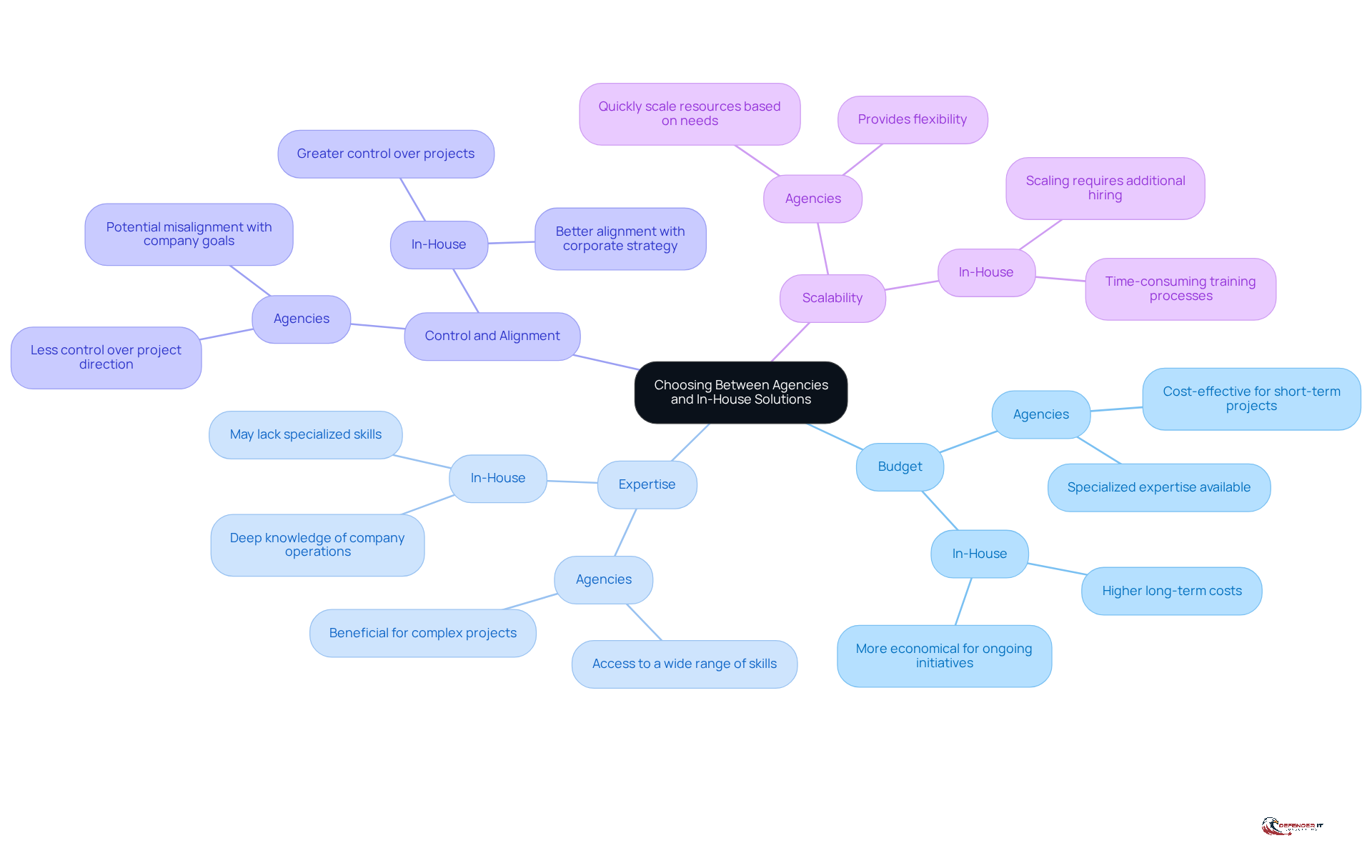
Organizations often grapple with the decision of whether to engage digital transformation agencies or develop in-house solutions, as both options present unique challenges and benefits.
-
Digital transformation agencies play a crucial role in modernizing businesses. Budget:
- Agencies: Often more cost-effective for short-term projects or when specialized expertise is needed.
- In-House: Higher long-term costs but may be more economical for ongoing initiatives.
-
Digital transformation agencies play a crucial role in modern business strategies. Expertise:
- Agencies: Provide access to a wide range of skills and experiences, particularly beneficial for complex projects.
- In-House: May lack specialized skills but have deep knowledge of the company’s operations and culture.
-
Digital transformation agencies play a crucial role in modern business strategies. Control and Alignment:
- Agencies: Less control over project direction and outcomes, which can lead to misalignment with company goals.
- In-House: Greater control and alignment with corporate strategy, fostering a cohesive approach to transformation.
-
Digital transformation agencies play a crucial role in modern business strategies. Scalability:
- Agencies: Can quickly scale resources based on project needs, providing flexibility.
- In-House: Scaling may require additional hiring and training, which can be time-consuming.
Conclusion:
Failing to evaluate these factors thoroughly may result in missed opportunities for effective transformation and alignment with strategic objectives. A hybrid approach, utilizing digital transformation agencies for specialized projects while building in-house capabilities, may also be beneficial.
Conclusion
Organizations must navigate a critical decision in the realm of digital transformation: whether to engage digital transformation agencies or develop in-house solutions. Each approach presents distinct benefits and challenges. These factors can significantly influence a company’s capacity to innovate and adapt. Understanding these options is crucial for businesses aiming to navigate the complexities of digital evolution effectively.
The article highlighted key insights regarding the strengths and weaknesses of both digital transformation agencies and in-house teams. Agencies offer expertise, scalability, and often cost-effectiveness, making them suitable for specific projects and rapid changes. Conversely, in-house solutions provide greater control, deep brand understanding, and the potential for long-term capability building. However, they may struggle with resource limitations and resistance to change. Ultimately, the success of either approach hinges on aligning strategies with organizational goals and capabilities.
In light of these considerations, organizations should carefully evaluate their unique circumstances and strategic objectives. A hybrid model that combines the strengths of both digital transformation agencies and in-house teams may offer the most effective path forward. By embracing a tailored approach, businesses can not only enhance their operational efficiency but also foster a culture of continuous innovation and adaptability. This strategic choice will ultimately determine their capacity to thrive in a rapidly evolving digital landscape.
Frequently Asked Questions
What is digital transformation?
Digital transformation refers to the integration of digital technology into all areas of a business, fundamentally changing how it operates and delivers value to customers.
What are the key concepts of digital transformation?
The key concepts of digital transformation include technology integration, cultural change, and a customer-centric approach. Technology integration involves using advanced technologies like AI and data analytics, cultural change fosters innovation and agility, and a customer-centric approach prioritizes customer needs and experiences.
Why is cultural change important in digital transformation?
Cultural change is important because it encourages organizations to embrace innovation and agility, enabling them to adapt quickly to market changes and continuously challenge the status quo.
How does a customer-centric approach benefit businesses?
A customer-centric approach benefits businesses by prioritizing customer needs and experiences, which leads to improved customer satisfaction and loyalty.
What are the benefits of digital transformation for businesses?
The benefits of digital transformation include enhanced efficiency, reduced costs, and the creation of new revenue streams, making it an essential strategy for success in a digital-first environment.
List of Sources
- Define Digital Transformation: Key Concepts and Importance
- Digital Transformation in 2026: Strategies, Benefits, & Real-World Examples | Splunk (https://splunk.com/en\_us/blog/learn/digital-transformation.html)
- Digital Transformation Is A Business Imperative In 2026 | Gateway Digital (https://thegatewaydigital.com/resources/digital-transformation-is-a-business-imperative-in-2026)
- How Digital Transformation Is Changing In 2026 (https://nextiva.com/blog/digital-transformation-trends.html)
- Digital Transformation Statistics and Facts (https://market.us/statistics/information-and-communication/digital-transformation)
- Evaluate Digital Transformation Agencies: Pros and Cons
- Pros & Cons of Digital Transformation | Insoftex.com (https://insoftex.com/pros-and-cons-of-digital-transformation)
- Pros and Cons of Outsourcing IT | 2024 IT Outsourcing Trends (https://omegasystemscorp.com/insights/blog/why-outsource-it-in-2024-pros-cons-of-outsourcing-it)
- State of Digital Transformation 2026: Enhancing Digital Strategy (https://teksystems.com/en/insights/state-of-digital-transformation-2026)
- 105+ Digital Transformation Statistics in 2026 (https://mooncamp.com/blog/digital-transformation-statistics)
- Digital Transformation in 2026: Strategies, Benefits, & Real-World Examples | Splunk (https://splunk.com/en\_us/blog/learn/digital-transformation.html)
- Assess In-House Solutions: Advantages and Challenges
- Digital Transformation Statistics and Facts (2026) (https://scoop.market.us/digital-transformation-statistics)
- Companies turn to in-house teams for cybersecurity (https://ibanet.org/companies-turn-to-in-house-teams-for-cybersecurity)
- Debunking the Myth: Why In-House IT Teams Struggle with Cyber Security Workload (https://f12.net/blog/debunking-the-myth-why-in-house-it-teams-struggle-with-cyber-security-workload)
- Digital Transformation Statistics and Facts (https://market.us/statistics/information-and-communication/digital-transformation)
- Compare and Decide: Choosing Between Agencies and In-House Solutions
- 105+ Digital Transformation Statistics in 2026 (https://mooncamp.com/blog/digital-transformation-statistics)
- Digital Transformation Cost Guide 2026: What to Expect (https://oski.site/blog/digital-transformation-cost)
- Digital Transformation Statistics and Facts (https://market.us/statistics/information-and-communication/digital-transformation)
- In-house vs Outsourcing Software Development 2026 (https://innowise.com/blog/in-house-vs-outsourcing-software-development)
- IT Services vs In-House IT: Best Choice for Businesses in 2026 (https://trustconsultingservices.com/it-services-vs-in-house-it-2026-guide)