Cyber Insurance
How to Do a Vulnerability Assessment: A Step-by-Step Guide
Published March 25, 2026
Introduction
In today’s digital landscape, understanding the potential threats within an organization’s IT infrastructure is essential. A vulnerability assessment not only identifies weaknesses but also empowers organizations to proactively defend against cyber threats. This process ensures compliance and fosters continuous improvement. However, many organizations struggle with the complexities of conducting these assessments effectively.
To navigate this intricate process, organizations must focus on safeguarding their assets and enhancing their security posture. By implementing a structured approach to vulnerability assessments, they can better protect themselves against emerging cyber threats.
Understand Vulnerability Assessments and Their Importance
A security evaluation is a systematic procedure that identifies, categorizes, and prioritizes weaknesses in an entity’s IT infrastructure. This process is essential for several reasons:
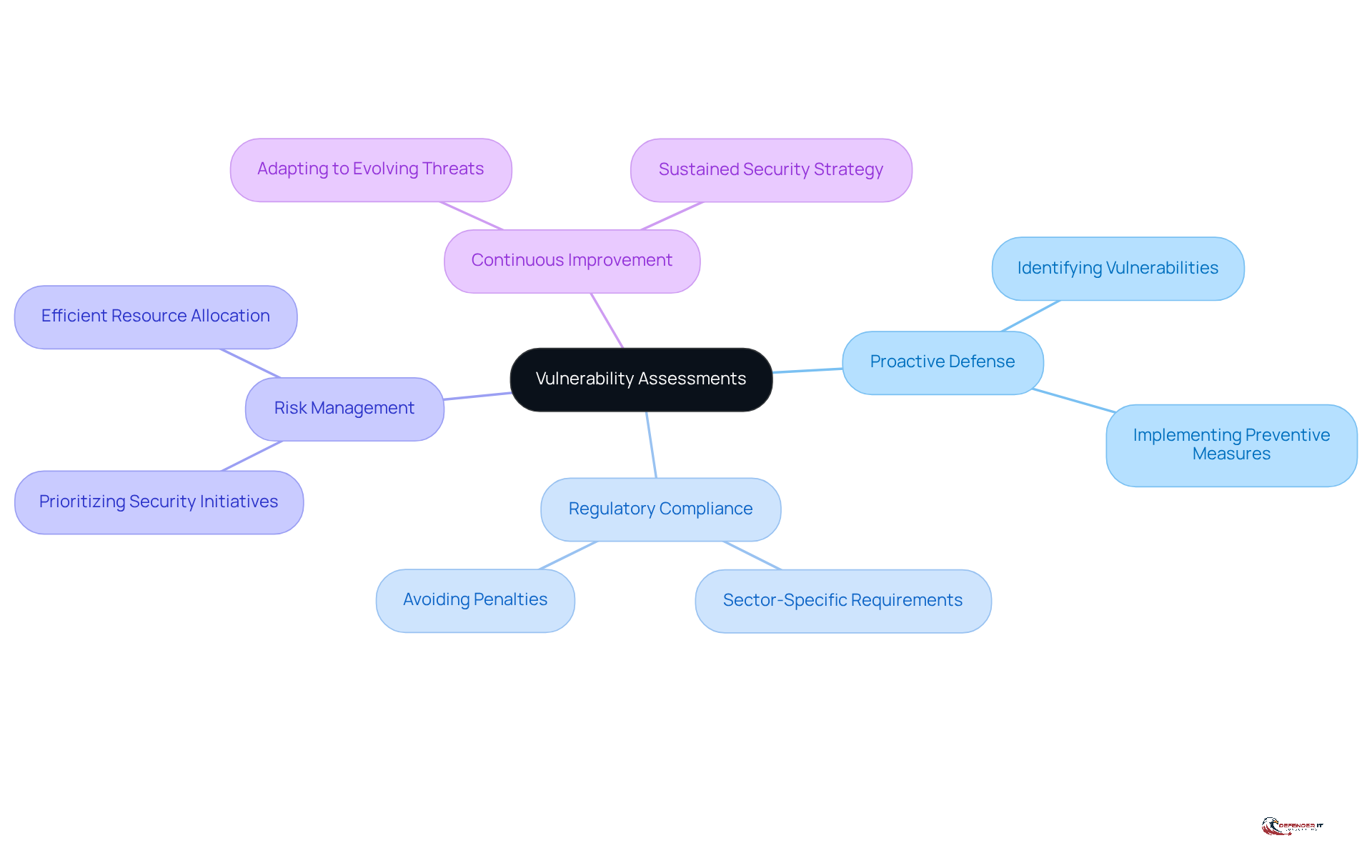
- Identifying vulnerabilities before they can be exploited allows organizations to implement security measures, safeguarding their assets.
- Many sectors, especially finance and healthcare, are required to conduct regular assessments to ensure compliance with regulations and avoid penalties.
- Recognizing weaknesses enables entities to prioritize their remediation efforts based on potential impact, facilitating more efficient allocation of resources.
- Regular evaluations contribute to a sustained security strategy, helping organizations adapt to evolving threats.
In conclusion, vulnerability assessments are a vital component of a robust security framework, empowering organizations to protect their operations and maintain trust with stakeholders.
Conduct a Comprehensive Vulnerability Assessment
To conduct a comprehensive vulnerability assessment, it is essential to follow a structured process:
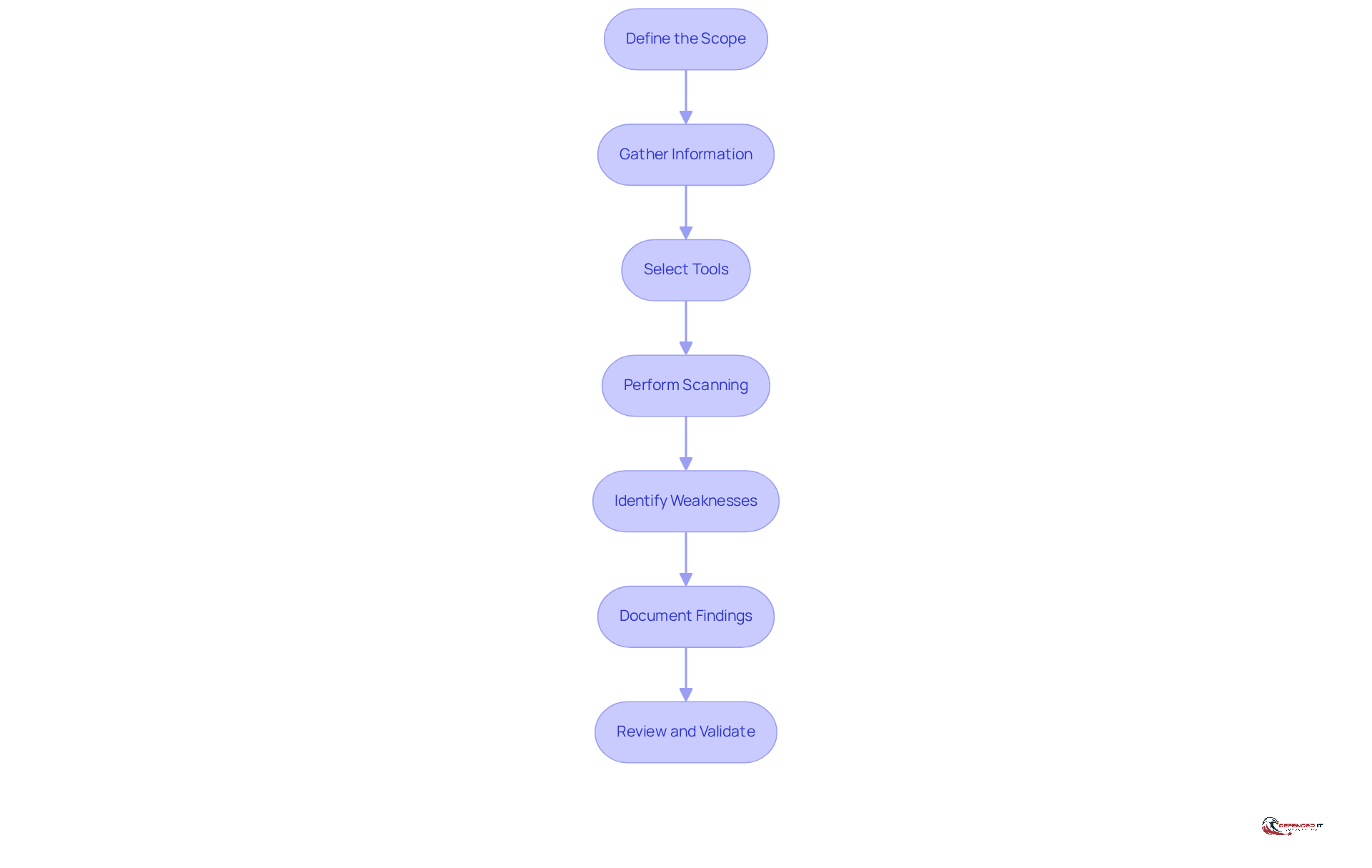
- Define the Scope: Begin by determining which systems, applications, and networks will be included in the assessment. This initial step helps focus efforts on critical assets.
- Gather Information: Collect relevant data about the systems in scope, including network diagrams, asset inventories, and existing security policies. This information is crucial for an effective assessment.
- Select Tools: Choose appropriate tools that fit your environment. Popular options include Nessus, Qualys, and OpenVAS, each offering unique features suited for different needs.
- Perform Scanning: Execute the scans using the selected tools. It is vital to ensure that scans are configured correctly to minimize the risk of false positives.
- Identify Weaknesses: Analyze the results, classifying them by severity and potential impact. This classification aids in prioritizing remediation efforts.
- Document Findings: Create a report outlining the identified weaknesses, their associated risk levels, and any relevant context. This documentation serves as a foundation for further action.
- Review and Validate: Conduct a review of the findings with relevant stakeholders to ensure accuracy and completeness. Engaging stakeholders is critical for validating the assessment results.
By adhering to these procedures, organizations can efficiently understand how to do a vulnerability assessment and prepare for the subsequent stages of the evaluation process.
Analyze Findings and Report Results to Stakeholders
Once the assessment is complete, the next step is to analyze findings and report them to stakeholders. This process can be broken down into several key actions:
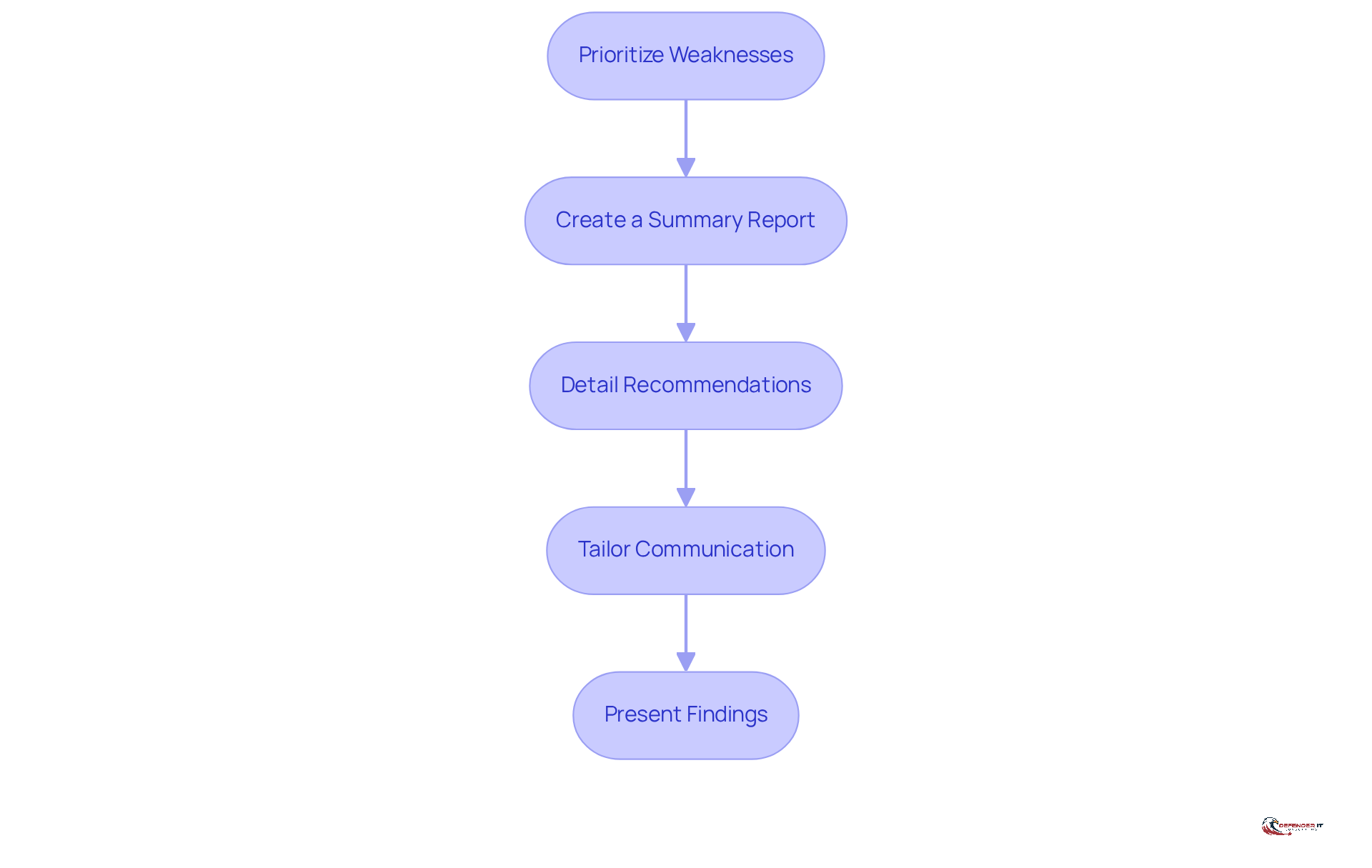
- Prioritize Weaknesses: Employ a risk-based approach to rank weaknesses based on their severity and potential impact on the organization.
- Create a Report: Develop a document that highlights key metrics, including the number of identified weaknesses, their severity levels, and any observed trends.
- Detail Recommendations: Provide suggestions, specifying timelines and assigning accountability for addressing each vulnerability.
- Tailor Communication: Adjust the report’s language and detail level according to the audience. Executives may require high-level insights, while technical teams will need detailed technical information.
- Schedule a Meeting: Schedule a meeting with stakeholders to present the findings, facilitating discussion and questions. This engagement fosters a collaborative approach to improvement.
Effective reporting not only informs stakeholders but also drives action towards enhancing the organization’s security posture.
Implement Remediation Strategies for Identified Vulnerabilities
After examining findings and presenting results, remediation is essential. Follow these steps:
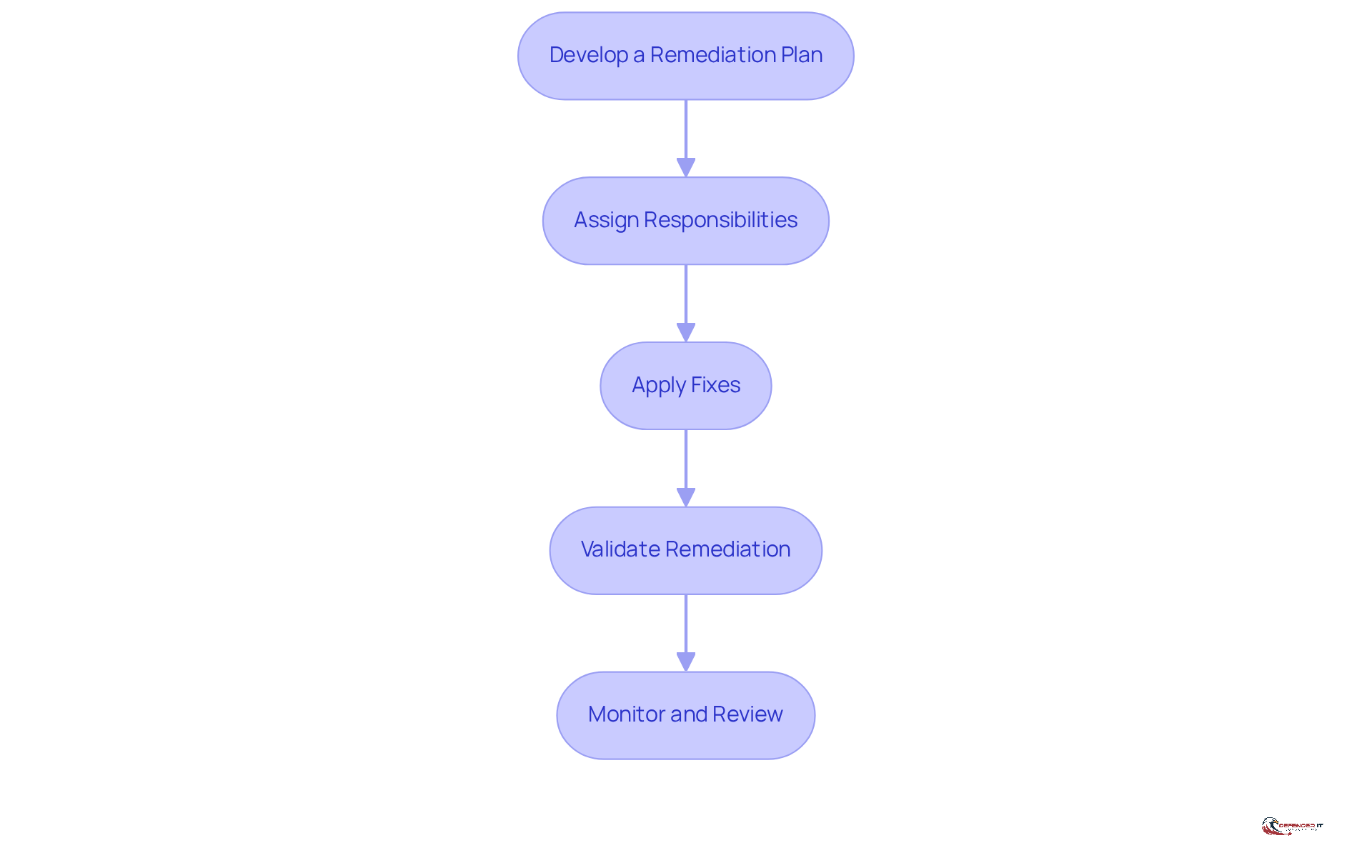
- Develop a Remediation Plan: Create a plan, including timelines and required resources. This structured approach minimizes gaps in the patching process and promotes departmental integration.
- Assign Responsibilities: Clearly designate team members or departments accountable for each corrective action. This clarity is crucial for accountability and ensures that actions are effectively coordinated. As Joseph M. Saunders, founder and CEO of RunSafe Security, highlights, an absence of accountability concerning recovery duties can impede advancement, especially in intricate settings.
- Apply Fixes: Implement the fixes, which may involve patching software, reconfiguring systems, or enhancing security controls. This process is essential to prevent attackers from exploiting weaknesses. Organizations may discover that during a vulnerability assessment, up to 30,000 weaknesses can be identified across 5,000 assets, highlighting the scale of the issue.
- Validate: After applying corrections, perform follow-up scans to confirm that weaknesses have been effectively resolved. Validation is a crucial phase in the risk management lifecycle, verifying that measures have been effective.
- Monitor and Review: Establish a continuous monitoring process to ensure that new weaknesses are identified and addressed promptly. Regular monitoring helps maintain a robust security posture and adapt to the evolving threat landscape.
By implementing these strategies, entities can significantly reduce their vulnerabilities and enhance their overall security. In 2026, the average time to remediate vulnerabilities will be a critical metric, with organizations striving to improve their Mean Time to Remediate (MTTR) to ensure efficiency. This proactive approach is essential for maintaining compliance and safeguarding sensitive information.
Conclusion
Conducting a vulnerability assessment is essential for any organization seeking to secure its IT infrastructure effectively. By systematically identifying and prioritizing weaknesses, organizations can proactively defend against potential threats, comply with regulatory requirements, and enhance their overall security posture. This guide has outlined the critical steps necessary for a thorough vulnerability assessment, underscoring the importance of a structured approach in safeguarding valuable assets.
Key insights from this guide highlight the necessity of:
- Defining the scope
- Gathering relevant information
- Selecting appropriate tools
- Analyzing findings to report results effectively
Each stage, from conducting scans to implementing remediation strategies, plays a vital role in not only identifying vulnerabilities but also ensuring that corrective actions are taken promptly and efficiently. Engaging stakeholders throughout the process fosters collaboration and accountability, ultimately leading to a more secure environment.
As the cybersecurity landscape continues to evolve, organizations must prioritize vulnerability assessments as an integral component of their security strategy. By adopting best practices and maintaining a proactive stance, organizations can protect sensitive information while fostering trust and confidence among stakeholders. Embracing these assessments transcends mere regulatory compliance; it represents a strategic imperative that enables organizations to navigate the complexities of today’s cyber threats effectively.
Frequently Asked Questions
What is a vulnerability assessment?
A vulnerability assessment is a systematic procedure that identifies, categorizes, and prioritizes weaknesses in an entity’s IT infrastructure.
Why are vulnerability assessments important?
They are important for several reasons: they allow for proactive defense against potential threats, ensure regulatory compliance, facilitate effective risk management, and contribute to continuous improvement of security strategies.
How do vulnerability assessments contribute to proactive defense?
By identifying vulnerabilities before they can be exploited, organizations can implement preventive measures to safeguard their assets.
What role do vulnerability assessments play in regulatory compliance?
Many sectors, particularly finance and healthcare, are required to conduct regular risk evaluations to comply with regulations and avoid penalties.
How do organizations use vulnerability assessments for risk management?
Recognizing weaknesses enables organizations to prioritize their security initiatives based on potential impact, allowing for more efficient allocation of resources.
In what way do vulnerability assessments support continuous improvement?
Regular evaluations help organizations adapt to evolving threats, contributing to a sustained security strategy.
What is the overall conclusion regarding security evaluations?
Security evaluations are a vital component of a robust cybersecurity strategy, empowering organizations to protect their operations and maintain trust with stakeholders.
List of Sources
- Understand Vulnerability Assessments and Their Importance
- Top Cybersecurity Statistics for 2026 | Cobalt (https://cobalt.io/blog/top-cybersecurity-statistics-for-2026)
- infosecurity-magazine.com (https://infosecurity-magazine.com/risk-and-vulnerability-assessment)
- Cyber threats to watch in 2026 – and other cybersecurity news (https://weforum.org/stories/2026/02/2026-cyberthreats-to-watch-and-other-cybersecurity-news)
- getastra.com (https://getastra.com/blog/security-audit/cyber-security-vulnerability-statistics)
- 205 Cybersecurity Stats and Facts for 2026 (https://vikingcloud.com/blog/cybersecurity-statistics)
- Conduct a Comprehensive Vulnerability Assessment
- siemba.io (https://siemba.io/planning-security-assessment-toolkit-for-cisos)
- Ultimate Guide to Vulnerability Assessment: What, Why & How (2026 Edition) (https://acronis.com/en/blog/posts/ultimate-guide-to-vulnerability-assessment-2026)
- cybri.com (https://cybri.com/blog/a-startups-guide-to-vulnerability-testing-for-2026)
- qualysec.com (https://qualysec.com/vulnerability-assessment-methodology)
- cybercrestcompliance.com (https://cybercrestcompliance.com/blog/vulnerability-management-best-practices)
- Analyze Findings and Report Results to Stakeholders
- rhisac.org (https://rhisac.org/vulnerability-management/reporting-results-assessment)
- getastra.com (https://getastra.com/blog/security-audit/cyber-security-vulnerability-statistics)
- linkedin.com (https://linkedin.com/advice/3/what-effective-ways-share-vulnerability-assessment-bj26f)
- brinqa.com (https://brinqa.com/blog/vulnerability-management-reporting-to-board)
- intigriti.com (https://intigriti.com/blog/business-insights/vulnerability-assessment-reporting)
- Implement Remediation Strategies for Identified Vulnerabilities
- sentinelone.com (https://sentinelone.com/cybersecurity-101/cybersecurity/15-vulnerability-remediation-best-practices)
- vicarius.io (https://vicarius.io/articles/vulnerability-remediation-complete-process-challenges-and-automated-best-practices)
- darkreading.com (https://darkreading.com/security-now/researchers-seek-best-vulnerability-remediation-strategy)
- industrialcyber.co (https://industrialcyber.co/cisa/federal-agencies-face-90-day-deadline-under-cisa-order-to-remediate-vulnerable-edge-devices)
- cisa.gov (https://cisa.gov/news-events/alerts/2026/03/20/cisa-adds-five-known-exploited-vulnerabilities-catalog)