General
Master CMMC Level 2 Certification: Key Steps for Security Leaders
Published March 4, 2026
Introduction
Achieving CMMC Level 2 certification is not just a regulatory requirement; it signifies a crucial milestone for organizations managing Controlled Unclassified Information (CUI) within the defense sector. Given the evolving landscape of cybersecurity threats, the demand for robust security frameworks has never been more critical. CMMC Level 2 certification provides a structured pathway to enhanced protection and compliance.
However, a concerning 62% of defense contractors do not meet the necessary governance controls. This raises an important question: how can organizations effectively navigate the complexities of the certification process to strengthen their cybersecurity posture and secure essential contracts?
Understand CMMC Level 2: Purpose and Importance
[[[CMMC Level 2 certification](https://defenderit.consulting/choose-the-right-cmmc-[compliance](https://defenderit.consulting)\-company-in-6-steps/)\](https://defenderit.consulting/choose-the-right-cmmc-compliance-company-in-6-steps/)\](https://defenderit.consulting/choose-the-right-cmmc-compliance-company-in-6-steps/) significantly enhancing their security posture. The certification is critical for companies seeking contracts with the Department of Defense (DoD), as it mandates compliance and the implementation of stringent cybersecurity measures to safeguard sensitive information from unauthorized access and breaches. Notably, 62% of defense contractors lack the comprehensive governance controls necessary for compliance, highlighting the urgent need for organizations to adopt these standards.
The certification process not only meets regulatory requirements but also builds trust with clients and partners by achieving compliance. By establishing a robust security framework, organizations can effectively adapt to evolving cyber threats, thereby protecting their reputation and operational integrity. For instance, a tailored approach to Level 2 has enabled companies to achieve significant cost savings by avoiding expensive enterprise-wide security systems, with some firms reporting substantial financial benefits.
Real-world cases underscore the importance of Level 2 certification. Organizations that have successfully adopted these standards have observed a marked improvement in their security posture. One client identified 20 key assets and pinpointed critical Security Protection Assets (SPAs) to mitigate risks. This strategic emphasis not only enhances security but also positions organizations favorably within the defense supply chain, facilitating access to vital contracts.
As cybersecurity leaders navigate the complexities of the Level 2 framework, grasping its significance is imperative. The credential serves as a foundation for developing effective governance structures, which are essential for overseeing and mitigating risks associated with Controlled Unclassified Information (CUI). By prioritizing compliance, organizations can enhance their security posture and achieve enduring success in a competitive landscape. Furthermore, entities are encouraged to leverage special offers, such as the initial gap review service available for $995, to initiate their journey.

Explore CMMC Level 2 Compliance Requirements and Controls
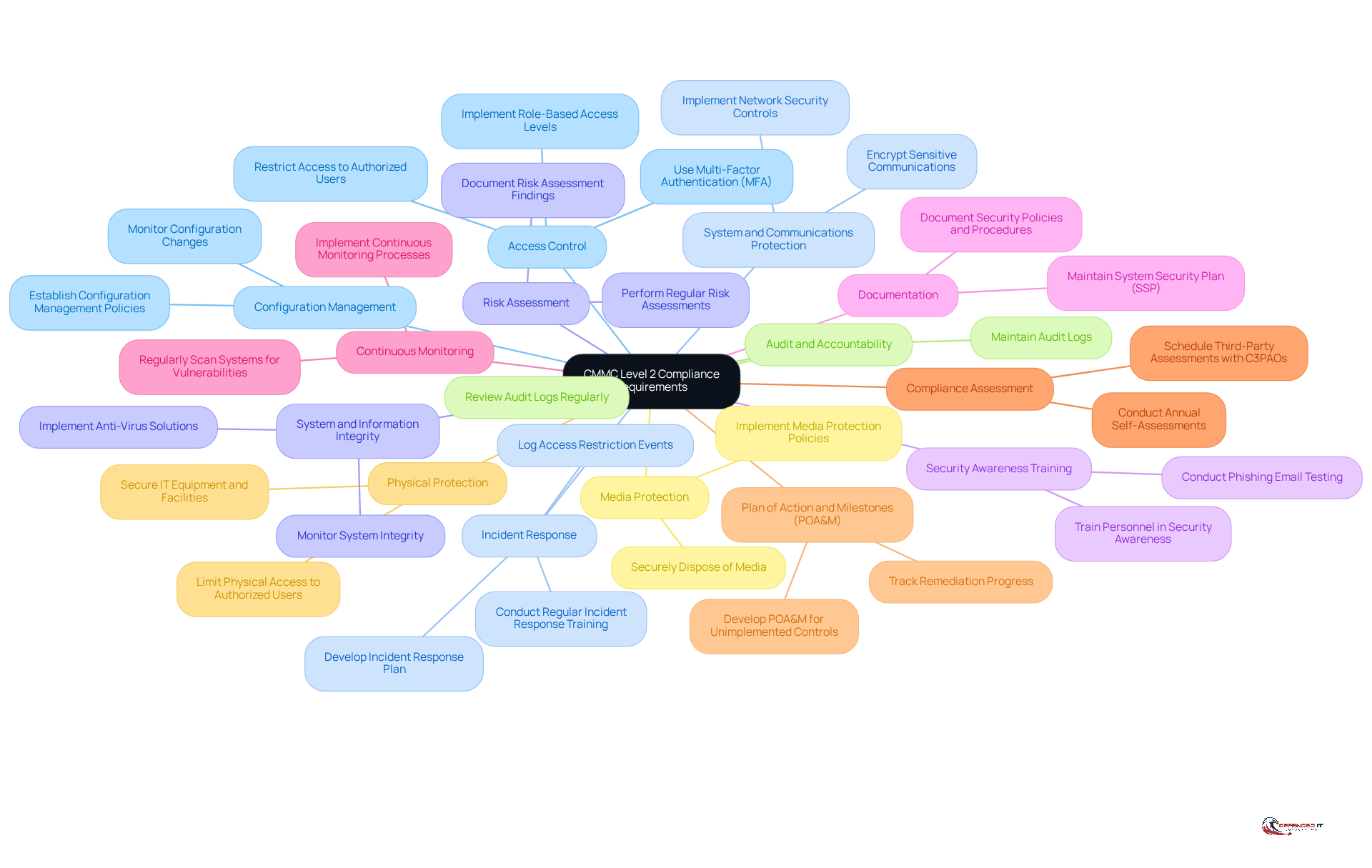
Level 2 necessitates the implementation of controls derived from NIST SP 800-171, organized into 14 categories such as Access Control, Awareness and Training, and Risk Assessment. Organizations must formulate a comprehensive System Security Plan (SSP) that outlines their strategies for fulfilling these controls. Key practices include:
- Performing regular assessments
- Training personnel in security awareness
- Thoroughly documenting processes
Additionally, entities are required to log all instances where access was restricted due to changes in IT systems, ensuring meticulousness in their security practices.
Achieving compliance may demand a commitment of 40 hours per week over 18 months, highlighting the significant resource investment required. Furthermore, organizations must conduct an assessment to confirm compliance with all 110 controls, underscoring the importance of routine assessments in the compliance process. By comprehensively understanding these regulatory requirements, companies can establish a systematic approach to attain certification, ultimately enhancing their security posture against emerging threats.
Navigate the CMMC Level 2 Assessment Process: Self vs. Third-Party
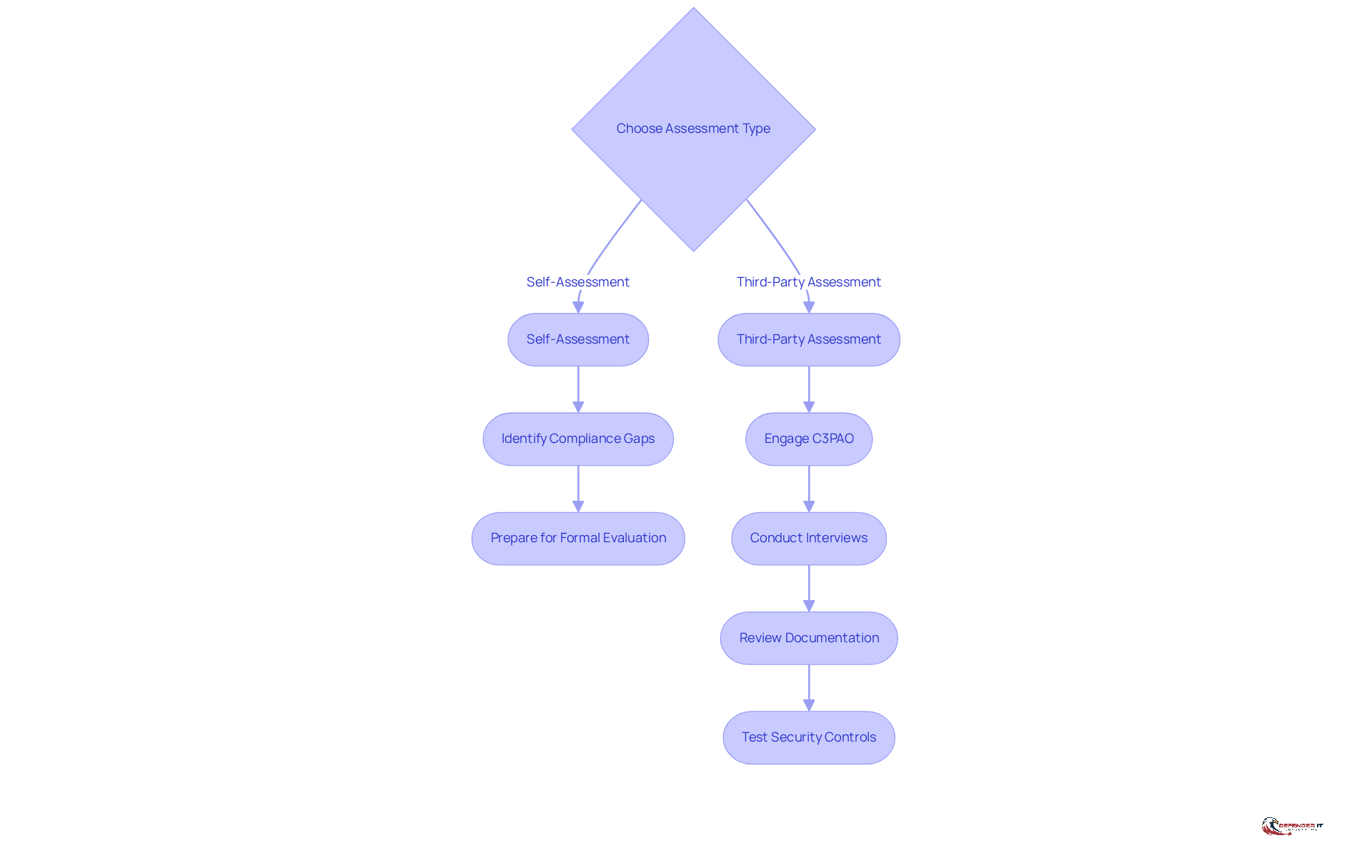
Organizations seeking certification can choose to conduct a self-assessment or work with a Certified Organization (C3PAO). A self-assessment allows organizations to internally assess their compliance, which can be beneficial for identifying gaps and preparing for a formal evaluation. Conversely, many organizations opt for a third-party assessment to ensure an unbiased evaluation of their security posture. The C3PAO will perform interviews, review documentation, and test security controls to confirm compliance. Understanding the nuances of each assessment method enables organizations to select the most appropriate path for their qualification journey.
Prepare for CMMC Level 2 Certification: Best Practices and Challenges
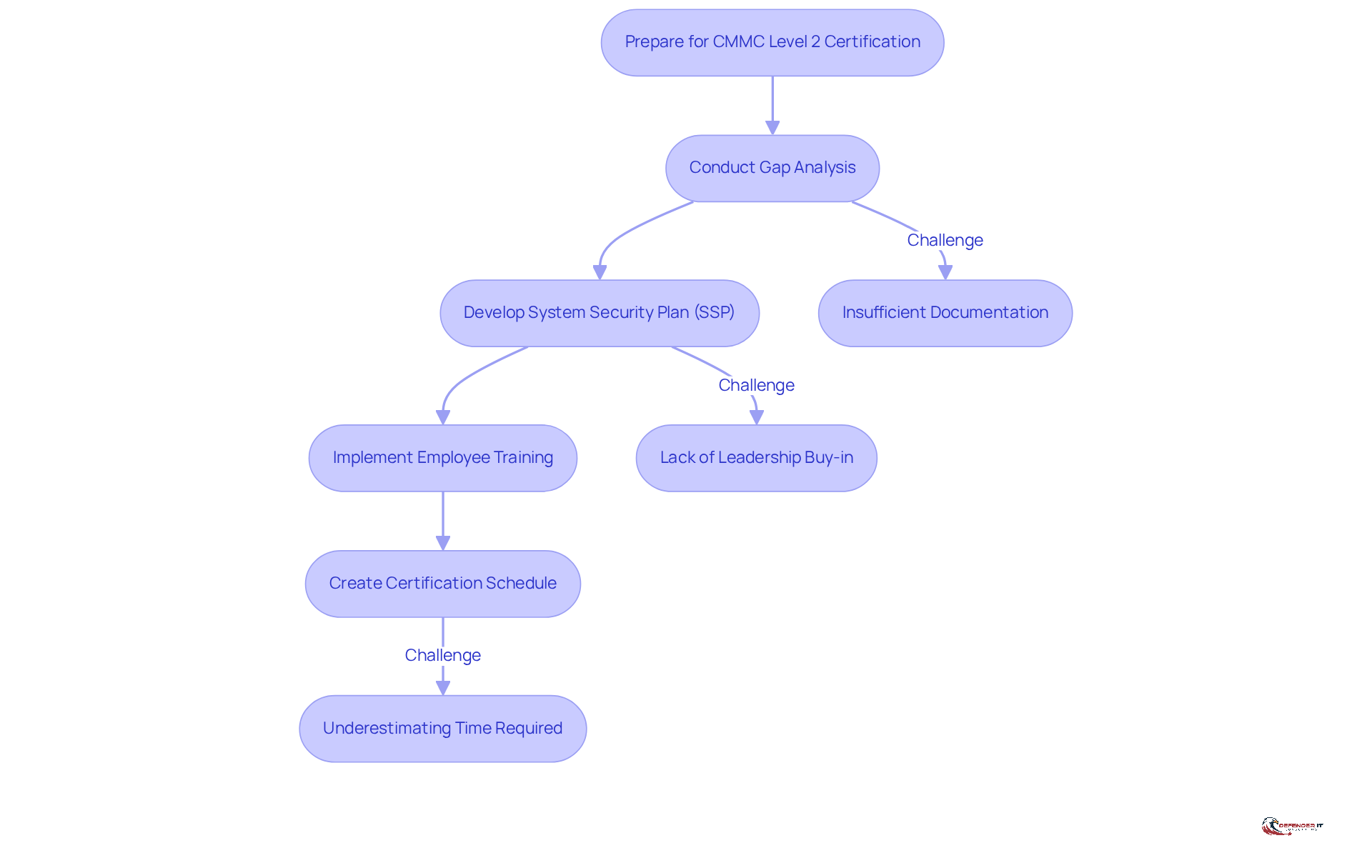
To effectively prepare, entities must implement several best practices. A thorough assessment is essential to pinpoint areas requiring improvement, followed by the development of a comprehensive System Security Plan (SSP) that clearly documents security controls and procedures. Regular training for employees on security policies and procedures is crucial to foster a culture of security. Additionally, creating a practical schedule for attaining compliance standards is essential, providing ample time to resolve any identified gaps.
Common challenges include:
- Insufficient documentation
- Lack of leadership buy-in
- Underestimating the time required for preparation
Many entities discover that arranging evaluations requires months of advance notice due to the rising demand for assessments, which may result in delays in the approval process. Furthermore, the defense industry has seen a nearly 200% increase in organizations seeking certification over the last six months, underscoring the urgency. By proactively addressing these challenges, organizations can streamline their certification process and significantly enhance their security posture, positioning themselves favorably in the competitive landscape of defense contracting.
Conclusion
Achieving CMMC Level 2 certification is essential for organizations that handle Controlled Unclassified Information (CUI) and aim to strengthen their cybersecurity frameworks. This certification not only fulfills regulatory requirements but also builds trust among clients and partners, positioning companies advantageously within the defense supply chain. As cyber threats evolve, the need for robust security measures has never been more critical.
The significance of implementing 110 security controls from NIST SP 800-171 is paramount for compliance with CMMC Level 2. Key practices such as:
- Regular risk assessments
- Employee training
- Comprehensive documentation
are vital components of an effective compliance strategy. Organizations must also navigate considerable challenges, including:
- Resource allocation
- The necessity for strong leadership support
which should be addressed proactively to facilitate the certification process.
In light of these considerations, organizations are urged to prioritize CMMC Level 2 certification as a foundational aspect of their cybersecurity strategy. By adopting best practices and preparing thoroughly for the assessment process, companies can enhance their security posture, mitigate risks associated with CUI, and ultimately succeed in the competitive defense contracting landscape. The urgency to act is clear, as the demand for CMMC Level 2 certification continues to grow, making it imperative for organizations to initiate their compliance journey without delay.
Frequently Asked Questions
What is CMMC Level 2 certification?
CMMC Level 2 certification is a cybersecurity standard essential for entities managing Controlled Unclassified Information (CUI) and is critical for companies seeking contracts with the Department of Defense (DoD). It mandates compliance with 110 controls and the implementation of stringent cybersecurity measures.
Why is CMMC Level 2 certification important?
CMMC Level 2 certification enhances an organization’s cybersecurity posture, builds trust with clients and partners, and ensures compliance with regulatory requirements. It also helps protect sensitive information from unauthorized access and breaches.
What percentage of defense contractors lack the necessary governance controls for CMMC Level 2 certification?
Approximately 62% of defense contractors lack the comprehensive governance controls necessary for CMMC Level 2 certification.
How can organizations benefit financially from achieving CMMC Level 2 certification?
Organizations can achieve significant cost savings by adopting a tailored approach to Level 2 compliance, which allows them to avoid expensive enterprise-wide security systems, leading to substantial financial benefits.
What are some real-world impacts of achieving CMMC Level 2 certification?
Organizations that have adopted CMMC Level 2 standards have observed a decrease in their cyber risk profiles. For example, one client identified 20 key assets and critical Security Protection Assets (SPAs) to mitigate CUI exposure, ensuring compliance and improving their position within the defense supply chain.
What is the significance of developing effective governance structures in relation to CMMC Level 2?
Developing effective governance structures is essential for overseeing compliance and mitigating risks associated with CUI. CMMC Level 2 certification serves as a foundation for these governance frameworks.
What initial service is being offered to help organizations start their compliance journey?
Organizations are encouraged to leverage special offers such as an initial gap review service available for $995 to initiate their compliance journey toward CMMC Level 2 certification.
List of Sources
- Understand CMMC Level 2: Purpose and Importance
- Lloyd F. Moss Free Clinic’s Transformation Case Study (https://it-va.com/blog/cmmc-level-2-certification-case-study-navigating-complexity-for-a-logistics-and-consulting-company)
- CMMC 2.0 Governance Crisis: Data Shows 62% of Defense Contractors Lack Critical Controls for Certification Success (https://kiteworks.com/cmmc-compliance/over-half-dod-cmmc-suppliers-fail-governance)
- CMMC Preparation Case Study Kyber Security (https://kybersecure.com/cmmc-preparation-case-study)
- Tanium Achieves CMMC Level 2 Certification, Powering Cyber Readiness and Compliance Across U.S. Defense Industrial Base (https://businesswire.com/news/home/20260303583752/en/Tanium-Achieves-CMMC-Level-2-Certification-Powering-Cyber-Readiness-and-Compliance-Across-U.S.-Defense-Industrial-Base)
- omnivistaconsulting.com (https://omnivistaconsulting.com/omnivista-consulting-case-study-by-sprinto)
- Explore CMMC Level 2 Compliance Requirements and Controls
- A Guide to CMMC Level 2 Compliance Requirements (https://kiteworks.com/risk-compliance-glossary/a-guide-to-cmmc-level-2-compliance-requirements)
- scrut.io (https://scrut.io/hub/cmmc/controls)
- corsicatech.com (https://corsicatech.com/resources/cmmc-case-study)
- CMMC 2.0 Level 2 Simplified: Steps, Controls List & Checklist (https://strikegraph.com/blog/cmmc-2-level-2-requirements)
- CMMC Levels Explained | Alluvionic (https://alluvionic.com/cybersecuritycompliance/cmmc/cmmc-levels-explained)
- Navigate the CMMC Level 2 Assessment Process: Self vs. Third-Party
- CMMC Certification vs. Self-Assessment What You Need to Know (https://agileit.com/news/cmmc-certification-vs-self-assessment-what-you-need-to-know)
- klcconsulting.net (https://klcconsulting.net/cmmc-and-nist-resources/case-studies)
- Report finds large gap in CMMC readiness among defense industrial base (https://defensescoop.com/2025/01/28/redspin-report-cmmc-readiness-gap-2025-defense-industrial-base)
- cybersheath.com (https://cybersheath.com/resources/blog/state-of-the-dib-report-2025-only-1-of-contractors-are-ready-for-cmmc)
- Prepare for CMMC Level 2 Certification: Best Practices and Challenges
- CMMC Compliance in 2026: How Did We Get Here and What’s Coming Next (https://112cyber.com/blog/cmmc-compliance-in-2026)
- CMMC 2.0 Governance Crisis: Data Shows 62% of Defense Contractors Lack Critical Controls for Certification Success (https://kiteworks.com/cmmc-compliance/over-half-dod-cmmc-suppliers-fail-governance)
- klcconsulting.net (https://klcconsulting.net/cmmc-and-nist-resources/case-studies)