General
Master Managed Detection Response: Essential Insights for Security Leaders
Published January 31, 2026
Introduction
Managed Detection and Response (MDR) stands as a cornerstone of modern cybersecurity, integrating advanced technology with human expertise to address an increasingly complex threat landscape. As organizations face a surge in sophisticated cyber risks, the adoption of MDR services provides a proactive strategy for continuous monitoring, incident response, and risk mitigation. Given the rapid evolution of threats, security leaders must ensure that their strategies not only keep pace but also effectively protect their digital assets. This article explores essential insights into MDR, examining its critical role, benefits, and the necessary steps for successful implementation.
Define Managed Detection and Response (MDR)
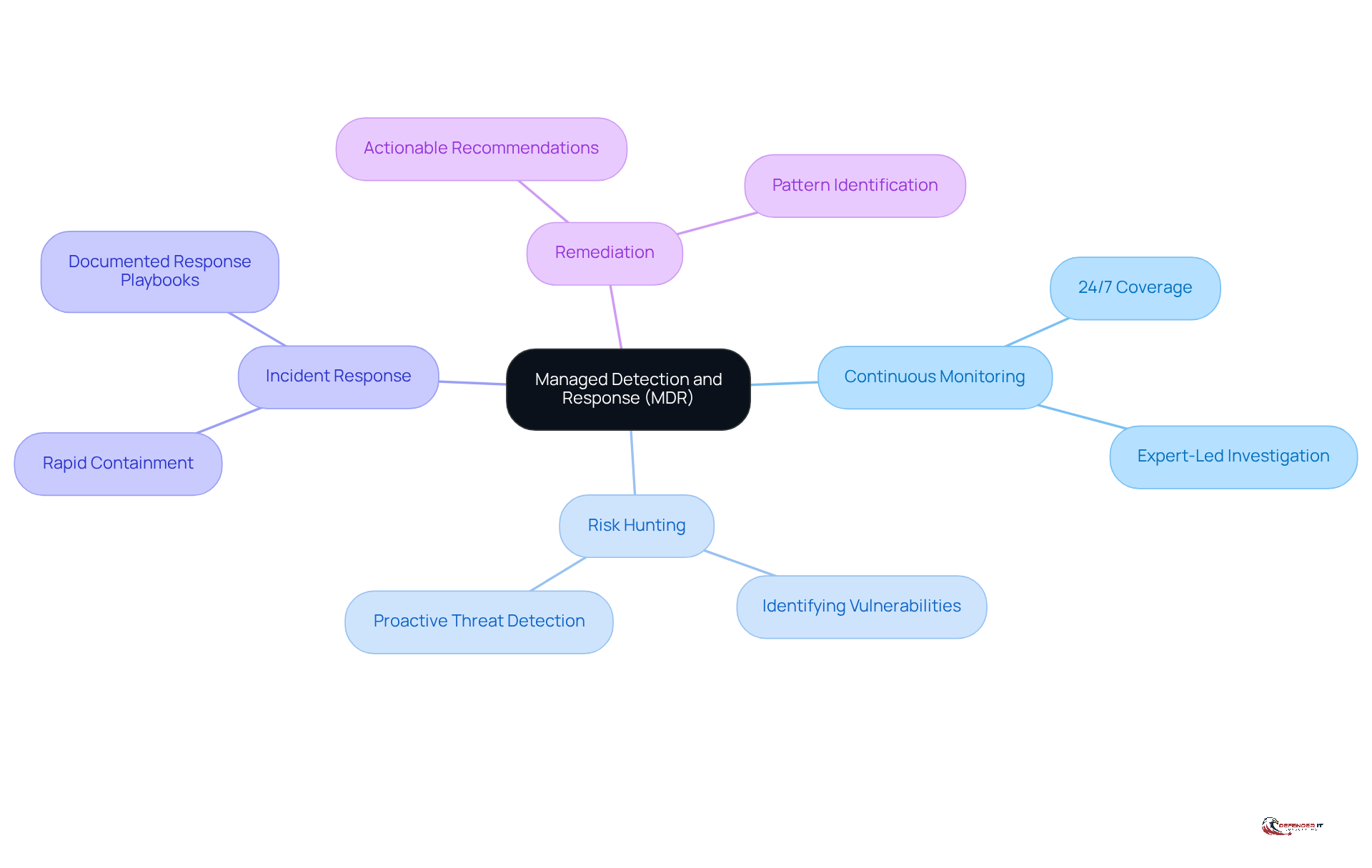
(MDR) is a vital solution that combines advanced technology with human expertise to monitor, detect, and respond to threats in real-time. The core components of MDR include:
- Continuous monitoring
- Risk hunting
- Remediation
By leveraging a security operations center (SOC), organizations can benefit from managed detection and response providers who implement a proactive strategy to identify and mitigate potential threats before they escalate into significant incidents. Furthermore, the managed detection and response (MDR) acts as an operational layer that translates protective intent into daily execution, ensuring that safety measures are effectively enforced.
Real-world applications of MDR have demonstrated its effectiveness in various industries. For instance, organizations facing complex hybrid environments have employed MDR to gain comprehensive visibility across endpoints, identities, and networks, facilitating rapid detection and response to threats. An effective MDR partner not only addresses immediate incidents but also helps reduce future risks by identifying patterns and providing actionable recommendations.
By 2026, a substantial percentage of organizations are expected to adopt MDR services, propelled by regulatory and insurance mandates that promote the implementation of enhanced monitoring and response capabilities. This trend highlights the increasing acknowledgment of managed detection and response as a vital element in cybersecurity and ensuring compliance with industry standards. The global managed detection and response (MDR) market was valued at USD 2.31 billion in 2025 and is anticipated to grow to USD 2.81 billion in 2026, underscoring the rising significance of MDR in the evolving cybersecurity landscape.
Explain the Need for MDR in Modern Cybersecurity
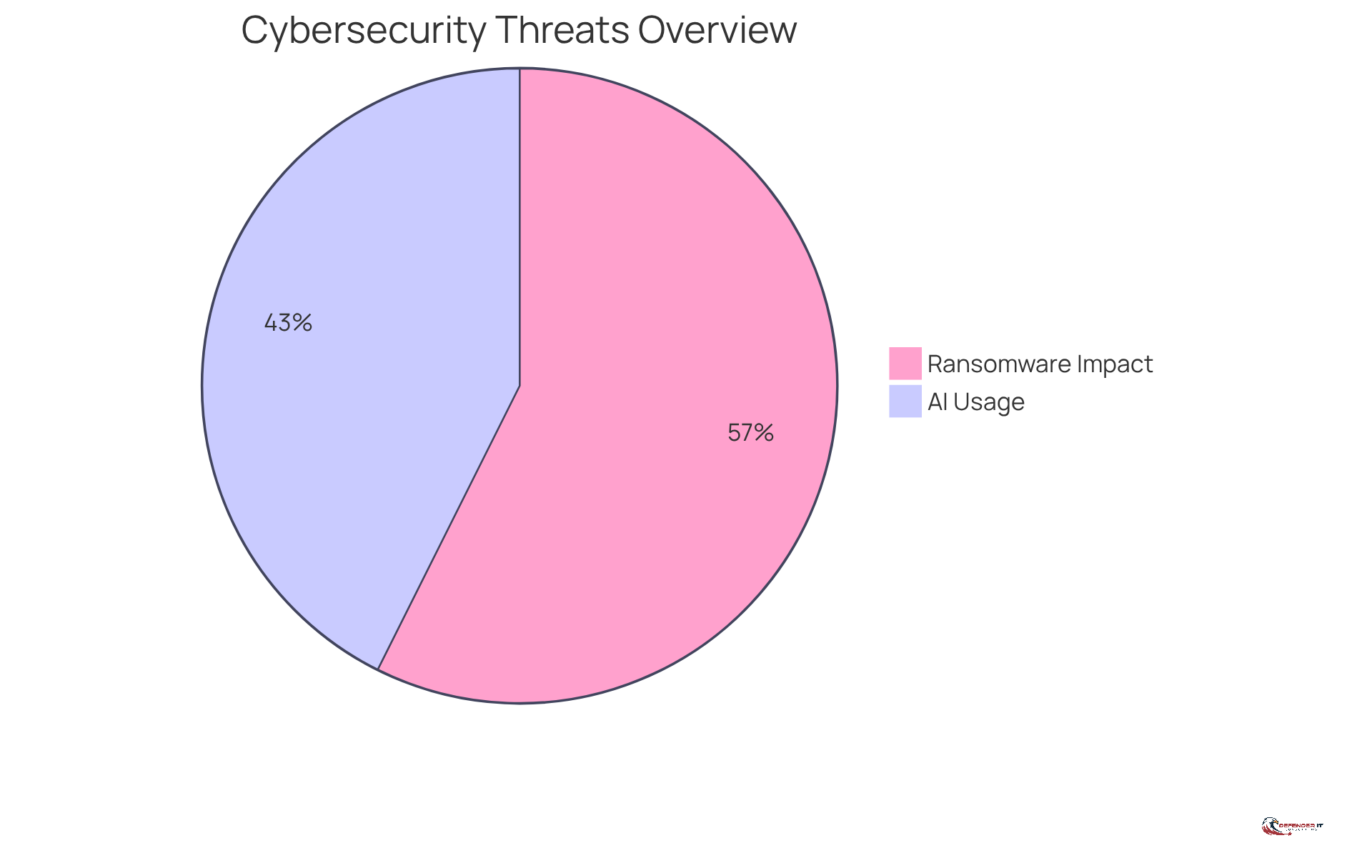
In the current digital landscape, organizations face an increasing array of complex threats that traditional protective measures often fail to address. The limitations of conventional security tools, which may lack sufficient visibility and rapid response capabilities, underscore the necessity for managed detection and response. Ransomware currently represents the most significant global threat, affecting 72.7% of entities, which highlights the urgent need for effective cybersecurity solutions.
Moreover, 54% of business owners are leveraging AI to simulate risks as a preparatory tactic against cyberattacks, illustrating the importance of proactive measures. Managed detection and response effectively fills this gap by providing continuous monitoring and proactive risk hunting, which enables organizations to respond in real-time. As cyber threats evolve, integrating MDR into a company’s defense strategy becomes essential for maintaining resilience and meeting regulatory requirements.
Additionally, with cybercrime projected to cost businesses up to $10.5 trillion by 2025, the stakes are substantial. The anticipated 29% increase in demand for information protection analysts, surpassing the average need across all professions by 2033, further emphasizes the need for MDR to adeptly navigate the growing complexity of cybersecurity challenges.
Highlight the Benefits of Implementing MDR
Implementing MDR provides significant advantages for organizations, including:
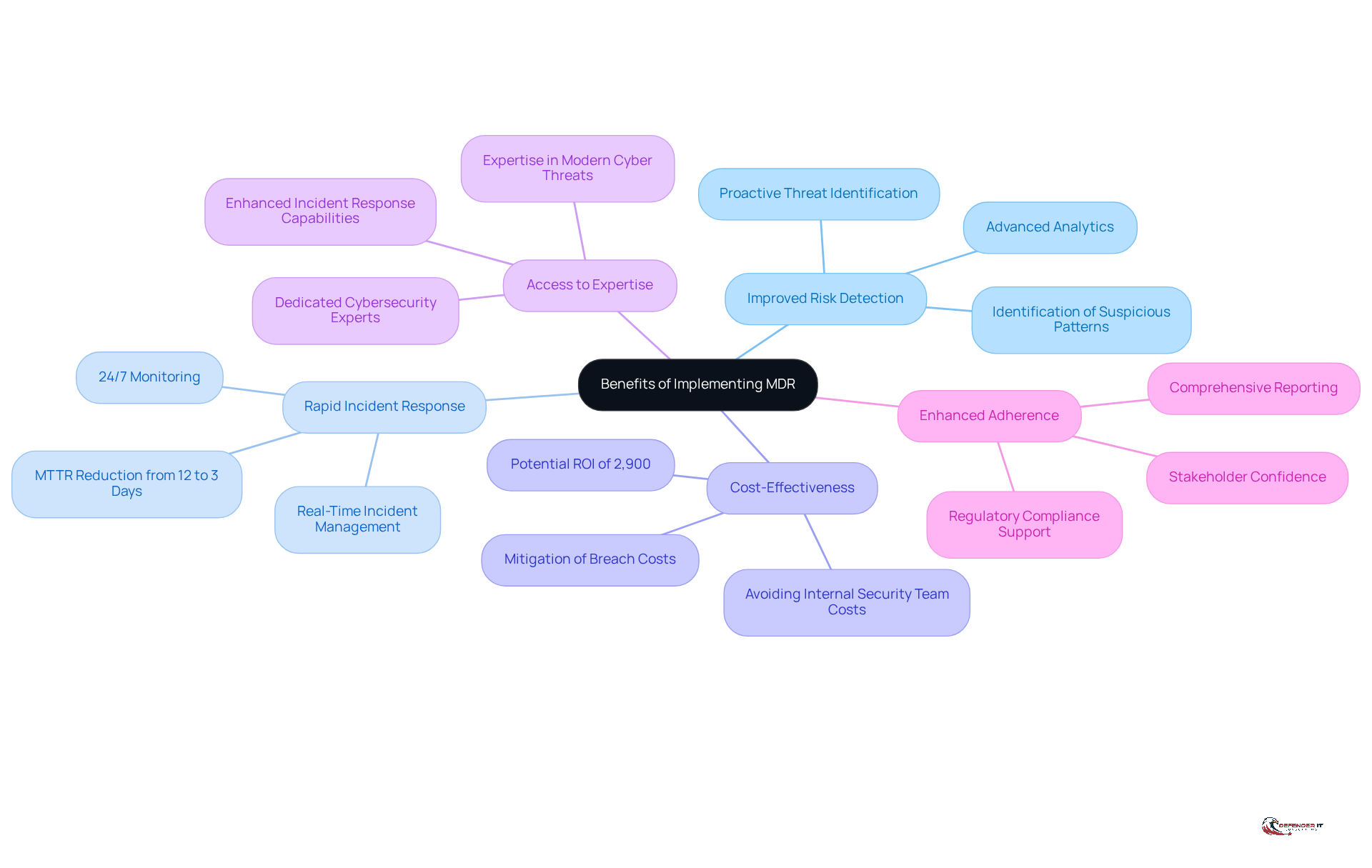
- Improved Risk Detection: MDR services leverage advanced technologies to identify potential threats that traditional security measures might miss. This proactive strategy is essential, especially as many ransomware attacks now involve data theft and extortion, which necessitate advanced capabilities. Furthermore, MDR plays a critical role in uncovering suspicious patterns that standard alerts may fail to detect.
- Rapid Incident Response: With continuous 24/7 monitoring, MDR providers can address incidents in real-time, greatly reducing damage and recovery time. For example, organizations that have implemented MDR have reported a decrease in MTTR from 12 days to just three days. This reduction translates into substantial time and cost savings compared to those relying solely on alert-based systems, which often result in delays in containment.
- Cost-Effectiveness: Outsourcing security operations to an MDR provider allows companies to avoid the high costs of maintaining an in-house security team. Investing in MDR can yield a return on investment as high as 2,900%, highlighting its potential to mitigate substantial breach costs and provide financial protection against potential incidents.
- Organizations gain access to specialized expertise, which provides support from dedicated professionals to identifying and mitigating risks. This expertise is crucial in navigating the complexities of modern cyber threats, particularly as organizations face faster attacks with limited internal resources. A dedicated team focused on outcomes further enhances the effectiveness of security measures.
- Enhanced Adherence: MDR services assist organizations in meeting compliance requirements of incidents and their responses. This capability not only improves compliance readiness but also instills confidence among stakeholders, including CFOs and board members, who increasingly demand evidence of continuous monitoring and effective incident management.
Identify Types of MDR Services and Solutions
MDR services can be categorized into several types, each designed to address specific security needs:
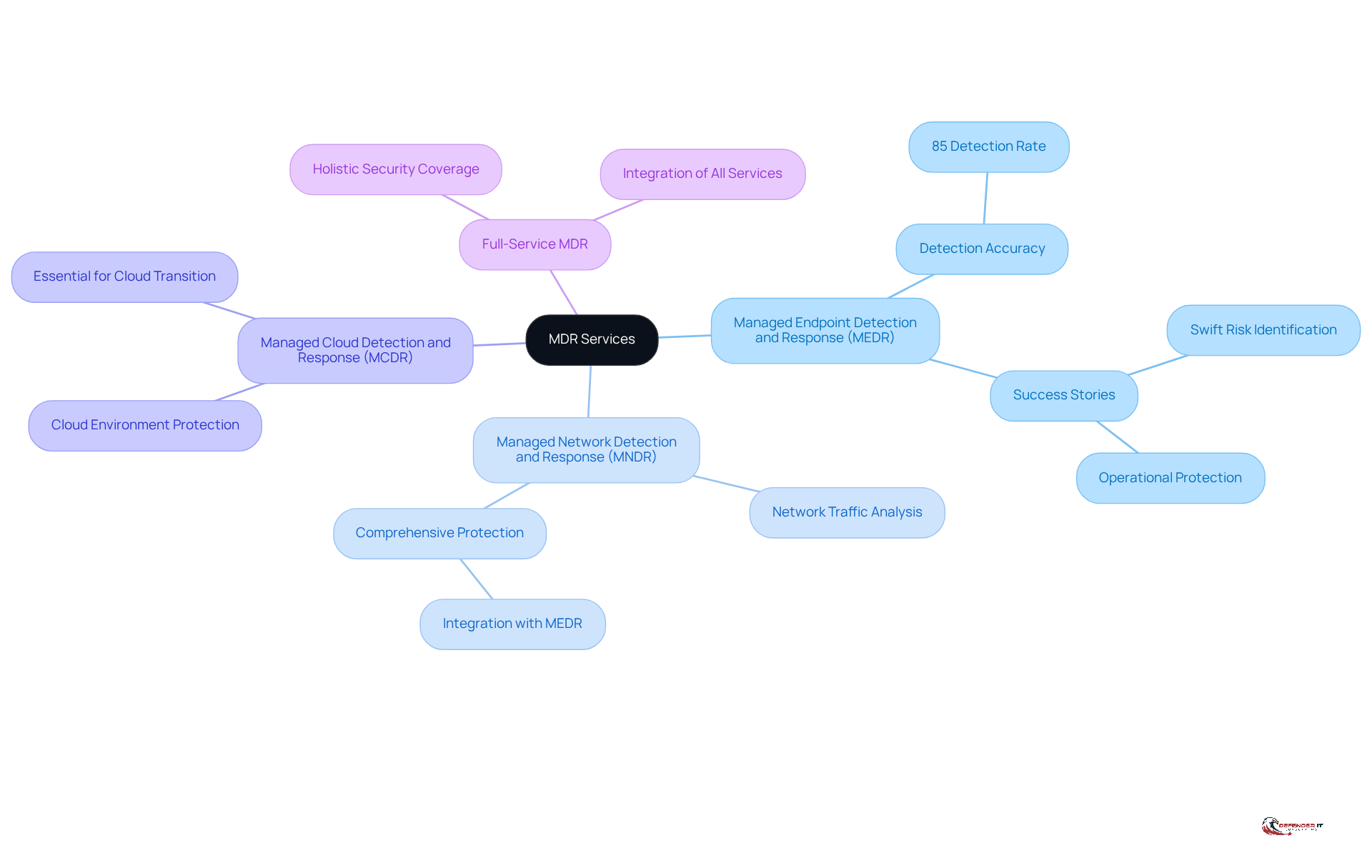
- MEDR: This service concentrates on observing and reacting to risks specifically on endpoints, such as laptops and servers. The growth of MEDR services is particularly notable, boasting a detection accuracy rate of 85%, which is significantly higher than traditional security measures. Success stories highlight how MEDR has enabled companies to swiftly identify and address risks, thereby protecting their operations and reputations.
- MNDR: This service focuses on analyzing network traffic to detect and mitigate risks across the network. Experts emphasize that while managed detection response is crucial for addressing network-level threats, organizations should implement both network and managed detection response strategies to achieve comprehensive security.
- MCDR: MCDR offers protection for cloud environments, ensuring that cloud-based applications and data are safeguarded from potential risks. As companies increasingly transition to cloud environments, MCDR services become essential for maintaining security.
- Integrated MDR: This service integrates all the aforementioned offerings, providing extensive coverage across endpoints, networks, and cloud environments. This holistic approach to managed detection response enhances the security posture of organizations, enabling them to respond effectively to a wide range of threats.
In summary, while MEDR provides a granular approach to endpoint security, MNDR addresses broader network threats. The integration of these services, along with MCDR, is essential for organizations aiming to strengthen their overall security.
Outline Steps to Enable MDR in Your Organization
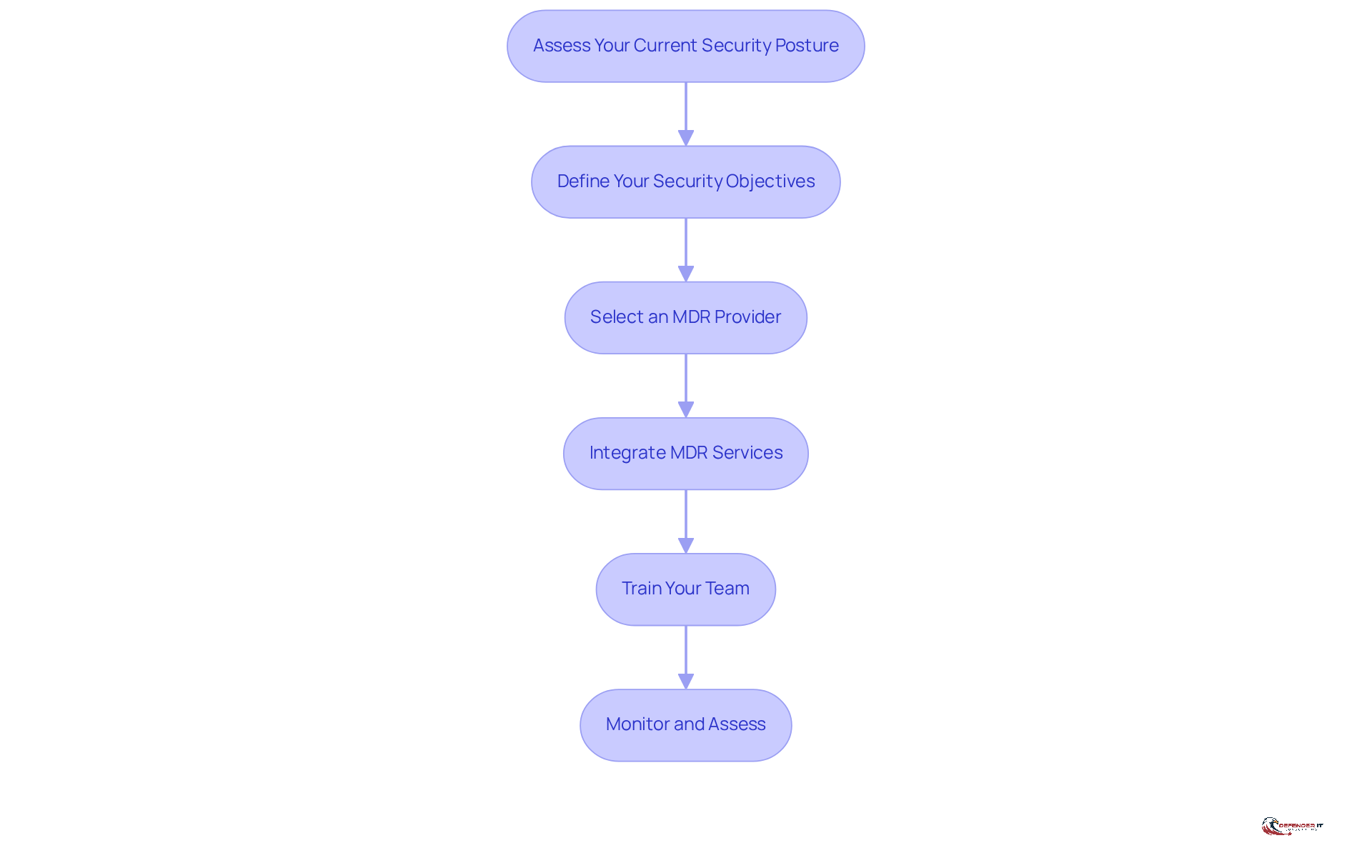
To enable Managed Detection and Response (MDR) in your organization, follow these structured steps:
- Assess Your Current Security Posture: Begin by evaluating your existing security measures. Identify any gaps that MDR can effectively address to enhance your overall security framework.
- Define Your Security Objectives: Establish clear and measurable goals for your cybersecurity strategy. This may include objectives such as improved detection or ensuring response through automation.
- Select an MDR Provider: Conduct thorough research to choose a reputable MDR provider. Ensure that their offerings for services align with your organization’s specific needs and budgetary constraints.
- Integrate MDR Services: Work collaboratively with your chosen provider to seamlessly incorporate their services into your current protection framework. This step is crucial for ensuring compatibility and maximizing the effectiveness of your security measures.
- Train Your Team: Provide training for your internal security team. This will enable them to effectively collaborate with the MDR provider and leverage their expertise to enhance your security posture.
- Monitor and Assess: Continuously monitor the performance of the MDR solution. Regularly assess the effectiveness of your services in achieving your established security objectives, making necessary adjustments to optimize outcomes.
Compare MDR with EDR and MSSP Solutions
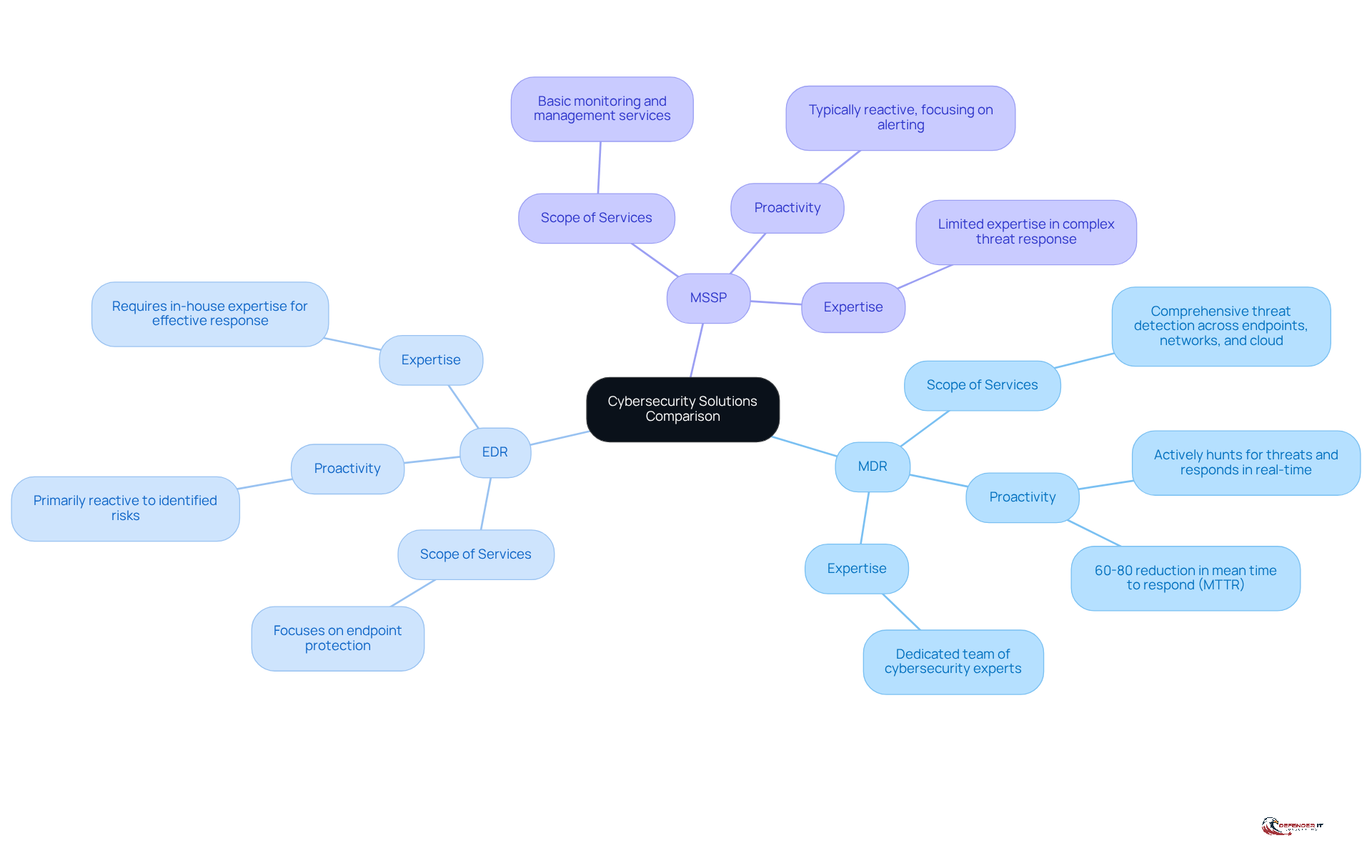
When comparing MDR with EDR and MSSP solutions, several key differences in services emerge that are critical for organizations to understand.
-
Scope of Services:
- MDR: Offers protection across endpoints, networks, and cloud environments, ensuring a holistic security posture.
- EDR: Concentrates specifically on endpoint protection, monitoring and responding to threats on devices, which limits its range compared to MDR.
- MSSP: Provides fundamental monitoring and management services, often lacking the depth that define MDR.
-
Proactivity:
- MDR: Actively hunts for threats and responds in real-time, significantly reducing the mean time to respond to incidents. Organizations that adopt MDR solutions often experience a 60-80% reduction in MTTR, which demonstrates the effectiveness of investing in proactive security.
- EDR: Primarily reactive, addressing identified risks on endpoints without the same level of proactive involvement as MDR.
- MSSP: Typically reactive, focusing on alerting and monitoring without prompt response actions, which can leave organizations vulnerable to attacks.
-
Expertise:
- MDR: Utilizes a dedicated team of cybersecurity experts for threat detection and response, providing a higher level of service and expertise compared to other options.
- EDR: Often necessitates in-house expertise to interpret alerts and respond effectively, which can strain resources for organizations lacking robust IT teams.
- MSSP: While offering monitoring services, MSSPs may not possess the same level of expertise in responding to threats as MDR providers, potentially limiting their effectiveness in complex scenarios.
In real-world applications, organizations that employ MDR have reported significant improvements, particularly in high-risk environments where threats, such as those posed by the Cactus ransomware group, are prevalent. In contrast, EDR solutions, while valuable for endpoint protection, may not provide the comprehensive coverage necessary to effectively address the evolving threat landscape. This distinction is crucial for security leaders when evaluating their security strategies, especially in regulated industries where compliance requirements further influence the choice between MSSP and MDR.
Conclusion
Managed Detection and Response (MDR) stands out as a vital element in today’s cybersecurity landscape, merging cutting-edge technology with human expertise to monitor, detect, and respond to cyber threats effectively. As organizations confront increasingly complex risks that traditional security measures fail to address adequately, implementing MDR becomes essential for protecting digital assets and ensuring compliance with industry standards.
This article explores the multifaceted nature of MDR, emphasizing its core components, including continuous monitoring, risk hunting, and incident response. It underscores the urgent need for organizations to adopt these services, especially given the rising threats such as ransomware and the anticipated financial repercussions of cybercrime. Moreover, the advantages of implementing MDR – such as enhanced risk detection, swift incident response, and cost-effectiveness – highlight its significance in strengthening security postures.
Ultimately, adopting Managed Detection and Response is not just a strategic decision; it is a necessary evolution for organizations striving to navigate the complexities of contemporary cyber threats. Security leaders are urged to evaluate their existing security measures, establish clear objectives, and integrate MDR solutions to bolster their defenses. The increasing market demand for MDR services reflects a broader acknowledgment of its importance – organizations must act decisively to secure their operations and safeguard against the ever-evolving landscape of cyber risks.
Frequently Asked Questions
What is Managed Detection and Response (MDR)?
Managed Detection and Response (MDR) is a cybersecurity service that combines advanced technology and human expertise to monitor, detect, and respond to cyber risks in real-time. It includes components such as continuous monitoring, risk hunting, incident response, and remediation.
How does MDR enhance cybersecurity for organizations?
MDR enhances cybersecurity by providing a proactive strategy through a Security Operations Center (SOC) that identifies and mitigates potential threats before they escalate into significant incidents. It ensures that safety measures are effectively enforced and helps organizations gain comprehensive visibility across their digital environments.
Why is there a growing need for MDR in modern cybersecurity?
The increasing complexity of cyber risks, along with the limitations of traditional security measures, has created a need for MDR. Ransomware, which affects a significant percentage of organizations, exemplifies this urgent need. MDR provides continuous monitoring and proactive risk hunting to help organizations respond to threats in real-time.
What are the financial implications of failing to adopt effective cybersecurity measures like MDR?
Cybercrime is projected to cost businesses up to $10.5 trillion by 2025, highlighting the substantial financial risks associated with inadequate cybersecurity. The growing demand for information protection analysts also emphasizes the critical need for organizations to implement MDR to navigate complex cyber threats.
What is the projected growth of the MDR market?
The global managed detection response (MDR) market was valued at USD 2.31 billion in 2025 and is expected to grow to USD 2.81 billion in 2026, indicating the rising importance of MDR in the evolving cybersecurity landscape.
How does MDR help reduce future risks for organizations?
An effective MDR partner not only addresses immediate incidents but also identifies patterns in cyber threats and provides actionable recommendations, thereby helping organizations reduce future risks.
List of Sources
- Define Managed Detection and Response (MDR)
- cyberfortress.com (https://cyberfortress.com/blog/why-mdr-is-becoming-essential-in-2026-and-what-it-means-for-your-security-team)
- cyberproof.com (https://cyberproof.com/manageddetectionandresponse/mapping-the-managed-detection-and-response-mdr-market-for-2026)
- crn.com (https://crn.com/news/networking/2026/levelblue-acquires-fortra-s-alert-logic-to-extend-mdr-leadership-as-world-s-largest-pure-play-mssp)
- fortunebusinessinsights.com (https://fortunebusinessinsights.com/managed-detection-and-response-market-108618)
- ir.crowdstrike.com (https://ir.crowdstrike.com/news-releases/news-release-details/crowdstrike-named-leader-managed-detection-and-response-mdr-0)
- Explain the Need for MDR in Modern Cybersecurity
- levelblue.com (https://levelblue.com/blogs/levelblue-blog/why-managed-detection-and-response-has-become-essential-to-modern-cyber-resilience)
- 205 Cybersecurity Stats and Facts for 2026 (https://vikingcloud.com/blog/cybersecurity-statistics)
- linkedin.com (https://linkedin.com/posts/cyberfortress\_managed-detection-and-response-mdr-what-activity-7414750149589229569-Nso0)
- cyberfortress.com (https://cyberfortress.com/blog/why-mdr-is-becoming-essential-in-2026-and-what-it-means-for-your-security-team)
- v2systems.com (https://v2systems.com/blog/why-managed-detection-response-mdr-is-no-longer-optional-in-2026)
- Highlight the Benefits of Implementing MDR
- cyberfortress.com (https://cyberfortress.com/blog/why-mdr-is-becoming-essential-in-2026-and-what-it-means-for-your-security-team)
- cybermaxx.com (https://cybermaxx.com/resources/the-roi-of-response-why-modern-mdr-saves-more-than-it-costs)
- sentinelone.com (https://sentinelone.com/cybersecurity-101/services/mdr-benefits)
- levelblue.com (https://levelblue.com/blogs/levelblue-blog/why-managed-detection-and-response-mdr-is-now-essential)
- miningandengreview.com (https://miningandengreview.com/the-business-case-for-mdr-protecting-clients-when-threats-dont-sleep)
- Identify Types of MDR Services and Solutions
- sentinelone.com (https://sentinelone.com/cybersecurity-101/endpoint-security/mdr-solutions)
- cybernx.com (https://cybernx.com/mdr-companies)
- levelblue.com (https://levelblue.com/newsroom/press-releases/levelblue-and-fortra-launch-strategic-managed-services-partnership-to-accelerate-cybersecurity-innovation)
- solutionsreview.com (https://solutionsreview.com/security-information-event-management/the-best-managed-detection-and-response-vendors)
- fieldeffect.com (https://fieldeffect.com/blog/best-mdr-solutions-2026)
- Outline Steps to Enable MDR in Your Organization
- levelblue.com (https://levelblue.com/blogs/levelblue-blog/why-managed-detection-and-response-has-become-essential-to-modern-cyber-resilience)
- technology.org (https://technology.org/2026/01/16/choosing-managed-detection-and-response-for-long-term-security)
- v2systems.com (https://v2systems.com/blog/why-managed-detection-response-mdr-is-no-longer-optional-in-2026)
- cyberproof.com (https://cyberproof.com/manageddetectionandresponse/mapping-the-managed-detection-and-response-mdr-market-for-2026)
- guardz.com (https://guardz.com/blog/what-is-mdr-in-cybersecurity)
- Compare MDR with EDR and MSSP Solutions
- brandefense.io (https://brandefense.io/blog/how-mdr-differs-from-edr-mssp-xdr-and-siem)
- cynet.com (https://cynet.com/mssp/mssp-vs-mdr-4-key-differences-and-how-to-choose)
- thehackernews.com (https://thehackernews.com/expert-insights/2025/10/what-happens-to-mssps-and-mdrs-in-age.html)
- sentinelone.com (https://sentinelone.com/cybersecurity-101/endpoint-security/mdr-vs-mssp-vs-siem)
- digitalhands.com (https://digitalhands.com/resources/guides/the-differences-between-mdr-mssps-and-managed-edr)