General
Master Managed Vulnerability Scanning: Best Practices for Security Leaders
Published May 22, 2026
Introduction
In regulated industries like finance and healthcare, the stakes are high when it comes to vulnerability scanning, as it has shifted from a recommendation to a compliance imperative. Organizations often grapple with the dual pressures of compliance and the need for robust cybersecurity measures.
How can security leaders implement managed vulnerability scanning practices that not only meet these standards but also enhance overall resilience? This article will provide best practices for vulnerability scanning, offering insights into essential tools and strategies that can empower organizations to navigate the evolving threat landscape with confidence.
Ultimately, organizations that prioritize effective vulnerability scanning will not only meet compliance requirements but also fortify their defenses against emerging threats.
Understand the Importance of Vulnerability Scanning in Regulated Industries
In regulated sectors like finance, healthcare, and government, security scanning is not merely a best practice; it is a fundamental compliance requirement. Organizations are mandated to conduct regular evaluations of their systems to identify weaknesses, thereby safeguarding sensitive information and preserving trust with clients and stakeholders. Failure to comply with these regulations can lead to severe financial and reputational consequences.
For instance, the Health Insurance Portability and Accountability Act (HIPAA) explicitly mandates regular security evaluations to protect patient information. As of 2026, these requirements have become even more stringent, necessitating that entities perform security scans at least twice a year and conduct comprehensive penetration testing annually.
By establishing a thorough managed vulnerability scanning initiative that adheres to these criteria, organizations can proactively detect and resolve risks, significantly enhancing their overall protection stance and ensuring compliance with industry standards. This shift in focus is crucial for maintaining compliance and protecting sensitive information, especially as the healthcare sector has experienced a disproportionate number of data breaches, accounting for 32% of all recorded breaches from 2015 to 2022.
Ultimately, prioritizing security assessments is not just about compliance; it is about safeguarding the integrity of sensitive information and maintaining stakeholder trust.

Identify Key Features of Effective Vulnerability Scanning Tools
Selecting the right vulnerability scanning tool is critical for security leaders aiming to enhance their organization’s cyber defense capabilities. When choosing a tool, several key features should be prioritized to ensure robust protection against cyber threats:
- Thorough Protection: The software must be capable of scanning all assets, including networks, applications, and databases, to ensure that no weaknesses are overlooked. Organizations face an overwhelming number of vulnerabilities each year, making it crucial to have effective scanning tools in place. A comprehensive approach helps identify both known and unknown exposed systems, which is vital for effective risk management.
- Automated Reporting: Comprehensive reports from efficient resources highlight weaknesses, their severity, and recommended corrective actions. This enables rapid decision-making, allowing teams to focus on the top 1% of weaknesses that present urgent risks, thus minimizing alert fatigue and improving overall efficiency. As noted by Recorded Future, “Conventional risk management systems can no longer match the pace of contemporary exploitation-threat context is now essential.”
- Integration Capabilities: The ability to integrate with existing protective applications and workflows enhances the overall efficiency of the vulnerability management process. Organizations that regularly employ scanning resources are better positioned to identify and mitigate risks, making integration a crucial feature. Case studies, such as the ‘Benefits of Conducting Vulnerability Scans,’ illustrate how proactive risk identification through these resources can lead to significant cost savings and improved protective measures.
- User-Friendly Interface: An intuitive interface allows protection teams to use the tool effectively, reducing the learning curve and improving adoption rates. This is particularly important in environments where response teams are often overwhelmed by alerts that lack real-world context.
- Regular Updates: The application should receive frequent updates to ensure it can detect the latest vulnerabilities and threats. As the landscape of cyber threats evolves, timely updates are essential for maintaining an effective defense.
By prioritizing these features, organizations can significantly bolster their defenses against the ever-evolving landscape of cyber threats.

Explore Different Types of Vulnerability Scanning Tools and Their Applications
Understanding the various types of managed vulnerability scanning tools is essential for organizations aiming to strengthen their cybersecurity defenses. These tools can be categorized into several types, each serving distinct purposes:
- Network Scanners: These tools evaluate the security of network infrastructure, detecting weaknesses in routers, switches, and firewalls. They are crucial for entities to secure their perimeter defenses. For example, Nessus is well-known for its extensive plugin library, user-friendliness, and thorough reporting, effectively detecting a wide range of weaknesses across network devices and operating systems.
- Web Application Scanners: Created to identify weaknesses in web applications, these resources assist entities in safeguarding against prevalent risks like SQL injection and cross-site scripting (XSS). Acunetix, for example, specializes in web application security testing and integrates seamlessly with development workflows, making it invaluable for organizations adopting DevSecOps practices. Moreover, Burp Suite merges automated scanning with manual testing resources, offering comprehensive analysis preferred by penetration testers.
- Database Scanners: These instruments concentrate on detecting weaknesses within database systems, ensuring that sensitive information is sufficiently safeguarded. Entities face challenges in maintaining compliance with regulatory frameworks that mandate regular assessments of database vulnerabilities.
- Cloud Security Scanners: As organizations increasingly move to the cloud, these resources evaluate cloud environments for misconfigurations and weaknesses. Solutions such as Qualys offer ongoing asset identification and threat prioritization, improving the capacity to handle weaknesses across various IT environments.
- Container Scanners: With the growth of containerization, these tools assess container images for known weaknesses prior to deployment. This proactive approach helps businesses mitigate risks associated with containerized applications. Tools such as Invicti employ proof-based scanning technology to automatically confirm identified weaknesses, ensuring a strong protective framework.
Ultimately, the right choice of scanning tools, such as managed vulnerability scanning, can be a decisive factor in an organization’s ability to defend against evolving cyber threats.

Implement Best Practices for Integrating Vulnerability Scanning into Security Frameworks
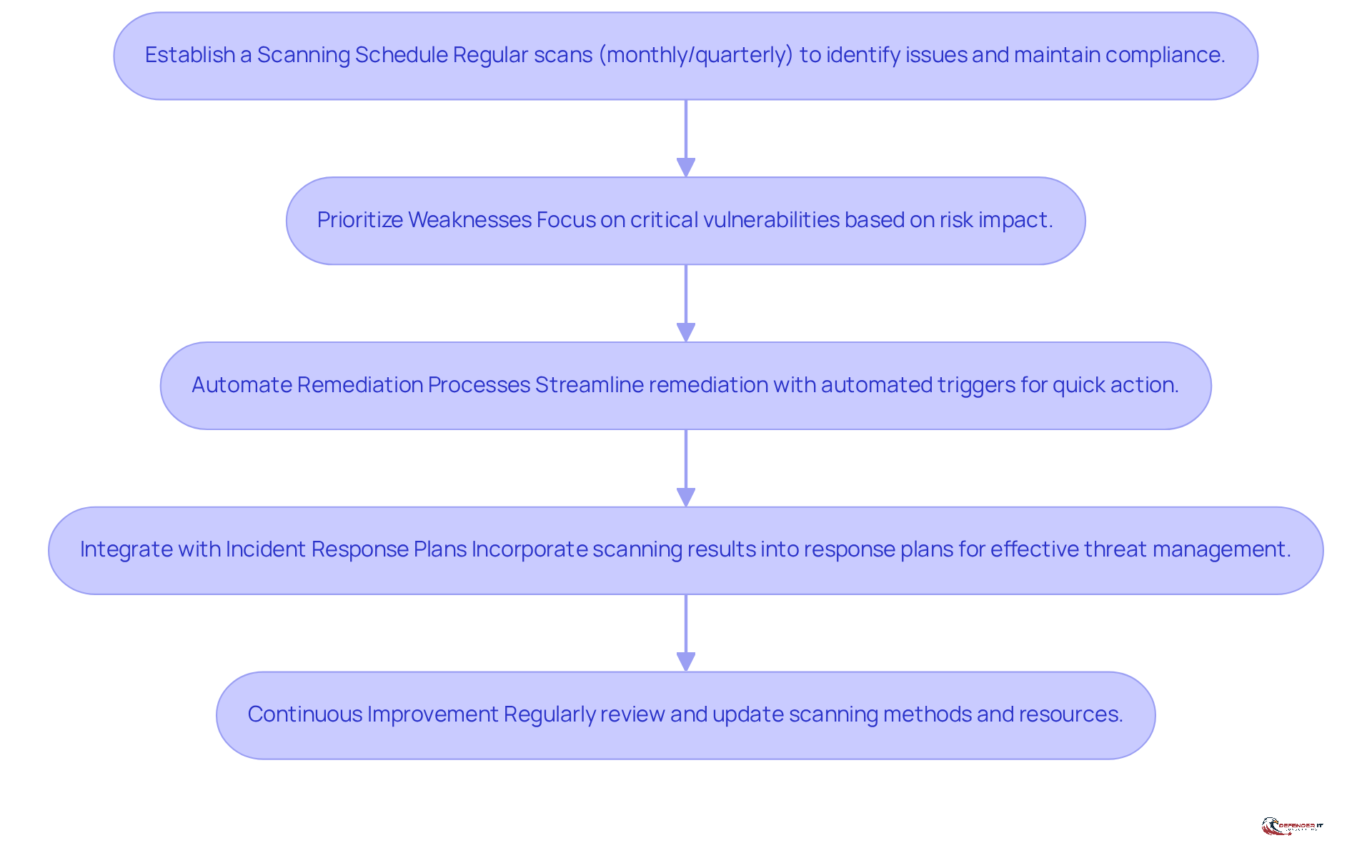
To effectively integrate vulnerability scanning into security frameworks, organizations must adopt a structured approach that emphasizes best practices:
- Establish a Scanning Schedule: Regularly scheduled scans, ideally on a monthly or quarterly basis, are crucial for the timely identification and resolution of issues. Compliance frameworks such as PCI DSS and HIPAA mandate quarterly scans, underscoring the necessity of managed vulnerability scanning to avoid costly fines and legal repercussions. Chris Brown, a Senior Product Marketing Manager, emphasizes that regular managed vulnerability scanning acts as a reliable form of cyber insurance, helping organizations avoid data breaches and maintain compliance with data protection regulations.
- Prioritize Weaknesses: Not all weaknesses carry the same risk. Adopting a risk-based approach allows organizations to prioritize remediation efforts based on the potential impact on operations and compliance requirements. This ensures that resources are allocated effectively to address the most critical issues first.
- Automate Remediation Processes: Automating the remediation of recognized weaknesses can significantly streamline the process, reducing the workload on protection teams. Implementing automated workflow triggers for remediation requests ensures prompt action and enhances overall efficiency in addressing weaknesses.
- Integrate with Incident Response Plans: Incorporating managed vulnerability scanning results into incident response plans is essential for facilitating swift action during security breaches. This integration allows organizations to respond effectively to threats, minimizing potential damage and ensuring compliance with regulatory standards.
- Continuous Improvement: Regularly reviewing and updating scanning methods and resources is vital to adapt to evolving threats and changes within the organizational environment. Ongoing rescanning and confirmation of tool outcomes, along with team input, can improve the efficiency of risk management efforts.
Ultimately, a proactive approach to vulnerability management not only enhances security but also safeguards organizational integrity and compliance.
Conclusion
In an era where compliance is paramount, mastering managed vulnerability scanning is essential for organizations, particularly in regulated industries. A robust vulnerability scanning initiative not only meets regulatory requirements but also fortifies the security posture of an organization. By prioritizing vulnerability assessments, organizations can protect sensitive information and maintain trust with clients and stakeholders.
Key insights discussed include:
- The importance of selecting effective scanning tools equipped with features such as comprehensive protection, automated reporting, and integration capabilities.
- Understanding the various types of scanning tools-ranging from network and web application scanners to cloud and container scanners-enables organizations to tailor their cybersecurity strategies effectively.
- Implementing best practices for integrating these tools into security frameworks ensures that vulnerability management becomes a fundamental aspect of an organization’s overall security strategy.
Organizations often struggle to keep pace with evolving regulatory requirements and emerging cyber threats. In a landscape where cyber threats are constantly evolving, vulnerability scanning stands as a critical line of defense. Without a proactive approach, organizations risk exposing sensitive information and damaging client trust. By embracing these proactive measures, organizations not only enhance their security posture but also ensure they remain resilient against the ever-evolving landscape of cyber threats.
Frequently Asked Questions
Why is vulnerability scanning important in regulated industries?
Vulnerability scanning is crucial in regulated industries like finance, healthcare, and government because it is a fundamental compliance requirement. Organizations must regularly evaluate their systems to identify weaknesses, protect sensitive information, and maintain trust with clients and stakeholders.
What are the consequences of failing to comply with vulnerability scanning regulations?
Failure to comply with vulnerability scanning regulations can lead to severe financial penalties and reputational damage for organizations.
What specific regulations mandate security evaluations in the healthcare sector?
The Health Insurance Portability and Accountability Act (HIPAA) mandates regular security evaluations to protect patient information, requiring entities to perform security scans at least twice a year and conduct comprehensive penetration testing annually as of 2026.
How can organizations enhance their protection stance through vulnerability scanning?
By establishing a thorough managed vulnerability scanning initiative that adheres to compliance criteria, organizations can proactively detect and resolve risks, significantly enhancing their overall security and ensuring compliance with industry standards.
What is the significance of the healthcare sector’s data breach statistics?
The healthcare sector has experienced a disproportionate number of data breaches, accounting for 32% of all recorded breaches from 2015 to 2022, highlighting the critical need for effective vulnerability scanning and security assessments.
What is the ultimate goal of prioritizing security assessments in regulated industries?
The ultimate goal of prioritizing security assessments is to safeguard the integrity of sensitive information and maintain stakeholder trust, beyond just fulfilling compliance requirements.
List of Sources
- Understand the Importance of Vulnerability Scanning in Regulated Industries
- 2026 HIPAA Changes: New Security Rule Requirements (https://hipaavault.com/resources/2026-hipaa-changes)
- HIPAA Updates and HIPAA Changes in 2026 (https://hipaajournal.com/hipaa-updates-hipaa-changes)
- Healthcare Data Breach Statistics (https://hipaajournal.com/healthcare-data-breach-statistics)
- Cybersecurity Awareness Month Quotes and Commentary from Industry Experts in 2025 (https://solutionsreview.com/cybersecurity-awareness-month-quotes-and-commentary-from-industry-experts-in-2025)
- 130+ Compliance Statistics & Trends to Know for 2026 (https://secureframe.com/blog/compliance-statistics)
- Identify Key Features of Effective Vulnerability Scanning Tools
- Threat and Vulnerability Management in 2026 (https://recordedfuture.com/blog/threat-and-vulnerability-management)
- The top 20 expert quotes from the Cyber Risk Virtual Summit (https://diligent.com/resources/blog/top-20-quotes-cyber-risk-virtual-summit)
- 12 popular vulnerability scanning tools in 2025 | Red Canary (https://redcanary.com/cybersecurity-101/security-operations/vulnerability-scanning-tools)
- Explore Different Types of Vulnerability Scanning Tools and Their Applications
- 12 popular vulnerability scanning tools in 2025 | Red Canary (https://redcanary.com/cybersecurity-101/security-operations/vulnerability-scanning-tools)
- Implement Best Practices for Integrating Vulnerability Scanning into Security Frameworks
- Vulnerability Scanning Best Practices: A Guide for Security Teams (https://vikingcloud.com/blog/vulnerability-scanning-best-practices)
- The Importance of Vulnerability Scanning for Cybersecurity: A Comprehensive Guide | Databank (https://databank.com/resources/blogs/the-importance-of-vulnerability-scanning-for-cybersecurity-a-comprehensive-guide)
- Best Practices for Vulnerability Scanning (https://kirkpatrickprice.com/blog/best-practices-vulnerability-scanning)