General
Master Network Security Compliance: Key Strategies for Success
Published January 28, 2026
Introduction
Navigating the complex landscape of cybersecurity compliance is essential for organizations that seek to protect sensitive data and uphold operational integrity. With regulations such as GDPR, HIPAA, and PCI DSS imposing stringent requirements, the stakes have never been higher; non-compliance can result in significant penalties and damage to reputation. As businesses endeavor to implement effective compliance strategies, the challenge lies not only in comprehending these regulations but also in adapting to the continuously evolving cybersecurity environment.
How can organizations ensure they are not merely compliant, but also resilient against emerging threats?
Define Cybersecurity Compliance and Its Importance
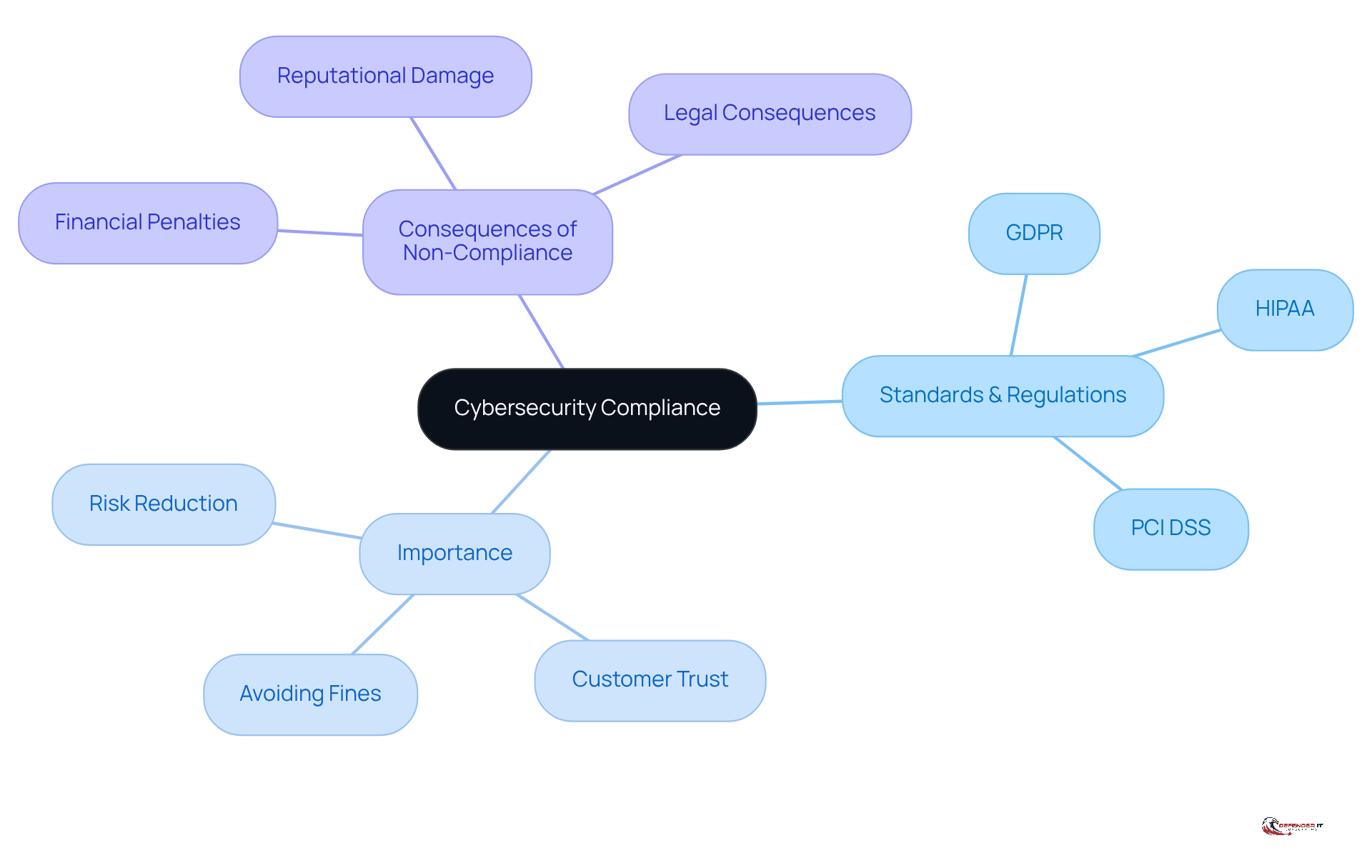
Adhering to cybersecurity compliance is crucial for ensuring security, protecting sensitive data, and maintaining the integrity of information systems. It encompasses the observance of laws, regulations, and standards, including frameworks such as NIST, which dictate how organizations should manage risk to ensure compliance.
The importance of adherence cannot be overstated. It significantly reduces the risks associated with data breaches, enhances customer trust, and helps prevent financial losses. For instance, organizations that fail to comply with GDPR may face penalties reaching up to 4% of their annual global revenue. This highlights that understanding and implementing cybersecurity compliance is not merely a legal obligation; it is a matter of business resilience and operational integrity.
Identify Key Cybersecurity Regulations and Standards
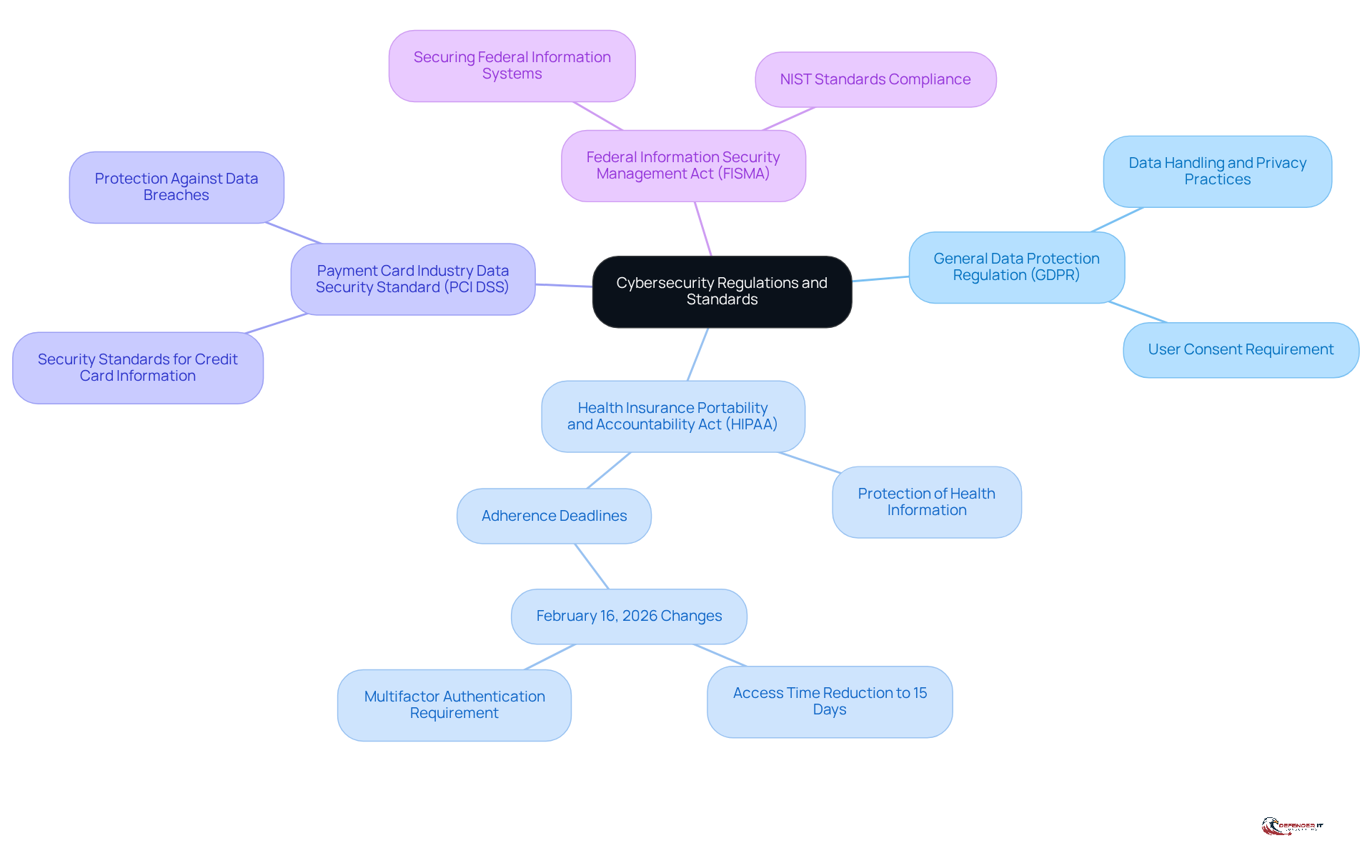
Organizations must navigate a complex landscape of cybersecurity regulations to achieve compliance in their operational protocols. Understanding these regulations is essential for entities to efficiently prioritize efforts and establish necessary controls. Key regulations include:
- GDPR: This EU law enforces stringent data handling and privacy practices, requiring organizations to prioritize user consent and data protection.
- HIPAA: In the U.S., HIPAA mandates the protection of health information, compelling healthcare organizations to implement specific protective measures. Notably, changes are expected, with significant changes anticipated to affect patient access and cybersecurity requirements. These changes include a reduction in the response time from 30 days to 15 days and the necessity for multifactor authentication (MFA) for all system access.
- PCI DSS: This set of security standards ensures that all entities handling credit card information maintain a secure environment, protecting against data breaches and fraud.
- FISMA: FISMA requires federal agencies to secure their information systems, adhering to standards established by the National Institute of Standards and Technology (NIST).
For instance, in 2023, over 168 million records were breached, underscoring the critical need for robust cybersecurity measures. As entities prepare for the evolving legal environment, they must remain vigilant and proactive in their adherence strategies to achieve compliance, especially considering the proposed modifications to the HIPAA Privacy Rule and Security Rule anticipated in 2026.
Implement Effective Compliance Strategies and Controls
To effectively implement cybersecurity compliance, organizations should adopt the following best practices:
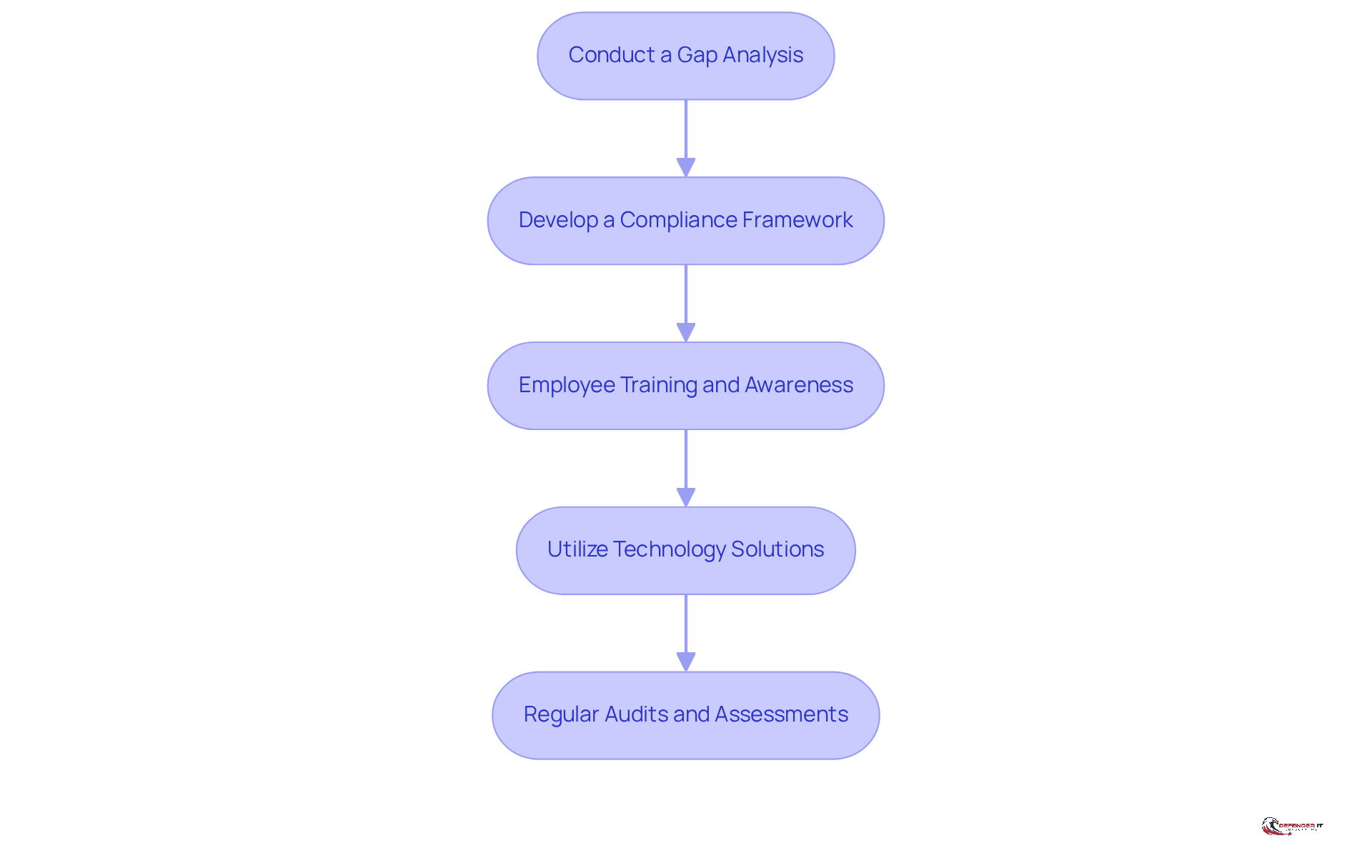
- Evaluate current protective measures against threats to pinpoint areas needing enhancement. This analysis is essential for recognizing regulatory gaps and aligning security practices with industry standards and evolving regulations. Notably, the ISC2 Cybersecurity Workforce Study indicates that nearly 60% of respondents believe skills gaps have significantly impacted their ability to protect the entity.
- Establish a structured approach that details the policies, procedures, and controls necessary for compliance with regulations. A well-defined framework serves as a roadmap for entities navigating complex regulatory landscapes concerning cybersecurity. For instance, organizations that have effectively adopted regulatory frameworks have observed improvements in their overall protection stance.
- Regularly educate employees on security protocols and best practices. Statistics show that organizations with robust training programs experience fewer security incidents; consistent training on phishing and security awareness is vital for employees.
- Implement management tools that facilitate compliance efforts. These technologies simplify adherence efforts, enabling organizations to maintain oversight and adapt to regulatory changes effectively.
- Conduct periodic audits to evaluate adherence status and make necessary adjustments to strategies and controls. Ongoing assessments ensure that organizations remain proactive in their compliance efforts, addressing any emerging risks swiftly.
By adopting these strategies, organizations can establish a robust compliance framework for cybersecurity that not only meets legal requirements but also enhances their overall cybersecurity posture.
Establish Continuous Monitoring and Improvement Processes
To maintain compliance effectively, organizations should implement the following strategies:
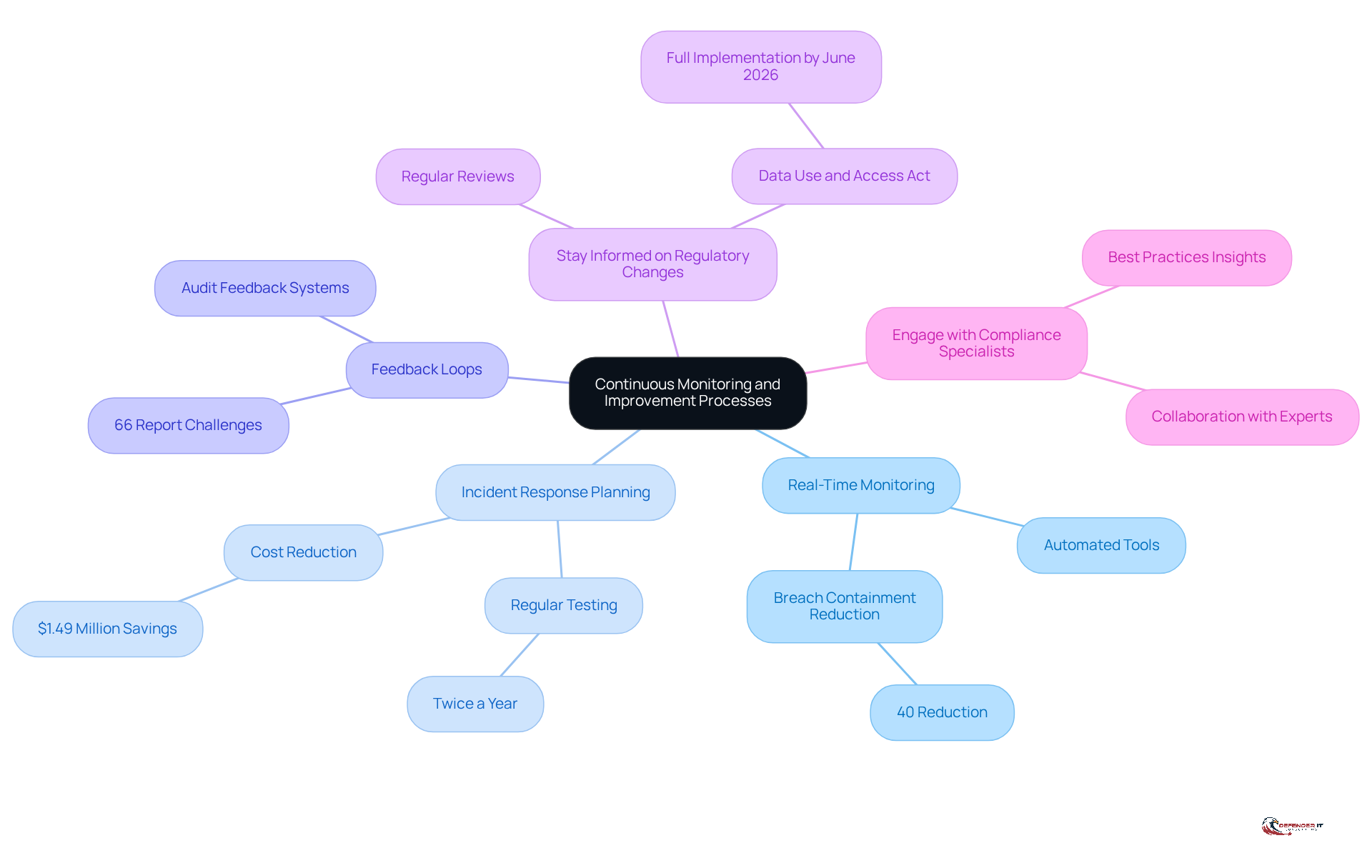
- Automated tools: Organizations must utilize automated tools to consistently oversee systems for compliance with policies and regulatory requirements. This proactive approach is essential; organizations that employ these tools can reduce breach containment time by 40%. As Chris Newton-Smith, CEO at the governance platform IO, states, “The constant churn of evolving regulations is driving businesses to take control by aligning to cyber, privacy, and AI frameworks.”
- Incident response planning: It is crucial to create and frequently revise strategies to promptly address potential breaches or regulatory failures. Organizations that conduct testing at least twice a year can reduce risks, underscoring the financial benefits of preparedness. Sean Cairncross, National Cyber Director, emphasizes that “active defense is essential because it shifts security from a passive, reactive posture to a proactive one that actively reduces risk.”
- Feedback mechanisms: Establishing systems for gathering feedback from audits and evaluations is vital for guiding continuous enhancements in adherence strategies. Ongoing feedback is essential for adapting to the changing regulatory environment, where 66% of entities report challenges in managing adherence internally. This statistic highlights the difficulties organizations face in navigating regulations effectively.
- Regular reviews: Regularly reviewing and updating adherence strategies to reflect changes in laws and regulations is necessary for ensuring ongoing conformity. The anticipated complete implementation of the Data Use and Access Act by June 2026 underscores the need for vigilance in adherence practices. An expert’s perspective on this enforcement could provide valuable insights into its implications for adherence strategies.
- Collaboration: Collaborating with cybersecurity professionals is essential for gaining insights into best practices and emerging trends in adherence. As the governance landscape becomes increasingly intricate, expert advice can assist organizations in navigating challenges effectively.
By embedding continuous monitoring into their compliance frameworks, organizations can enhance their resilience against cyber threats and ensure sustained network security compliance with regulatory requirements.
Conclusion
Achieving mastery in network security compliance is not merely a regulatory requirement; it is a crucial element in safeguarding sensitive data and upholding an organization’s reputation. As the cybersecurity landscape evolves, understanding and implementing effective compliance strategies becomes essential for organizations seeking to protect themselves against potential breaches and legal repercussions.
This article underscores the critical importance of adhering to various cybersecurity regulations, including:
- GDPR
- HIPAA
- PCI DSS
These regulations outline how organizations should manage and protect data. By conducting thorough gap analyses, developing compliance frameworks, and fostering employee training, organizations can significantly enhance their cybersecurity posture. Furthermore, the implementation of continuous monitoring and improvement processes ensures that compliance efforts remain robust and responsive to the dynamic regulatory environment.
Ultimately, the significance of network security compliance cannot be overstated. Organizations must prioritize these strategies not only to fulfill legal obligations but also to cultivate trust with customers and stakeholders. Embracing a proactive approach to cybersecurity compliance will not only safeguard against potential threats but also position organizations as leaders in their respective industries, prepared to navigate the complexities of the digital landscape with confidence.
Frequently Asked Questions
What is cybersecurity compliance?
Cybersecurity compliance refers to adhering to laws, regulations, and standards that dictate how organizations should manage and safeguard data to ensure network security. This includes frameworks such as GDPR, HIPAA, and PCI DSS.
Why is cybersecurity compliance important?
Cybersecurity compliance is important because it significantly reduces the risks of data breaches, enhances customer trust, and helps prevent substantial fines. Non-compliance can lead to penalties, such as those under GDPR, which can reach up to 4% of an organization’s annual global revenue.
What are some frameworks associated with cybersecurity compliance?
Some key frameworks associated with cybersecurity compliance include the General Data Protection Regulation (GDPR), Health Insurance Portability and Accountability Act (HIPAA), and Payment Card Industry Data Security Standard (PCI DSS).
What are the consequences of failing to comply with cybersecurity regulations?
Failing to comply with cybersecurity regulations can result in severe penalties, including significant fines and damage to a company’s reputation and operational integrity.
How does cybersecurity compliance relate to a company’s reputation?
Adhering to cybersecurity compliance measures is not just a legal obligation; it is a strategic necessity that helps maintain a company’s reputation by ensuring the protection of sensitive data and enhancing customer trust.
List of Sources
- Define Cybersecurity Compliance and Its Importance
- Cyber security compliance statistics for 2026 | CyberArrow (https://cyberarrow.io/blog/cyber-security-compliance-statistics)
- mark43.com (https://mark43.com/press/solutions-review-cybersecurity-awareness-month-quotes-from-industry-experts-in-2024)
- 130+ Compliance Statistics & Trends to Know for 2026 (https://secureframe.com/blog/compliance-statistics)
- diligent.com (https://diligent.com/resources/blog/top-20-quotes-cyber-risk-virtual-summit)
- 280+ Cybersecurity Compliance Statistics for 2026 (https://brightdefense.com/resources/cybersecurity-compliance-statistics)
- Identify Key Cybersecurity Regulations and Standards
- outsidegc.com (https://outsidegc.com/blog/hipaa-changes-coming-in-2026)
- Critical HIPAA Updates for 2026 (https://corsicatech.com/blog/hipaa-updates-security-rules)
- HIPAA Updates and HIPAA Changes in 2026 (https://hipaajournal.com/hipaa-updates-hipaa-changes)
- New HIPAA Regulations in 2026 (https://hipaajournal.com/new-hipaa-regulations)
- New HIPAA rules address substance use disorder records (https://adanews.ada.org/ada-news/2026/january/new-hipaa-rules-address-substance-use-disorder-records)
- Implement Effective Compliance Strategies and Controls
- isc2.org (https://isc2.org/Insights/2024/10/ISC2-2024-Cybersecurity-Workforce-Study)
- NIST compliance in 2026: A complete implementation guide | UpGuard (https://upguard.com/blog/nist-compliance)
- Cyber Security Best Practices for 2026 (https://sentinelone.com/cybersecurity-101/cybersecurity/cyber-security-best-practices)
- Five Security and Compliance Trends to Look Out for in 2026 | ISMS.online (https://isms.online/information-security/five-security-and-compliance-trends-to-look-out-for-in-2026)
- Understanding IT Compliance: Key Regulations for 2026 | Prime Secured (https://primesecured.com/it-compliance-key-regulations-2026)
- Establish Continuous Monitoring and Improvement Processes
- Five things to watch in cybersecurity for 2026 | Federal News Network (https://federalnewsnetwork.com/cybersecurity/2026/01/five-things-to-watch-in-cybersecurity-for-2026)
- Five Security and Compliance Trends to Look Out for in 2026 | ISMS.online (https://isms.online/information-security/five-security-and-compliance-trends-to-look-out-for-in-2026)
- Cyber Insights 2026: Regulations and the Tangled Mess of Compliance Requirements (https://securityweek.com/cyber-insights-2026-regulations-and-the-tangled-mess-of-compliance-requirements)
- Incident Response Statistics to Know in 2025 (https://jumpcloud.com/blog/incident-response-statistics)
- Security Priorities 2026: Organizations Shift Toward Resilience and Identity as Cyber Risk Accelerates, Says Info-Tech Research Group (https://prnewswire.com/news-releases/security-priorities-2026-organizations-shift-toward-resilience-and-identity-as-cyber-risk-accelerates-says-info-tech-research-group-302668326.html)