Social Media Marketing
Master TTPs in Cybersecurity: Strengthen Your Defense Strategy
Published April 19, 2026
Introduction
As cyber adversaries grow increasingly sophisticated, understanding their operational methods has never been more critical. Tactics, Techniques, and Procedures (TTPs) act as a blueprint for these attacks, offering insights that organizations can leverage to strengthen their defenses. However, with the emergence of AI-powered threats and the rapid evolution of attack strategies, security teams face the challenge of transforming their knowledge of TTPs into actionable defense mechanisms. This article explores the significance of mastering TTPs in cybersecurity, providing a roadmap for organizations to enhance their defense strategies against evolving threats.
Define Tactics, Techniques, and Procedures (TTPs) in Cybersecurity
Tactics, Techniques, and Procedures (TTPs) are foundational elements that define the operational methods of cyber adversaries.
- Tactics encompass the overarching objectives of an attack, such as data theft or system disruption.
- Techniques refer to the specific methods employed to achieve these objectives, including phishing or exploiting software vulnerabilities.
- Procedures detail the exact steps taken to implement these techniques, which may involve the tools and scripts utilized by attackers.
Understanding TTPs is crucial in 2026, as TTPs cybersecurity becomes increasingly important due to adversaries adopting advanced methods to bypass traditional defenses. Notably, there has been an 89% increase in attacks from AI-powered adversaries, with 82% of reported detections being malware-free. This shift in attack strategies necessitates that organizations adapt accordingly to TTPs cybersecurity measures.
By analyzing the TTPs associated with specific threat actors, security teams can develop targeted defenses that address the unique methodologies employed by these actors. This proactive strategy not only enhances situational awareness but also enables organizations to identify indicators of compromise early in the attack lifecycle.
Real-world examples underscore the evolving nature of TTPs. For instance, attackers now leverage trusted platforms, such as cloud storage, for data exfiltration, effectively blending malicious activities with legitimate traffic to evade detection. Moreover, the average eCrime breakout time has plummeted to just 29 minutes, emphasizing the urgent need for organizations to refine their incident response strategies in line with actual attacker methodologies.
Integrating TTP knowledge into standard training protocols significantly bolsters incident response capabilities and situational awareness in TTPs cybersecurity, empowering organizations to stay ahead of emerging threats. As cybersecurity frameworks like MITRE ATT&CK continue to evolve, a thorough understanding of TTPs will be essential for crafting effective defense strategies capable of withstanding the complexities of today’s cyber landscape.

Apply TTP Analysis to Strengthen Cybersecurity Defenses
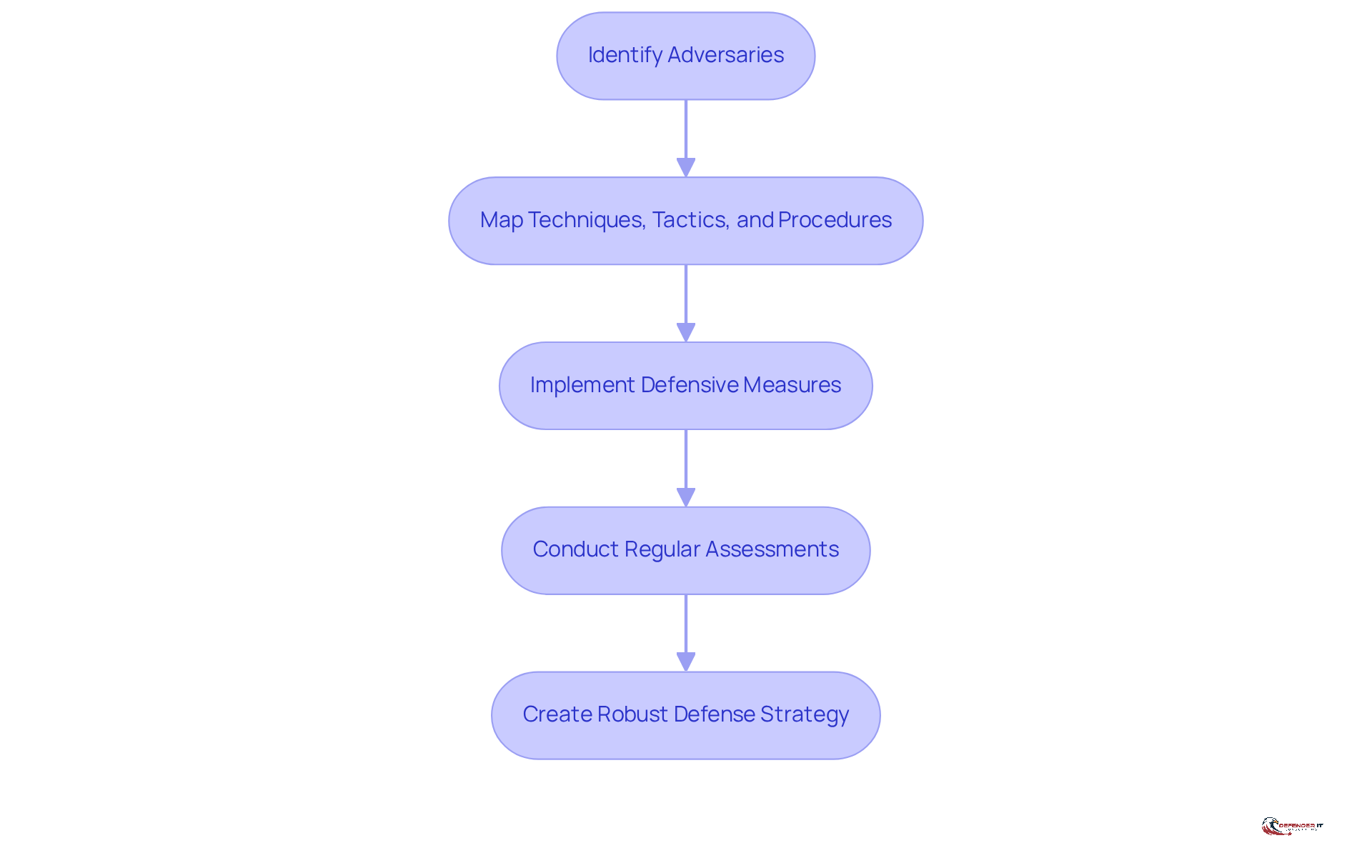
To effectively apply TTP analysis, organizations should follow these steps:
- Identify Adversaries: Research and recognize the adversaries relevant to your industry. Utilize threat intelligence reports to comprehend their tactics, techniques, and procedures.
- Map Techniques, Tactics, and Procedures to Your Environment: Analyze how these strategies could be applied within your organization’s infrastructure.
- Implement Defensive Measures: Based on the identified tactics, implement specific protective controls. For example, if phishing is a common tactic, enhance email filtering and user training.
- Conduct Regular Assessments: Continuously assess and update your defenses based on evolving TTPs. Routine vulnerability evaluations and penetration testing can help uncover gaps in your protective stance.
By systematically applying TTP analysis, entities can create a robust defense strategy that effectively addresses the tactics used by TTPs cybersecurity adversaries.
Integrate TTPs with Cybersecurity Frameworks for Enhanced Protection
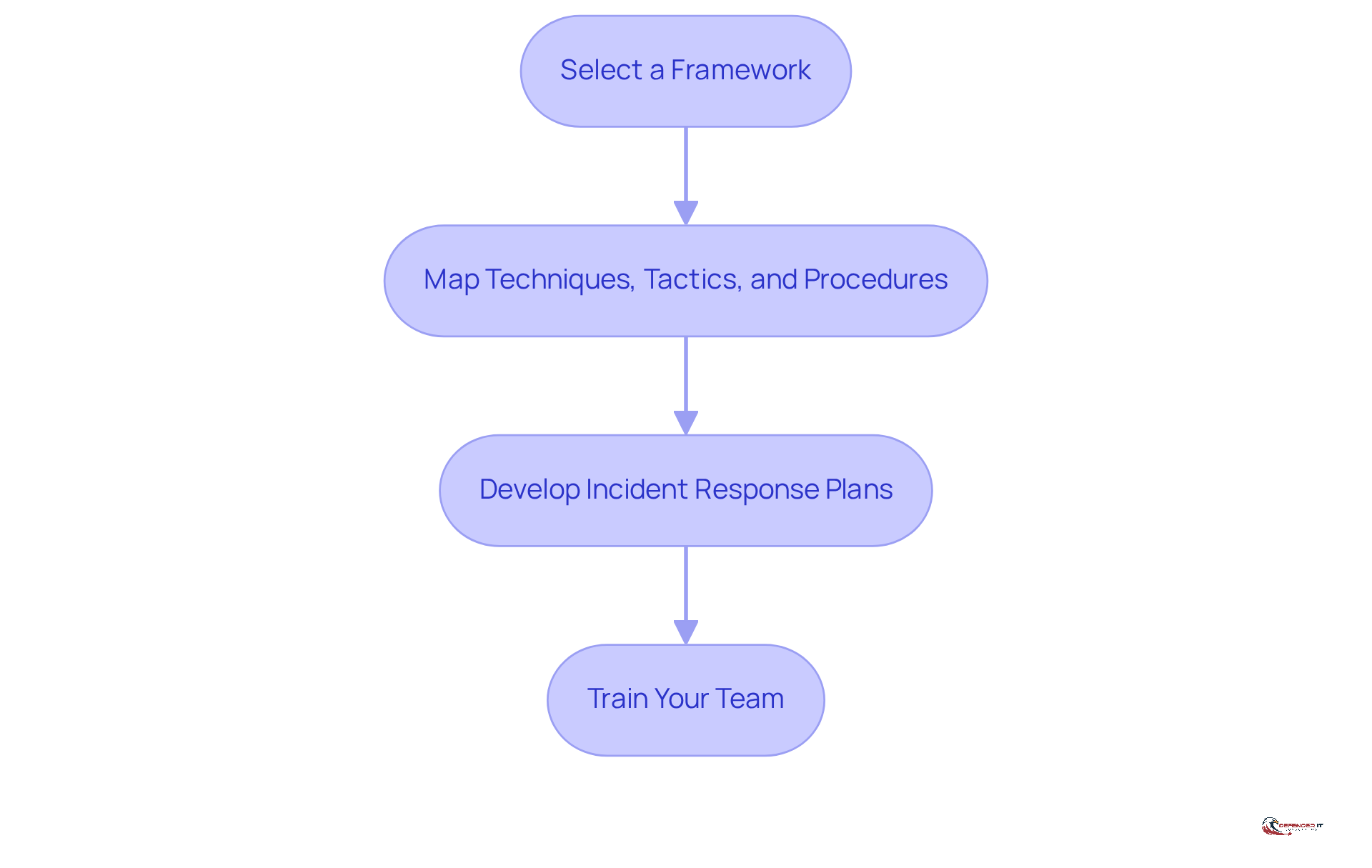
Incorporating tactics, techniques, and procedures alongside cybersecurity frameworks significantly enhances a company’s security posture. This integration can be achieved through a structured approach:
- Select a Framework: Start by choosing a cybersecurity framework that aligns with your organization’s objectives. Popular options include the NIST Cybersecurity Framework, ISO 27001, and MITRE ATT&CK, each offering unique benefits tailored to different operational needs.
- Map Techniques, Tactics, and Procedures to the Framework: Align the identified techniques, tactics, and procedures with the selected framework. For instance, specific tactics can be mapped to corresponding controls within the NIST Cybersecurity Framework, ensuring that your security measures are both comprehensive and targeted. As Gartner notes, “companies adopting continuous threat exposure management will be three times less likely to suffer breaches,” highlighting the importance of integrating these elements with established frameworks.
- Develop Incident Response Plans: Formulate incident response plans that incorporate tactics, techniques, and procedures. This proactive approach ensures that your team is well-prepared to respond effectively to attacks based on known adversary behaviors, thereby enhancing overall resilience. The SANS Incident Response PICERL framework can serve as a valuable method for developing these plans, breaking down the response process into actionable phases.
- Train Your Team: Conduct training sessions to familiarize your personnel with the integrated framework and tactics. This training will enhance their ability to identify and respond to threats, fostering a culture of security awareness within the organization. As Illena Armstrong, President, states, “The businesses that thrive in the future will not be those that have never been hit by cyber hacks or crimes, but those which have built the strongest capability to recover from them.”
By effectively combining tactics, techniques, and procedures with established frameworks, organizations can create a more robust cybersecurity strategy, better equipped to manage the complexities of evolving cyber risks. This approach not only enhances operational readiness but also aligns with best practices in cybersecurity management.
Monitor and Adapt TTPs to Evolving Cyber Threats
To effectively monitor and adapt TTPs, organizations should implement several key strategies:
- Establish Threat Intelligence Feeds: Organizations should subscribe to threat intelligence services that provide timely updates on emerging tactics, techniques, and procedures, as well as threat actor activities. This practice ensures that organizations remain informed about the latest tactics employed by adversaries.
- Conduct Regular Reviews: It is essential to schedule consistent reviews of TTPs and associated defenses. This process should involve examining incident reports and risk intelligence to identify trends and modify strategies accordingly. Routine evaluations have been statistically shown to enhance the efficiency of ttps cybersecurity strategies; organizations that conduct these reviews are better equipped to respond to risks, as highlighted by findings from IBM X-Force.
- Employ Automation Tools: Deploying automation tools that monitor tactics, techniques, and procedures in real-time is crucial. These tools can alert teams to suspicious actions that align with recognized tactics, techniques, and procedures, facilitating quicker responses to potential threats. Many incidents stem from lapses in fundamental ttps cybersecurity hygiene, underscoring the importance of these automated practices.
- Engage in Risk Detection: Organizations should proactively search for threats by simulating techniques and procedures within their environments. This approach aids in identifying vulnerabilities before they can be exploited, thereby strengthening the entity’s security posture.
By continuously monitoring and adapting TTPs, organizations can improve their ttps cybersecurity efforts to stay ahead of cyber threats, ensuring their defenses remain robust and effective. The integration of automated tools and regular reviews is vital, as emphasized by Christopher Caridi from IBM X-Force, who noted that organizations with fewer credential-based incidents enforce strong identity management practices.

Conclusion
In conclusion, understanding and mastering Tactics, Techniques, and Procedures (TTPs) is crucial for strengthening cybersecurity defenses against increasingly sophisticated threats. A comprehensive analysis of TTPs enables organizations to develop targeted strategies that enhance situational awareness and empower effective responses to the evolving landscape of cyber threats.
Key insights throughout this article underscore the importance of identifying adversaries, mapping their methodologies to organizational frameworks, and implementing proactive defensive measures. Continuous monitoring and adaptation of TTPs are essential, as they allow organizations to stay ahead of potential vulnerabilities and emerging attack vectors. Real-world examples illustrate the urgency of refining incident response strategies and integrating TTP knowledge into training protocols to ensure better preparedness.
Ultimately, a robust cybersecurity strategy relies on the effective application of TTP analysis. Organizations are encouraged to adopt a proactive stance by leveraging threat intelligence, conducting regular assessments, and integrating established cybersecurity frameworks with TTP insights. This approach not only bolsters defenses but also cultivates a culture of resilience, which is vital for navigating the complexities of today’s cyber environment.
Frequently Asked Questions
What are Tactics, Techniques, and Procedures (TTPs) in cybersecurity?
TTPs are foundational elements that define the operational methods of cyber adversaries. Tactics refer to the overarching objectives of an attack, such as data theft or system disruption. Techniques are the specific methods used to achieve these objectives, like phishing or exploiting software vulnerabilities. Procedures detail the exact steps taken to implement these techniques, including the tools and scripts utilized by attackers.
Why is understanding TTPs important in 2026?
Understanding TTPs is crucial in 2026 due to the increasing sophistication of cyber adversaries who are adopting advanced methods to bypass traditional defenses. There has been a significant rise in attacks from AI-powered adversaries, necessitating organizations to adapt their cybersecurity measures accordingly.
What recent trends have been observed in cyber attacks?
There has been an 89% increase in attacks from AI-powered adversaries, with 82% of reported detections being malware-free. Attackers are also leveraging trusted platforms, such as cloud storage, for data exfiltration, blending malicious activities with legitimate traffic to evade detection.
How can analyzing TTPs help organizations?
By analyzing the TTPs associated with specific threat actors, security teams can develop targeted defenses that address the unique methodologies employed by these actors. This proactive strategy enhances situational awareness and allows organizations to identify indicators of compromise early in the attack lifecycle.
What is the significance of the average eCrime breakout time?
The average eCrime breakout time has decreased to just 29 minutes, highlighting the urgent need for organizations to refine their incident response strategies in line with actual attacker methodologies.
How can organizations improve their incident response capabilities?
Integrating TTP knowledge into standard training protocols significantly enhances incident response capabilities and situational awareness in TTPs cybersecurity, empowering organizations to stay ahead of emerging threats.
What role do cybersecurity frameworks like MITRE ATT&CK play in understanding TTPs?
Cybersecurity frameworks like MITRE ATT&CK continue to evolve and provide a structured approach to understanding TTPs, which is essential for crafting effective defense strategies capable of withstanding the complexities of today’s cyber landscape.
List of Sources
- Define Tactics, Techniques, and Procedures (TTPs) in Cybersecurity
- bitsight.com (https://bitsight.com/blog/top-cybersecurity-ttps-used-by-threat-actors-in-2025)
- tidalcyber.com (https://tidalcyber.com/blog/adversary-ttps-are-rapidly-evolving-what-it-means-for-your-soc)
- proofpoint.com (https://proofpoint.com/us/threat-reference/tactics-techniques-procedures-ttps)
- crowdstrike.com (https://crowdstrike.com/en-us/global-threat-report)
- nu.edu (https://nu.edu/blog/cybersecurity-key-threats-and-skills)
- Apply TTP Analysis to Strengthen Cybersecurity Defenses
- blog.cloudflare.com (https://blog.cloudflare.com/2026-threat-report)
- Global Cybersecurity Outlook 2026 (https://weforum.org/publications/global-cybersecurity-outlook-2026/in-full/3-the-trends-reshaping-cybersecurity)
- cybersecurity.asee.io (https://cybersecurity.asee.io/blog/cybersecurity-trends-2026)
- trendmicro.com (https://trendmicro.com/en\_us/research/26/d/us-public-sector-under-siege.html)
- news.vt.edu (https://news.vt.edu/articles/2026/02/top-cybersecurity-concerns-2026-experts.html)
- Integrate TTPs with Cybersecurity Frameworks for Enhanced Protection
- Global Cybersecurity Outlook 2026 (https://weforum.org/publications/global-cybersecurity-outlook-2026/in-full/3-the-trends-reshaping-cybersecurity)
- fedscoop.com (https://fedscoop.com/updated-nist-cybersecurity-framework-adds-core-function-focuses-on-supply-chain-risk-management)
- paloaltonetworks.com (https://paloaltonetworks.com/blog/2026/01/public-sector-cyber-outlook)
- infosecurity-magazine.com (https://infosecurity-magazine.com/news/usa-unveils-new-cyber-strategy)
- 10 Cyber Security Trends For 2026 (https://sentinelone.com/cybersecurity-101/cybersecurity/cyber-security-trends)
- Monitor and Adapt TTPs to Evolving Cyber Threats
- Cybersecurity Trends 2026 | IBM (https://ibm.com/think/insights/more-2026-cyberthreat-trends)
- Cyber threats to watch in 2026 – and other cybersecurity news (https://weforum.org/stories/2026/02/2026-cyberthreats-to-watch-and-other-cybersecurity-news)
- trendmicro.com (https://trendmicro.com/en\_us/research/26/d/us-public-sector-under-siege.html)
- 5 cybersecurity trends to watch in 2026 (https://cybersecuritydive.com/news/5-cybersecurity-trends-2026/810354)