Business
Understanding Digital Transformation Consulting for Security Leaders
Published June 4, 2026
Introduction
As technological advancements reshape the business landscape, organizations face significant challenges in balancing innovation with security needs. Digital transformation consulting provides strategies to improve operational efficiency while ensuring data protection. However, as reliance on digital technologies increases, the integration of security measures into these transformations presents significant challenges for organizations. Failure to address these challenges may result in vulnerabilities that expose organizations to cyber threats.
Define Digital Transformation Consulting
The integration of modern technologies presents both opportunities and challenges for businesses seeking to enhance their operational efficiency and client value. Our service in digital transformation consulting helps organizations tackle the complexities of adopting new technologies, optimizing processes, and enhancing customer experiences. This service encompasses a wide range of activities, including:
- Assessing current capabilities
- Identifying gaps
- Utilizing digital transformation consulting to develop tailored strategies that achieve desired outcomes
In cybersecurity, it is crucial to integrate security protocols throughout the technology adoption process to protect sensitive information and ensure compliance with regulations. Organizations often struggle to keep pace with rapid technological advancements, leading to inefficiencies and missed opportunities. Without a strategic approach to technology adoption, organizations risk falling behind in a competitive landscape, jeopardizing their customer relationships and compliance efforts.

Context and Importance in Modern Business
In an era defined by rapid technological evolution, businesses face a dual-edged sword of challenges and opportunities. Digital transformation consulting is essential for organizations aiming to navigate and thrive in this evolving landscape. This digital transformation consulting service is essential for helping businesses boost their agility, efficiency, and focus on customers. The increasing reliance on digital technologies exposes organizations to heightened cyber threats, complicating their operational landscape.
Integrating security measures is vital for protecting sensitive information and maintaining compliance with industry regulations. For security leaders, understanding this context is crucial for making informed choices concerning their organizations’ online strategies, especially as around 25% of IT decision-makers recognize cyber threats as a major challenge in technological advancement efforts.
Experts emphasize that every successful digital transformation consulting should be accompanied by a corresponding security enhancement initiative, highlighting the interrelation of these two areas. As Ethan Bresnahan states, “Successful online change depends on strong security measures that consistently adapt and grow according to emerging technology, compliance risks, and cyber threats.”
Additionally, organizations should develop a cybersecurity framework aligned with their business goals to guide the implementation of security measures, ensuring that they are well-prepared to navigate the evolving risk landscape. Organizations that fail to integrate security into their digital transformation consulting strategies risk not only their data but also their competitive edge.

Key Characteristics and Components
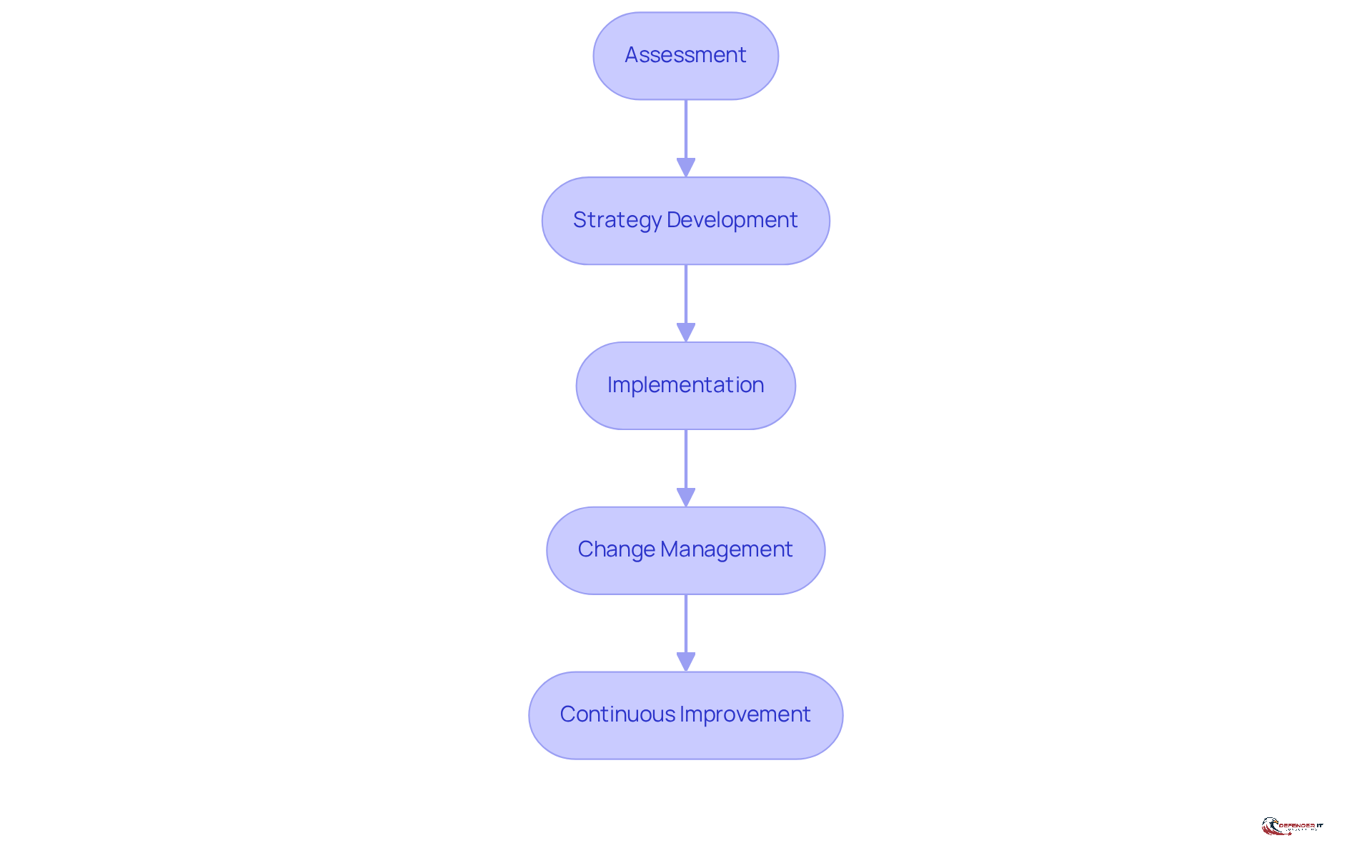
Effective online change consulting emphasizes customer experience, data-informed decision-making, and the integration of advanced technologies. Organizations often face challenges in adapting to rapidly changing technological landscapes, making digital transformation consulting essential for effective online change. The essential components of effective online change consulting include:
- Assessment: Evaluating the current state of the organization’s technological capabilities and identifying areas for improvement.
- Strategy Development: Creating a customized online evolution strategy that aligns with business goals and addresses cybersecurity issues.
- Implementation: Executing the strategy through the adoption of new technologies, processes, and practices.
- Change Management: Ensuring that employees are equipped to adapt to new systems and processes through training and support.
- Continuous Improvement: This involves establishing mechanisms for ongoing evaluation and enhancement of technological initiatives, ensuring organizations can respond effectively to evolving threats and opportunities. Without a robust framework for continuous improvement, organizations may find themselves unprepared for future technological disruptions, highlighting the importance of digital transformation consulting.
Real-World Examples and Applications
Technological change advisory services have become essential for organizations aiming to enhance operational efficiency and security protocols. Entities across various industries have successfully employed these services to strengthen their operations and improve security measures.
For instance, a leading bank launched an extensive technology modernization project that involved enhancing its security framework. This strategic move significantly reduced data breaches. Automation solutions not only cut costs by removing the need for manual intervention but also bolstered customer trust in the institution.
In the healthcare sector, a provider implemented telemedicine solutions that expanded patient access while integrating stringent security protocols to safeguard sensitive health information. As noted by Auxis, “This approach was not only more efficient but also financially prudent, helping the client save the costs of hiring additional staff.”
These examples illustrate the tangible benefits of digital transformation consulting, which include increased efficiency, enhanced security, and greater customer satisfaction. Furthermore, statistics indicate that organizations embracing digital transformation consulting experience a significant decrease in data breaches, reinforcing the critical role of cybersecurity in modern business strategies. Thus, the integration of robust cybersecurity measures is not merely an option but a necessity for organizations navigating the complexities of digital transformation consulting.

Conclusion
Organizations face significant challenges in navigating the complexities of digital transformation, making consulting services essential for success. Digital transformation consulting plays a pivotal role in equipping organizations to adopt new technologies while enhancing operational efficiency and customer engagement. This service focuses on integrating advanced technologies while also highlighting the need to embed security measures throughout the transformation process. By doing so, organizations can safeguard sensitive information and ensure compliance, ultimately positioning themselves for success in a competitive landscape.
Throughout the article, key insights highlight the necessity of a strategic approach to digital transformation. This includes:
- Assessing current capabilities
- Identifying gaps
- Developing tailored strategies that align with business goals
Real-world examples from various sectors, such as banking and healthcare, demonstrate the tangible benefits of effective digital transformation consulting, including reduced data breaches and improved customer trust. Furthermore, the interconnectedness of cybersecurity and digital transformation underscores the need for security leaders to be proactive in their strategies. Without a strategic approach, organizations risk falling behind in a competitive landscape.
Recognizing that digital transformation is a comprehensive strategy rather than just a technological upgrade is crucial for organizations. Embracing digital transformation consulting can lead to enhanced agility, efficiency, and security, ultimately driving sustainable growth. As businesses continue to evolve in the face of rapid technological advancements, prioritizing both transformation and security will be essential for thriving in an increasingly digital world. Ultimately, the integration of digital transformation consulting and robust security measures will determine an organization’s ability to thrive in a rapidly evolving digital landscape.
Frequently Asked Questions
What is digital transformation consulting?
Digital transformation consulting is a service that helps organizations integrate modern technologies to enhance operational efficiency and improve client value. It involves assessing current capabilities, identifying gaps, and developing tailored strategies for technology adoption.
What activities are included in digital transformation consulting?
The activities include assessing current capabilities, identifying gaps, and utilizing consulting services to create customized strategies that achieve desired outcomes.
Why is cybersecurity important in digital transformation?
Cybersecurity is crucial in digital transformation to ensure that security protocols are integrated throughout the technology adoption process, protecting sensitive information and ensuring compliance with regulations.
What challenges do organizations face in digital transformation?
Organizations often struggle to keep pace with rapid technological advancements, which can lead to inefficiencies and missed opportunities. Without a strategic approach, they risk falling behind in a competitive landscape, jeopardizing customer relationships and compliance efforts.
How can organizations benefit from digital transformation consulting?
Organizations can benefit by receiving expert guidance on technology adoption, improving processes, enhancing customer experiences, and ultimately achieving better operational efficiency and value.
List of Sources
- Define Digital Transformation Consulting
- 16 Digital Transformation Statistics You Can’t Ignore (https://businessmap.io/blog/digital-transformation-statistics)
- How Digital Transformation Impacts Cybersecurity | DPO Consulting (https://dpo-consulting.com/blog/digital-transformation-and-cybersecurity)
- Digital Transformation Statistics and Facts (https://market.us/statistics/information-and-communication/digital-transformation)
- Digital Transformation in 2026: Strategies, Benefits, & Real-World Examples | Splunk (https://splunk.com/en\_us/blog/learn/digital-transformation.html)
- Industry News 2025 Cybersecurity Governance in Digital Transformation (https://isaca.org/resources/news-and-trends/industry-news/2025/cybersecurity-governance-in-digital-transformation)
- Context and Importance in Modern Business
- techtarget.com (https://techtarget.com/searchsecurity/feature/Should-cybersecurity-be-part-of-your-digital-transformation-strategy)
- Industry News 2025 Cybersecurity Governance in Digital Transformation (https://isaca.org/resources/news-and-trends/industry-news/2025/cybersecurity-governance-in-digital-transformation)
- How Digital Transformation Impacts Cybersecurity | DPO Consulting (https://dpo-consulting.com/blog/digital-transformation-and-cybersecurity)
- erelego.com (https://erelego.com/blog/digital-transformation-struggles-businesses-need-to-overcome-in-2026)
- cybersaint.io (https://cybersaint.io/blog/managing-risk-in-digital-transformation)
- Key Characteristics and Components
- Digital Transformation in 2026: Strategies, Benefits, & Real-World Examples | Splunk (https://splunk.com/en\_us/blog/learn/digital-transformation.html)
- prosci.com (https://prosci.com/blog/digital-transformation-best-practices)
- Digital Transformation Trends in 2026 – Insights from the Best Transformation Consulting Firms (https://trndigital.com/blog/digital-transformation-trends-in-2026-insights-from-the-best-transformation-consulting-firms)
- qentelli.com (https://qentelli.com/insights/blogs/digital-transformation-strategy-key-components)
- State of Digital Transformation 2026: Enhancing Digital Strategy (https://teksystems.com/en/insights/state-of-digital-transformation-2026)
- Real-World Examples and Applications
- heidihealth.com (https://heidihealth.com/blog/digital-transformation-in-healthcare)
- auxis.com (https://auxis.com/case-study/a-banking-digital-transformation-case-study)
- ibm.com (https://ibm.com/think/topics/digital-transformation-use-cases)
- lek.com (https://lek.com/insights/healthcare-services/best-practise-case-study-diaverums-digital-transformation)