General
Understanding the Role of a Cybersecurity Compliance Consultant
Published April 10, 2026
Introduction
The role of cybersecurity compliance consultants has become increasingly critical due to the growing complexity of digital threats and the evolving landscape of regulations. These professionals act as essential guides for organizations as they navigate the intricate web of laws and standards designed to safeguard sensitive information.
With industries facing heightened pressure to adhere to stringent regulations, organizations must consider how to effectively leverage the expertise of cybersecurity compliance consultants. This collaboration not only helps meet compliance requirements but also enhances the overall security posture of the organization.
Define Cybersecurity Compliance Consultant
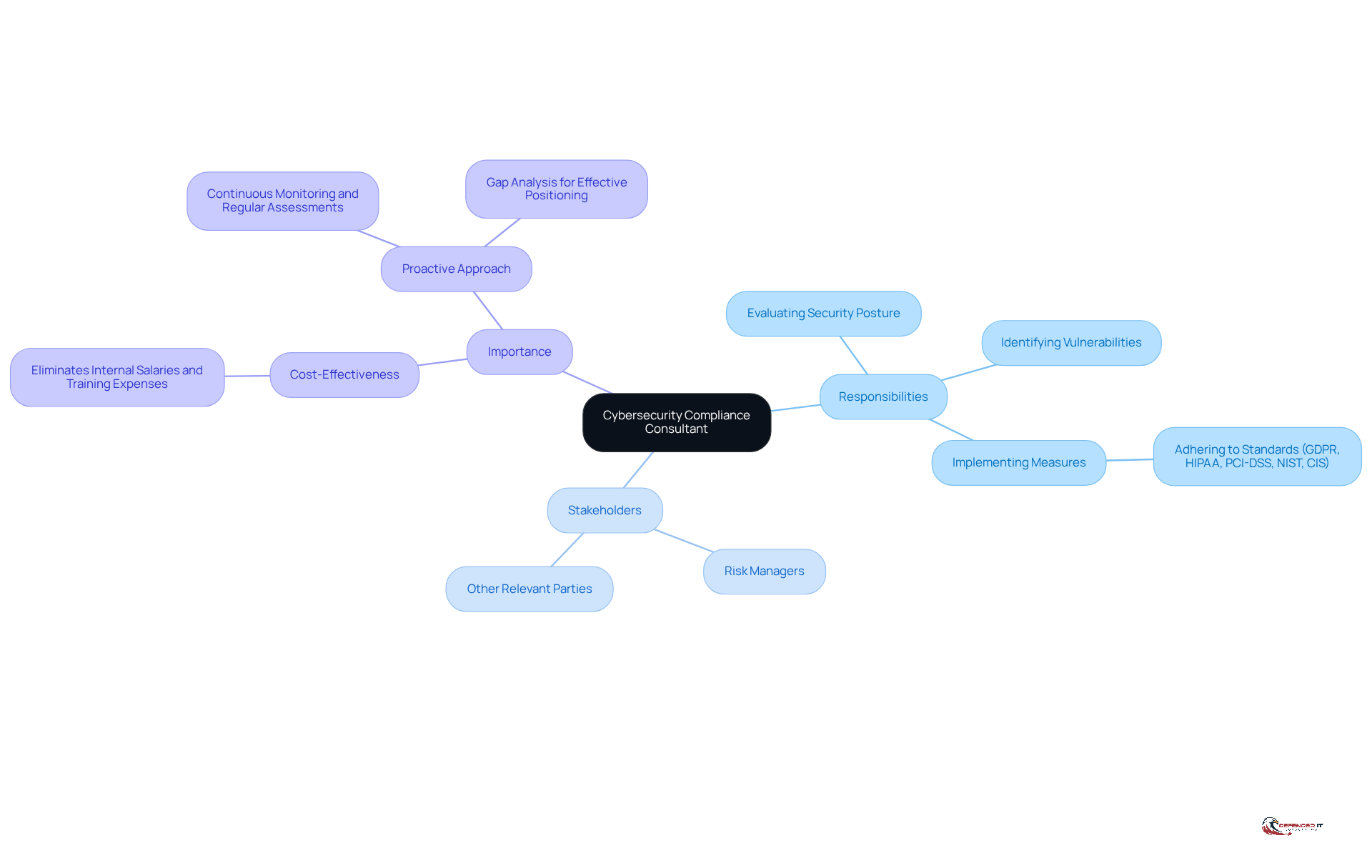
A cybersecurity compliance consultant plays a crucial role in ensuring that organizations comply with relevant laws, regulations, and standards concerning information protection. Their primary responsibilities include:
- Evaluating a company’s security posture
- Identifying vulnerabilities
- Implementing necessary measures to adhere to standards such as GDPR, HIPAA, PCI-DSS, NIST, and CIS
These specialists work closely with various stakeholders, including Risk Managers, to develop and maintain regulatory programs that not only protect sensitive information but also enhance the overall security posture of the organization. Their expertise is particularly essential in regulated industries, where non-compliance can result in significant penalties and reputational harm.
Moreover, outsourcing a cybersecurity compliance consultant proves to be a cost-effective strategy, as it eliminates the need for internal salaries and training expenses. Through comprehensive gap assessments, these specialists evaluate existing protective measures against regulatory requirements, helping organizations identify gaps and formulate targeted strategies to bolster data protection and mitigate risks.
The proactive approach adopted by cybersecurity specialists ensures that organizations remain resilient against emerging threats while navigating the complexities of regulatory compliance. Continuous monitoring and regular assessments following the implementation of regulatory strategies are vital for adapting security measures to evolving threats. As Rhett Bauer, Director of Cybersecurity Advisory & Consulting at RAMPQuest, notes, ‘Starting with a gap analysis can help determine what investments are needed and how to prioritize those for effective positioning.
Context and Importance in Regulated Industries
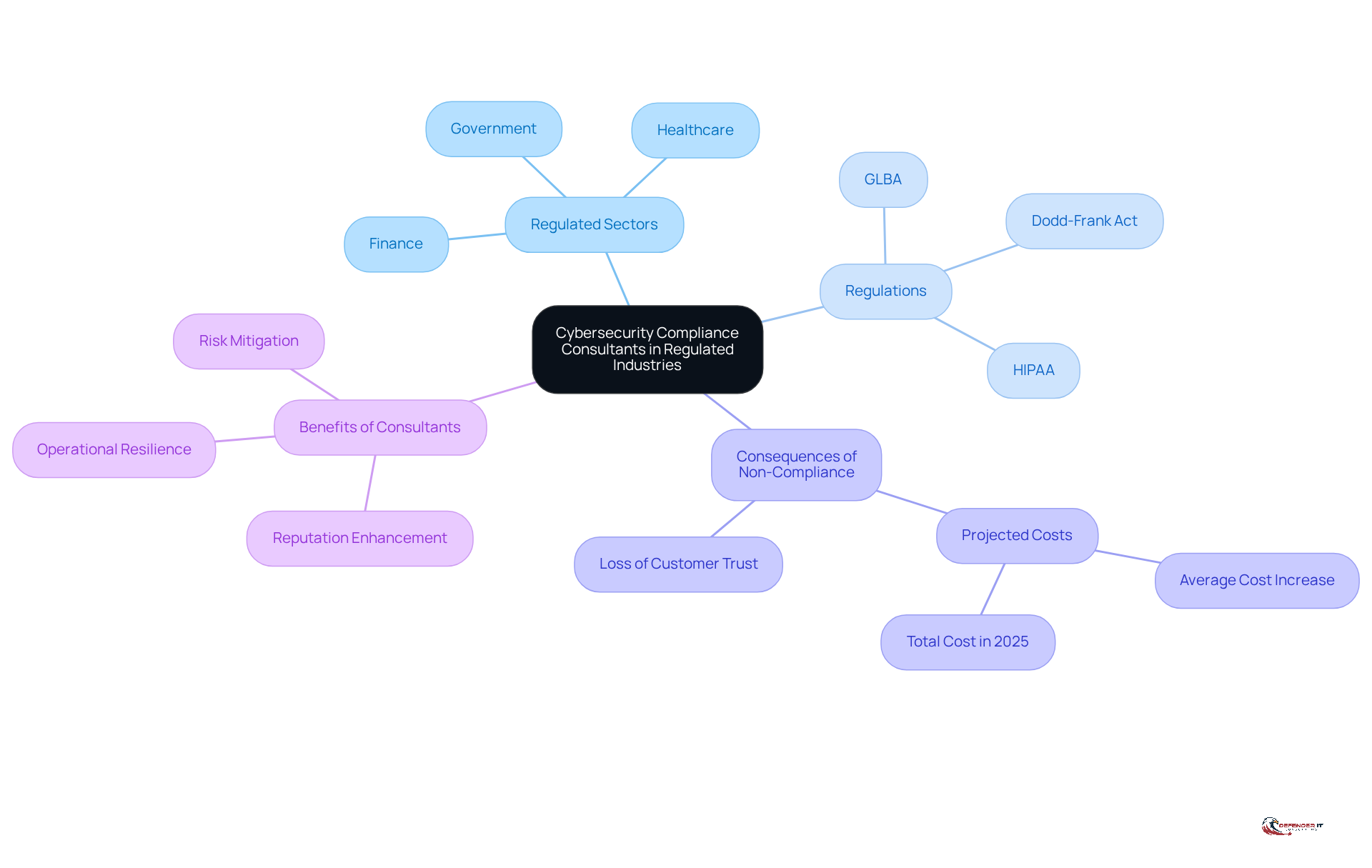
In regulated sectors such as finance, healthcare, and government, a cybersecurity compliance consultant plays a crucial role. These sectors are subject to stringent regulations designed to protect sensitive information and ensure operational integrity. For example, financial institutions must comply with the Gramm-Leach-Bliley Act (GLBA) and the Dodd-Frank Act, while healthcare organizations are required to adhere to HIPAA standards.
The consequences of non-compliance can be significant; breaches associated with non-compliance factors are projected to cost an average of $174,000 more, totaling $4.61 million overall in 2025. Legal repercussions and a substantial decline in customer trust further complicate these challenges, as 56% of risk and regulatory experts identify adherence to regulations as their primary concern.
A cybersecurity compliance consultant aids organizations in navigating these complex regulatory landscapes, ensuring the implementation of essential measures and practices to mitigate risks and uphold standards. Their expertise not only protects sensitive data but also enhances the organization’s reputation and operational resilience, establishing them as invaluable partners in adapting to the evolving regulatory environment.
Key Responsibilities and Skills of Cybersecurity Compliance Consultants
Cybersecurity compliance consultants play a crucial role in ensuring organizations comply with regulations. Their responsibilities encompass conducting risk assessments, developing regulatory frameworks, and performing audits to verify conformity with relevant laws.
Key skills required for this role include:
- Regulatory Knowledge: A comprehensive understanding of applicable laws and standards is vital for guiding organizations through compliance requirements.
- Risk Assessment: The capability to identify and evaluate potential threats is essential for formulating effective adherence strategies.
- Analytical Skills: Consultants must analyze complex data and security practices to recommend necessary improvements.
- Communication Skills: Effective communication is critical for collaborating with stakeholders and educating staff on regulatory matters.
- Project Management: Efficient management of adherence projects ensures the timely implementation of necessary measures.
These skills empower a cybersecurity compliance consultant to offer actionable insights and tailored solutions that enhance an organization’s security posture while ensuring compliance with relevant regulations.

Evolution of Cybersecurity Compliance Consulting
The area of cybersecurity regulatory consulting has undergone significant transformation over the past few decades. Initially, adherence efforts primarily concentrated on fundamental data protection measures. However, as cyber threats have evolved and regulatory demands have intensified, the role of regulatory advisors has expanded considerably. Key milestones in this evolution include:
- Emergence of Regulations: The introduction of pivotal laws such as HIPAA in the 1990s and GDPR in 2018 marked a significant turning point, establishing formal compliance requirements for data protection across various sectors.
- Increased Cyber Threats: The rise in cyberattacks, including notable data breaches and ransomware incidents, has underscored the necessity for robust governance frameworks that not only meet regulatory standards but also enhance overall security posture.
- Integration of Technology: The incorporation of advanced technologies, such as artificial intelligence and machine learning, has revolutionized regulatory practices, enabling organizations to adopt more proactive risk management strategies.
- Recent Regulatory Changes: Significant modifications to federal cybersecurity in 2025, including the rollout of the Cybersecurity Maturity Model Certification (CMMC) and stricter restrictions on controlled unclassified information, have further complicated adherence requirements.
- Future Enforcement Actions: As we look ahead to 2026, increased enforcement actions are anticipated, which will exert additional pressure on organizations to comply with regulations.
- Automation Tools: The emergence of automation tools, such as CyberArrow, is aiding companies in optimizing adherence processes, simplifying the management of the complexities associated with regulatory requirements.
- Challenges in Demonstrating Adherence: Organizations frequently encounter difficulties in demonstrating consistent adherence, which is critical in the current regulatory landscape.
Today, a cybersecurity compliance consultant plays a vital role in guiding organizations through this complex environment, ensuring compliance while effectively managing cybersecurity risks. Their expertise is essential in navigating the intricate web of regulations and implementing best practices that protect sensitive data.

Real-World Applications and Case Studies
Cybersecurity advisory experts have made significant contributions across various sectors, underscoring their essential role in enhancing security and ensuring regulatory compliance. Here are several notable case studies:
- Healthcare Sector: A prominent hospital network engaged a compliance consultant to address gaps in HIPAA compliance. The consultant conducted a comprehensive risk assessment, developed a robust regulatory program, and provided staff training. Consequently, the hospital network markedly improved its compliance posture, reducing the risk of data breaches and bolstering patient trust. Mark Ludwig, CEO of Bonafide Healthcare, stated, “As the industry continues to evolve, we recognize the need to strengthen our approach to cybersecurity and HIPAA compliance.”
- Financial Services: A regional bank encountered difficulties in fulfilling the requirements of the Dodd-Frank Act. By partnering with a cybersecurity regulatory consultant, the bank established a solid regulatory framework that included regular audits and risk assessments. This proactive strategy not only ensured compliance but also enhanced customer trust and satisfaction, leading to a measurable increase in client retention. The cybersecurity regulatory consulting market is projected to experience substantial growth, as highlighted by Deloitte and PwC, reflecting the increasing demand for such services.
- Manufacturing Industry: A manufacturing firm aimed to comply with ISO 27001 standards. The advisor assisted the organization in developing an information security management system (ISMS), which resulted in improved data protection practices and operational efficiency. This initiative not only fulfilled regulatory requirements but also streamlined processes, contributing to overall business resilience. The Regulatory Consulting Services market is expected to grow at a CAGR of XX% from 2019 to 2026, reaching USD XX million by the end of 2025, emphasizing the importance of regulatory consulting in the contemporary business landscape.
These examples illustrate the pivotal role that a cybersecurity compliance consultant plays in assisting organizations to navigate complex regulatory environments, enhance their overall security posture, and achieve measurable improvements in compliance and operational effectiveness.

Conclusion
The pivotal role of a cybersecurity compliance consultant is crucial, as these professionals are integral in guiding organizations through the intricate landscape of regulatory requirements. By ensuring compliance with laws such as GDPR, HIPAA, and PCI-DSS, they not only safeguard sensitive information but also bolster the overall security posture of businesses across diverse sectors.
Key responsibilities of cybersecurity compliance consultants include:
- Conducting risk assessments
- Developing regulatory frameworks
- Performing ongoing audits
Their unique skill set – comprising regulatory knowledge, risk assessment capabilities, analytical prowess, effective communication, and project management – enables them to deliver tailored solutions that meet the specific needs of organizations. Real-world case studies illustrate how these consultants have successfully enhanced compliance and security in industries such as healthcare, finance, and manufacturing.
As regulatory environments continue to evolve and cyber threats grow increasingly sophisticated, the demand for cybersecurity compliance consultants is set to rise. Organizations must acknowledge the importance of investing in these experts, not only to meet compliance standards but also to cultivate trust and resilience within their operations. Adopting a proactive approach to cybersecurity compliance is not merely a necessity; it is a strategic imperative that can significantly impact an organization’s reputation and long-term success.
Frequently Asked Questions
What is the role of a cybersecurity compliance consultant?
A cybersecurity compliance consultant ensures that organizations comply with relevant laws, regulations, and standards regarding information protection. Their primary responsibilities include evaluating a company’s security posture, identifying vulnerabilities, and implementing necessary measures to adhere to standards such as GDPR, HIPAA, PCI-DSS, NIST, and CIS.
Why are cybersecurity compliance consultants important in regulated industries?
In regulated sectors like finance, healthcare, and government, cybersecurity compliance consultants are crucial due to stringent regulations designed to protect sensitive information. Non-compliance can lead to significant penalties, legal repercussions, and a decline in customer trust, making their expertise vital for navigating complex regulatory landscapes.
How can outsourcing a cybersecurity compliance consultant benefit an organization?
Outsourcing a cybersecurity compliance consultant can be cost-effective as it eliminates the need for internal salaries and training expenses. This allows organizations to access specialized expertise without the overhead costs associated with maintaining an in-house team.
What methods do cybersecurity compliance consultants use to assess an organization’s security?
Cybersecurity compliance consultants conduct comprehensive gap assessments to evaluate existing protective measures against regulatory requirements. This helps organizations identify gaps and formulate targeted strategies to enhance data protection and mitigate risks.
What are the potential financial consequences of non-compliance?
Breaches associated with non-compliance are projected to cost organizations an average of $174,000 more, totaling $4.61 million overall in 2025. This includes legal repercussions and a substantial decline in customer trust.
How do cybersecurity compliance consultants help organizations adapt to evolving threats?
Cybersecurity compliance consultants adopt a proactive approach by conducting continuous monitoring and regular assessments following the implementation of regulatory strategies. This ensures that security measures are adapted to evolving threats and that organizations remain resilient.
What is a gap analysis, and why is it important?
A gap analysis is a method used to determine what investments are needed and how to prioritize them for effective positioning in terms of cybersecurity compliance. It helps organizations identify areas for improvement and focus on essential measures to enhance their security posture.
List of Sources
- Define Cybersecurity Compliance Consultant
- Driving Success Through Cybersecurity Compliance Consulting | RAMPQuest (https://rampquest.com/blog/driving-success-through-cybersecurity-compliance-consulting)
- Integris Expands Cybersecurity Services with New Compliance Offering in Collaboration with IntelliGRC (https://prnewswire.com/news-releases/integris-expands-cybersecurity-services-with-new-compliance-offering-in-collaboration-with-intelligrc-302652711.html)
- What Does Cybersecurity Compliance Mean? | CyberSecOp Consulting (https://cybersecop.com/news/2022/3/4/what-does-cybersecurity-compliance-mean)
- Cybersecurity Compliance Consulting Market Is Going to Boom |• Deloitte • PwC (https://openpr.com/news/4456044/cybersecurity-compliance-consulting-market-is-going-to-boom)
- 2025 reshaped federal cybersecurity, from new mandates to tougher compliance rules | Federal News Network (https://federalnewsnetwork.com/cybersecurity/2025/12/2025-reshaped-federal-cybersecurity-from-new-mandates-to-tougher-compliance-rules)
- Context and Importance in Regulated Industries
- FinCEN Issues Advisory to Financial Sector Enhancing Obligations with Respect to Policing Health Care Fraud Schemes (https://maynardnexsen.com/publication-fincen-issues-advisory-to-financial-sector-enhancing-obligations-with-respect-to-policing-health-care-fraud-schemes)
- The Consequences of Non-Compliance in Healthcare – 2026 Update (https://hipaajournal.com/consequences-of-non-compliance-in-healthcare)
- Cyber Insights 2026: Regulations and the Tangled Mess of Compliance Requirements (https://securityweek.com/cyber-insights-2026-regulations-and-the-tangled-mess-of-compliance-requirements)
- Privacy and Cybersecurity 2025–2026: Insights, challenges, and trends ahead | White & Case LLP (https://whitecase.com/insight-alert/privacy-and-cybersecurity-2025-2026-insights-challenges-and-trends-ahead)
- 130+ Compliance Statistics & Trends to Know for 2026 (https://secureframe.com/blog/compliance-statistics)
- Key Responsibilities and Skills of Cybersecurity Compliance Consultants
- 41 Cybersecurity Quotes to Protect Your Digital Life (https://acecloudhosting.com/blog/cybersecurity-quotes)
- IT Security & Compliance Consultants: What They Do & How They Help (https://bridgepointconsulting.com/insights/it-security-compliance-consultants-skills-job-duties-hiring-benefits)
- Cybersecurity Compliance Analyst Skills & Careers (https://trailhead.salesforce.com/content/learn/modules/cybersecurity-compliance-analysis/discover-the-skills-of-a-cybersecurity-compliance-analyst)
- Compliance in Cybersecurity: Importance & Key Considerations (https://tatacommunications.com/knowledge-base/cyber-security/compliance-in-cybersecurity)
- Why Is Cybersecurity Compliance Important? | BlackFog (https://blackfog.com/why-is-cybersecurity-compliance-important)
- Evolution of Cybersecurity Compliance Consulting
- 2025 reshaped federal cybersecurity, from new mandates to tougher compliance rules | Federal News Network (https://federalnewsnetwork.com/cybersecurity/2025/12/2025-reshaped-federal-cybersecurity-from-new-mandates-to-tougher-compliance-rules)
- Cyber security compliance statistics for 2026 | CyberArrow (https://cyberarrow.io/blog/cyber-security-compliance-statistics)
- 5 new cybersecurity regulations businesses should know about | MIT Sloan (https://mitsloan.mit.edu/ideas-made-to-matter/5-new-cybersecurity-regulations-businesses-should-know-about)
- Privacy and Cybersecurity 2025–2026: Insights, challenges, and trends ahead | White & Case LLP (https://whitecase.com/insight-alert/privacy-and-cybersecurity-2025-2026-insights-challenges-and-trends-ahead)
- 280+ Cybersecurity Compliance Statistics for 2026 (https://brightdefense.com/resources/cybersecurity-compliance-statistics)
- Real-World Applications and Case Studies
- Cybersecurity Compliance Consulting Market Is Going to Boom |• Deloitte • PwC (https://openpr.com/news/4456044/cybersecurity-compliance-consulting-market-is-going-to-boom)
- Case Studies in Cybersecurity Compliance and Trust (https://trustnetinc.com/case-studies)
- Case Studies (https://clearwatersecurity.com/resources/case-studies)
- Cybersecurity | Compliance Week (https://complianceweek.com/news/cybersecurity)
- Cybersecurity and Data Resilience Case Studies | Kroll (https://kroll.com/en/publications/cyber/case-studies)