General
Understanding Tools Used in Penetration Testing for Security Leaders
Published February 25, 2026
Introduction
Understanding the landscape of cybersecurity necessitates a thorough examination of the tools that enable security leaders to protect their organizations. Penetration testing tools are not merely optional resources; they are essential instruments that identify vulnerabilities before malicious actors can exploit them. As cyber threats grow increasingly sophisticated, a pressing question emerges: how can security leaders effectively leverage these tools to strengthen their defenses and ensure compliance with evolving regulations? This article delves into the crucial role of penetration testing tools, categorizes them, and traces their evolution, offering insights into how organizations can enhance their security posture in a constantly changing digital environment.
Define Penetration Testing Tools and Their Importance
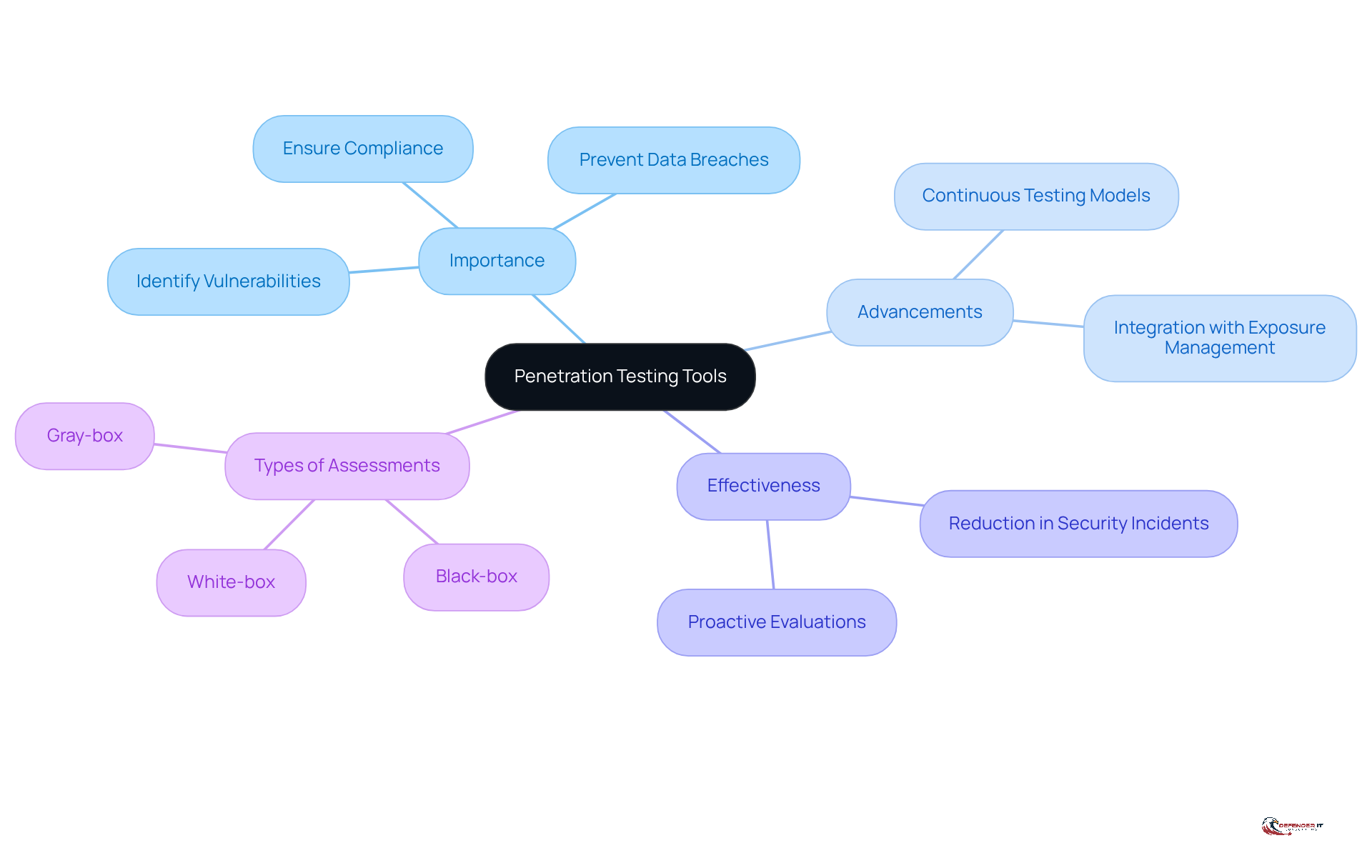
are specialized software programs designed to simulate cyberattacks on systems, networks, or applications. Their primary purpose is to identify vulnerabilities that malicious actors could exploit. The tools used in are essential for security leaders, offering critical insights into the effectiveness of existing security measures and enabling organizations to proactively address potential weaknesses. By utilizing , businesses can ensure compliance with regulatory standards, safeguard sensitive data, and enhance their overall . The significance of these assessments lies in their ability to reveal hidden vulnerabilities before they can be exploited, thereby preventing costly data breaches and reputational harm. As TrustCloud emphasizes, “Penetration assessment is not merely an optional exercise but an essential aspect of maintaining a robust in today’s digital environment.”
Recent advancements in security assessment tools have significantly improved their capabilities, allowing for more thorough evaluations of complex environments, including cloud infrastructures and IoT devices. For example, organizations are increasingly adopting that integrate findings into ongoing exposure management, rather than relying solely on static reports. This evolution not only enhances the speed and accuracy of threat detection but also fosters a culture of security awareness and continuous improvement.
Real-world examples illustrate the effectiveness of these resources. Organizations that have implemented strong assessment programs report , with data indicating that can prevent up to 73% of successful breaches associated with . As cyber threats evolve, the role of becomes increasingly critical, underscoring the necessity for organizations to invest in these vital resources to maintain a robust cybersecurity framework. Various , including white-box, black-box, and gray-box evaluations, further enhance the ability to identify weaknesses tailored to specific contexts.
Explore Categories of Penetration Testing Tools
tools can be categorized into several types based on their functionalities, each serving a unique purpose in assessing :
- : Tools such as Nmap and Nessus are essential for discovering devices on a network, identifying open ports, and determining active services.
- : Tools like Qualys and OpenVAS are designed to scan systems for known , providing critical insights into potential security gaps.
- : Metasploit, among others, enables testers to leverage identified weaknesses, allowing for an evaluation of the potential impact of an attack.
- : Tools including and OWASP ZAP focus on identifying vulnerabilities within web applications, such as SQL injection and cross-site scripting.
- : These resources simulate phishing attacks to assess employee awareness and reactions to social engineering tactics.
Each category plays a vital role in enabling security teams to conduct comprehensive assessments of their using tools used in .
 tools, with branches showing different categories. Each category lists specific tools that serve unique purposes in security assessments.](https://images.tely.ai/telyai/xmpmbqvj-the-center-represents-the-main-topic-of-penetration-testing-tools-with-branches-showing-different-categories-each-category-lists-specific-tools-that-serve-unique-purposes-in-security-assessments.webp "The center represents the main topic of penetration testing tools, with branches showing different categories. Each category lists specific tools that serve unique purposes in security assessments.")
Review Popular Penetration Testing Tools and Their Applications
Multiple , such as tools used in , have gained recognition for their efficiency and intuitive interfaces, each fulfilling unique functions in enhancing cybersecurity.
Main Insight: The importance of in improving cybersecurity is underscored by the increasing budgets allocated by organizations for these tools. In fact, 85 percent of organizations increased their last year, and 70% of companies perform security assessments for vulnerability management support, highlighting their critical role in organizational security strategies.
: This comprehensive exploitation platform enables security professionals to develop and execute exploit code against remote targets. Its extensive library of exploits and payloads facilitates a thorough examination of system vulnerabilities, establishing it as a cornerstone in penetration assessment. Recent updates in 2026 have introduced enhanced automation features and improved exploit capabilities, ensuring it remains at the forefront of security evaluation resources.
: Considered the industry benchmark for web application security testing, provides a collection of resources for scanning, crawling, and exploiting web applications. Its real-world applications demonstrate its effectiveness in recognizing weaknesses, particularly in intricate web settings, where it assists organizations in strengthening their defenses against potential breaches. Notably, 73% of successful breaches in the corporate sector were caused by weaknesses in web applications, underscoring the significance of resources like Burp Suite.
Nmap: A powerful , Nmap is essential for identifying hosts and services on a network, which is crucial for mapping out potential attack surfaces. Its capability to conduct thorough reconnaissance renders it indispensable for security testers seeking to identify weaknesses before they can be exploited.
OWASP ZAP: This open-source web application security scanner excels at . Its integration into the development lifecycle promotes proactive security measures, ensuring that applications are regularly tested for weaknesses.
Kali Linux: A Linux distribution designed for security assessments, Kali Linux comes pre-installed with numerous utilities, making it a favorite among security experts. Its comprehensive toolset allows testers to focus on engagements without the need for extensive setup.
In conclusion, the tools used in serve an essential function in a broader assessment strategy, enabling organizations to efficiently detect and address weaknesses in their systems.
 tools. Each branch leads to a specific tool, and the sub-branches provide details about what each tool does and why it's important for cybersecurity.](https://images.tely.ai/telyai/haqlszdg-the-central-node-represents-the-main-topic-of-penetration-testing-tools-each-branch-leads-to-a-specific-tool-and-the-sub-branches-provide-details-about-what-each-tool-does-and-why-its-important-for-cybersecurity.webp "The central node represents the main topic of penetration testing tools. Each branch leads to a specific tool, and the sub-branches provide details about what each tool does and why it's important for cybersecurity.")
Trace the Evolution of Penetration Testing Tools
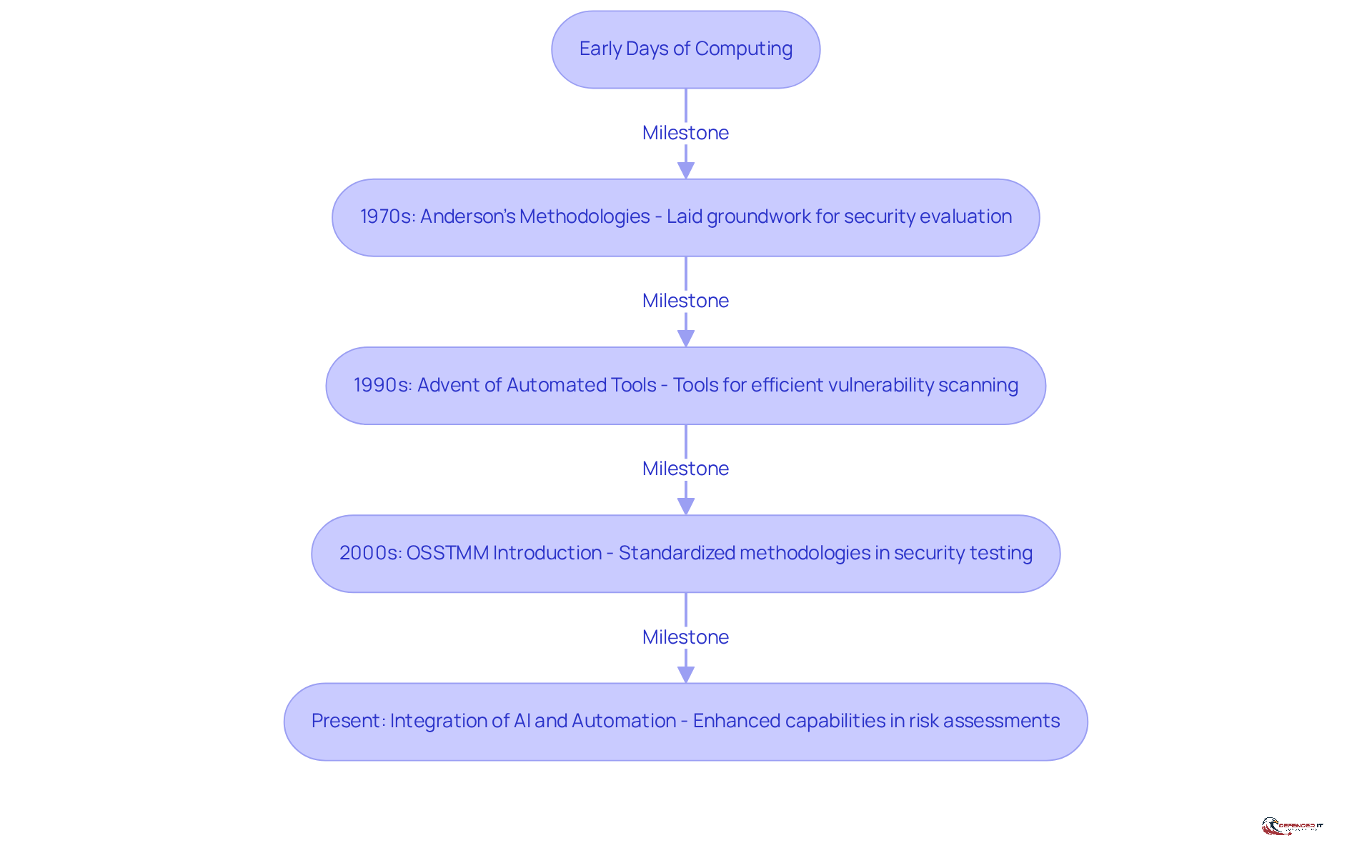
The evolution of began in the early days of computing, driven by the need for as multi-user systems emerged. Pioneers like James P. Anderson laid the groundwork for modern in the 1970s. A significant turning point occurred in the 1990s with the advent of tools used in that could scan for vulnerabilities more efficiently than manual methods. Notably, companies now allocate an average of $164,400, or 13% of their IT budgets, to , reflecting a .
As technology advanced, incorporated sophisticated features such as artificial intelligence and machine learning, significantly enhancing their capabilities. Today, the tools used in not only enhance the speed and accuracy of but also adapt to the evolving landscape of cyber threats. Statistics indicate that 85% of U.S. and European firms have increased their security assessment budgets, underscoring their commitment to robust protective measures.
The shift from manual evaluations to has transformed the security assessment landscape, allowing organizations to use to proactively address vulnerabilities before they can be exploited. Historical case studies, including the U.S. Air Force’s MULTICS security assessment in 1974, highlighted critical vulnerabilities and emphasized . Additionally, the emergence of the Morris worm in 1988 underscored the urgent need for security evaluations in response to evolving threats. The introduction of the Open-Source Security Testing Methodology Manual (OSSTMM) in the 2000s further standardized methodologies in security testing.
Moreover, understanding the three primary types of penetration tests – black box, white box, and gray box testing – provides valuable insight into the various approaches within the field. As the landscape continues to evolve, the integration of automation with human expertise remains crucial for maintaining a strong security posture.
Conclusion
Penetration testing tools are not merely technical resources; they are essential elements of a robust cybersecurity strategy. By effectively simulating cyberattacks, these tools enable organizations to identify vulnerabilities before they can be exploited, thereby fostering a proactive security posture. As the digital landscape grows increasingly intricate, the significance of these tools in protecting sensitive information and ensuring compliance with regulatory standards is paramount.
This article has delved into the categories and functionalities of penetration testing tools, highlighting their critical roles in bolstering an organization’s security framework. From network scanners and vulnerability assessment tools to exploitation frameworks and web application testers, each category contributes uniquely to enhancing security. The evolution of these tools, particularly with advancements in automation and their integration into continuous testing models, underscores their escalating importance in the face of ever-evolving cyber threats.
Investing in penetration testing tools transcends being a best practice; it is a necessity for organizations intent on strengthening their defenses. As cyber threats continue to advance, security leaders must prioritize the adoption of these vital resources to remain ahead of potential vulnerabilities. Cultivating a culture of continuous improvement and proactive security measures will not only safeguard sensitive data but also foster resilience against future attacks, emphasizing the indispensable role that penetration testing tools play in the dynamic cybersecurity landscape.
Frequently Asked Questions
What are penetration testing tools?
Penetration testing tools are specialized software programs designed to simulate cyberattacks on systems, networks, or applications to identify vulnerabilities that could be exploited by malicious actors.
Why are penetration testing tools important?
These tools provide critical insights into the effectiveness of existing security measures, help organizations proactively address potential weaknesses, ensure compliance with regulatory standards, safeguard sensitive data, and enhance overall security posture.
How do penetration testing assessments help prevent data breaches?
By revealing hidden vulnerabilities before they can be exploited, penetration testing assessments help prevent costly data breaches and reputational harm.
What recent advancements have been made in penetration testing tools?
Recent advancements have improved the capabilities of these tools, allowing for thorough evaluations of complex environments, including cloud infrastructures and IoT devices, and enabling continuous testing models that integrate findings into ongoing exposure management.
What impact do strong penetration assessment programs have on security incidents?
Organizations that implement strong penetration assessment programs report significant reductions in security incidents, with data indicating that proactive evaluations can prevent up to 73% of successful breaches associated with vulnerabilities in web applications.
What types of penetration assessments are there?
There are various types of penetration assessments, including white-box, black-box, and gray-box evaluations, which enhance the ability to identify weaknesses tailored to specific contexts.
How do penetration testing tools contribute to a culture of security awareness?
By fostering continuous improvement and integrating findings into security practices, penetration testing tools promote a culture of security awareness within organizations.