Social Media Marketing
What Is a Cyber Risk? Understanding Its Importance and Characteristics
Published April 1, 2026
Introduction
The digital landscape presents significant challenges, where systems intended to enhance efficiency can also serve as gateways for catastrophic breaches. Cyber risk, which includes threats such as data breaches and ransomware attacks, poses a formidable challenge for organizations that depend heavily on technology. As businesses confront the rising costs and complexities associated with these threats, a critical question emerges: how can they effectively navigate this perilous terrain to protect their operations and reputation? Understanding the intricacies of cyber risk is not merely advantageous – it is essential for survival in an increasingly interconnected world.
Define Cyber Risk: Understanding the Core Concept
Cybersecurity exposure represents the potential for financial loss, operational disruption, or reputational damage stemming from the failure of information systems due to digital threats. This concept encompasses a variety of risks, including:
Understanding these digital threats is essential for organizations, as it enables them to identify vulnerabilities and implement appropriate protective measures. While the explanation of digital threats may vary across different contexts, it fundamentally revolves around the susceptibility to harm resulting from online incidents that can jeopardize a company’s and operations.
Contextualize Cyber Risk: Importance for Modern Businesses
In today’s digital landscape, online threats represent a critical challenge for organizations across all sectors. The increasing dependence on technology and the internet leads to questions about what is a , as it exposes businesses to a range of digital risks that could result in substantial financial losses and damage to their reputation. For instance, in 2025, cybercrime losses in the U.S. soared to an alarming $16.6 billion, reflecting a 33% increase from the previous year. Data breaches not only incur immediate financial repercussions but also cause enduring harm to customer trust and brand integrity.
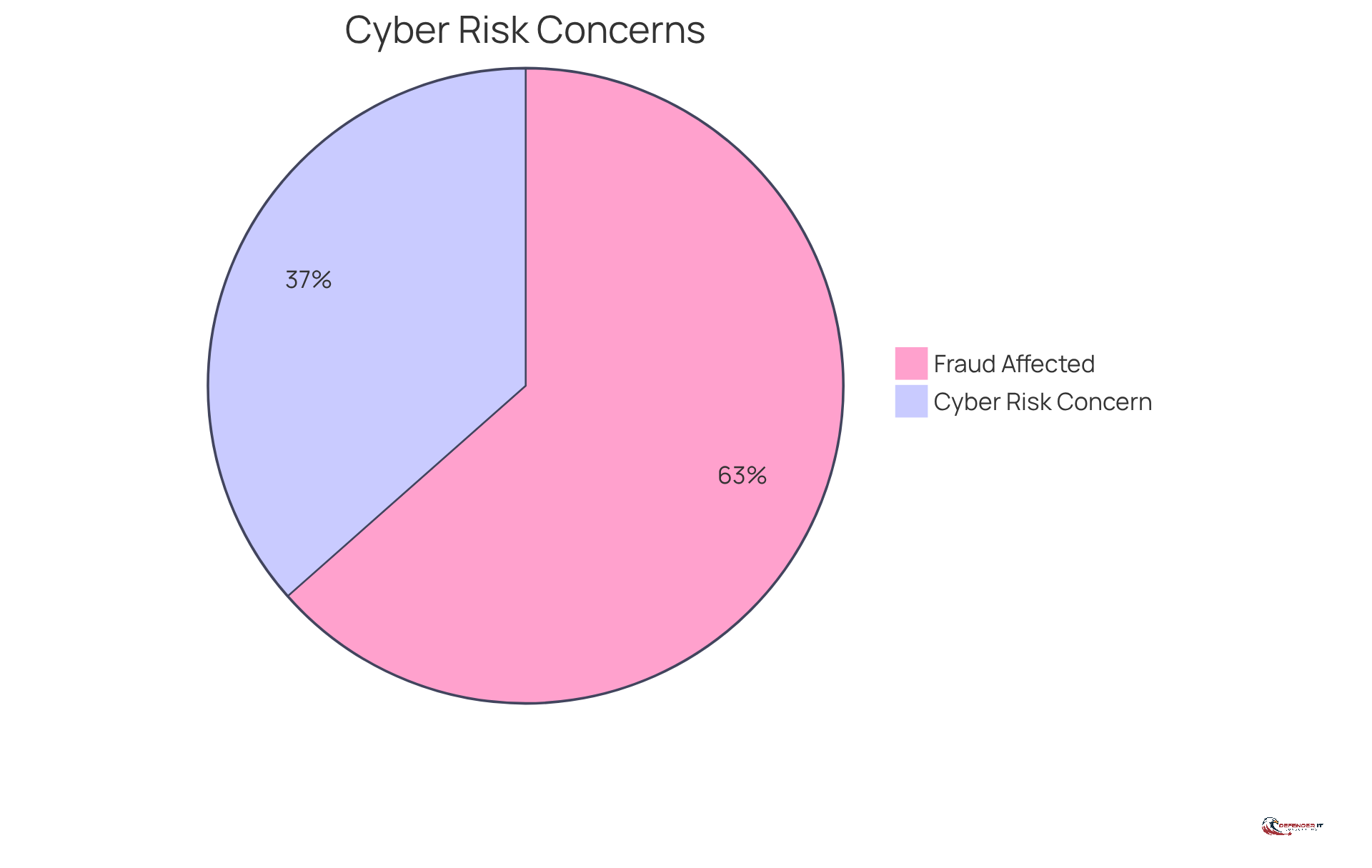
In highly regulated sectors such as finance and healthcare, where adherence to stringent cybersecurity regulations is essential, the stakes are even higher. A significant breach can threaten not only operational integrity but also the overall viability of a business. Furthermore, a survey conducted prior to 2026 indicated that 42% of organizations identified what is a cyber risk as their foremost concern, underscoring the urgent need for effective risk management strategies. Additionally, 73% of respondents reported that someone within their network had been personally affected by technology-facilitated fraud in 2025, illustrating the pervasive impact of digital risks.
As digital threats continue to evolve, organizations must adapt their security strategies accordingly, ensuring they remain vigilant and robust in protecting their reputation and maintaining customer confidence.
Trace the Origins of Cyber Risk: Historical Development
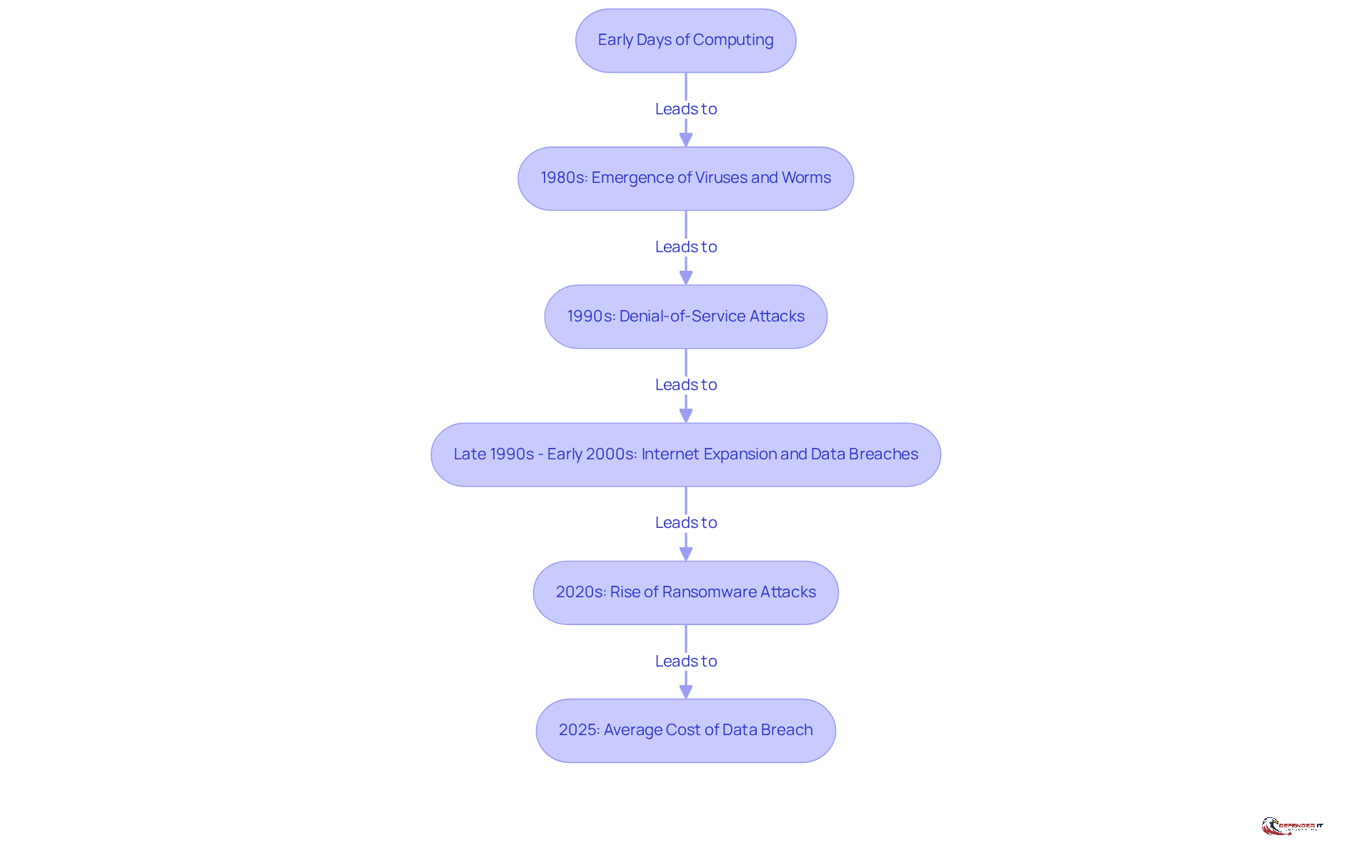
Digital risk has its roots in the early days of computing, marked by initial instances of unauthorized access and data manipulation. The 1980s heralded the emergence of viruses and worms, signaling the onset of more sophisticated digital threats. By the 1990s, complex attacks like denial-of-service (DoS) attacks began to disrupt services, exposing vulnerabilities in network infrastructures. The late 1990s and early 2000s, characterized by the internet’s expansion, significantly broadened the attack surface for cybercriminals, leading to a surge in data breaches and identity theft incidents.
As technology progressed, so too did the nature of digital threats. By the 2020s, the landscape had undergone a dramatic transformation, with ransomware attacks becoming increasingly prevalent, accounting for 35% of all cyberattacks and rising by 84% over the previous year. The rate of online attacks has doubled since the COVID-19 pandemic, underscoring the financial ramifications of digital threats. In 2025, the average cost of a data breach reached an unprecedented $10.22 million, while the global average cost was reported at $4.44 million, revealing significant disparities across sectors.
Experts emphasize that the understanding of digital threats has evolved from a purely technical focus to encompass broader business implications, including financial, operational, and reputational challenges. This evolution reflects the increasing complexity of the digital environment, where organizations must navigate not only but also the potential for substantial impacts on their operations and stakeholder trust. Historical insights into the evolution of cyber threats are essential for organizations today as they prepare to defend against a continually evolving array of cyber challenges.
Identify Key Characteristics of Cyber Risk: Components and Variations
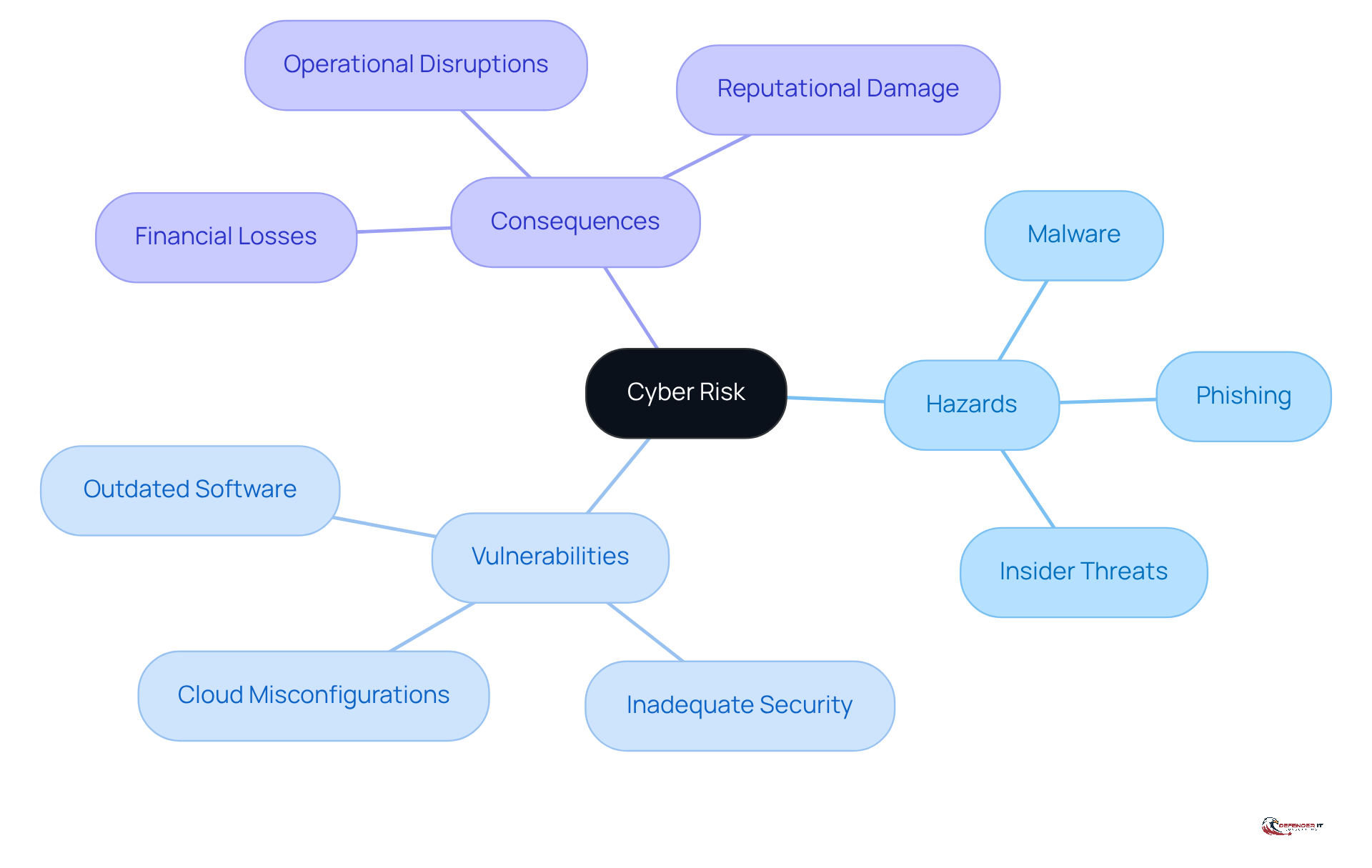
Understanding what is a cyber risk involves recognizing several critical elements, including hazards, vulnerabilities, and their potential effects. To understand what is a cyber risk, one must recognize that risks represent harmful activities that exploit system weaknesses, such as malware, phishing attacks, and insider threats. Vulnerabilities are inherent weaknesses within systems, often arising from outdated software or inadequate security protocols. Understanding what is a cyber risk is crucial as its consequences can lead to financial losses, operational disruptions, and reputational damage, significantly impacting an entity’s stability.
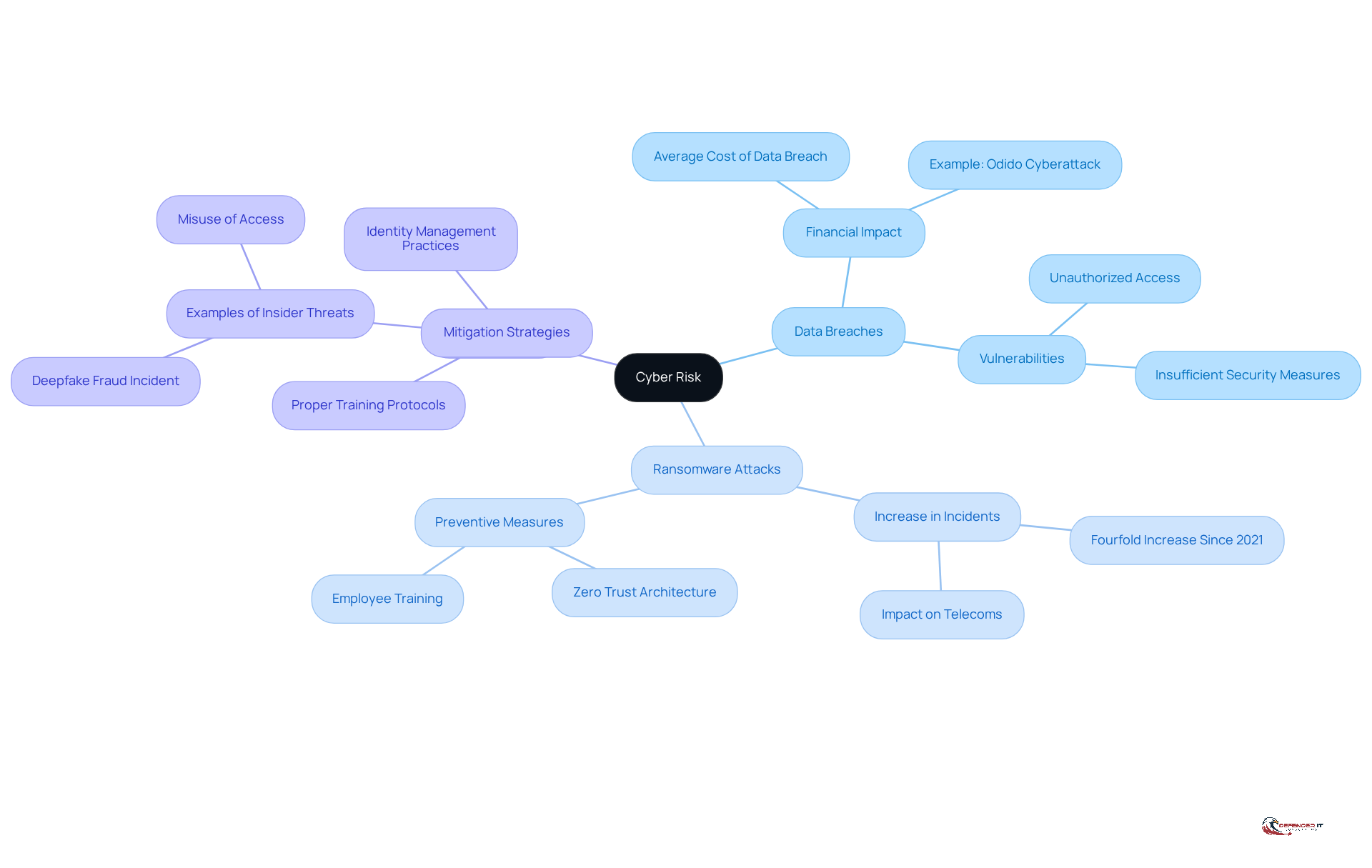
As we look ahead to 2026, the landscape of threats and vulnerabilities continues to evolve. Ransomware attacks, for instance, have surged, marked by an increase in sophistication and frequency, particularly affecting sectors like healthcare and manufacturing. The in the manufacturing industry was reported at $5.56 million in 2024, underscoring the financial stakes involved. Additionally, it was noted that 44% of computers in manufacturing were impacted by ransomware in previous years, with many companies resorting to paying the ransom to regain access to their data.
Specific examples of vulnerabilities exploited in cyber attacks include misconfigurations in cloud environments, which account for over 80% of data breaches. As organizations increasingly transition to the cloud, the lack of adequate security measures exposes them to significant threats. Furthermore, the National Vulnerability Database recorded over 30,000 new vulnerabilities in recent years, many classified as high or critical severity, highlighting the urgent need for robust security practices.
Industry specialists emphasize that understanding what is a cyber risk, as well as the interplay between dangers and vulnerabilities, is essential for effective risk management. Organizations must consider their unique contexts, including regulatory requirements and the sensitivity of their data. For example, financial institutions face heightened challenges due to stringent regulations and the critical nature of their data. By recognizing these factors, organizations can tailor their cybersecurity strategies to prioritize risk management efforts effectively, ensuring resilience against the evolving threat landscape.
Conclusion
Understanding cyber risk is crucial for organizations navigating the complexities of the digital age. This article underscores the multifaceted nature of cyber risk, highlighting its potential to cause financial, operational, and reputational harm to businesses. As digital threats evolve, recognizing the characteristics and implications of these risks is essential for protecting an organization’s assets and maintaining customer trust.
Key insights include:
- The historical evolution of cyber threats
- The rising incidence of ransomware attacks
- The significant vulnerabilities organizations face, particularly in highly regulated sectors
The substantial financial losses linked to cyber incidents, along with the pressing need for effective risk management strategies, emphasize the importance of proactive cybersecurity measures. Furthermore, understanding the relationship between hazards and vulnerabilities is vital for customizing security approaches that fit specific organizational contexts.
As the cyber threat landscape becomes increasingly complex, organizations must prioritize the comprehension and management of cyber risks. By cultivating a culture of cybersecurity awareness and implementing robust protective measures, businesses can not only mitigate potential impacts but also leverage cyber risk as a strategic advantage. Adopting this proactive approach is essential for thriving in an interconnected world, where digital resilience equates to business success.
Frequently Asked Questions
What is cyber risk?
Cyber risk refers to the potential for financial loss, operational disruption, or reputational damage that arises from the failure of information systems due to digital threats.
What types of digital threats are included in cyber risk?
Cyber risk encompasses various threats, including data breaches, ransomware attacks, and insider threats.
Why is it important for organizations to understand cyber risk?
Understanding cyber risk allows organizations to identify vulnerabilities in their systems and implement appropriate protective measures to safeguard their digital assets and operations.
How does cyber risk affect a company’s operations?
Cyber risk can jeopardize a company’s digital assets and operations, potentially leading to significant financial losses and damage to its reputation.
What does the concept of cybersecurity exposure entail?
Cybersecurity exposure involves the potential harm that can occur due to online incidents, which can affect a company’s financial stability, operational efficiency, and public image.
List of Sources
- Define Cyber Risk: Understanding the Core Concept
- What is Cyber Risk? (https://hyperproof.io/resource/what-is-cyber-risk)
- Cybersecurity Trends 2026 | IBM (https://ibm.com/think/insights/more-2026-cyberthreat-trends)
- What is Cybersecurity Risk? A Thorough Definition | UpGuard (https://upguard.com/blog/cybersecurity-risk)
- Cyber threats to watch in 2026 – and other cybersecurity news (https://weforum.org/stories/2026/02/2026-cyberthreats-to-watch-and-other-cybersecurity-news)
- Why Cybersecurity Threats Are Growing (https://time.com/7382979/cybersecurity-threats-are-growing)
- Contextualize Cyber Risk: Importance for Modern Businesses
- Cyber threats to watch in 2026 – and other cybersecurity news (https://weforum.org/stories/2026/02/2026-cyberthreats-to-watch-and-other-cybersecurity-news)
- 116 Must-Know Data Breach Statistics for 2026 | UpGuard (https://upguard.com/blog/data-breach-statistics)
- Outperform In 2026 By Making Cyber Risk A Strategic Advantage (https://securityforum.org/in-the-news/outperform-in-2026-by-making-cyber-risk-a-strategic-advantage)
- Allianz Risk Barometer 2026: Cyber and AI as major business risks (https://allianz.com/en/mediacenter/news/articles/260203-allianz-risk-barometer-2026-cyber-and-ai-as-major-business-risks.html)
- Cyber Remains Top Global Business Risk for 2026: Report/Articles/CLM Magazine (https://theclm.org/Magazine/articles/cyber-remains-top-global-business-risk-for-2026/3381)
- Trace the Origins of Cyber Risk: Historical Development
- Top Cybersecurity Statistics: Facts, Stats and Breaches for 2025 (https://fortinet.com/resources/cyberglossary/cybersecurity-statistics)
- Key Cyber Security Statistics for 2026 (https://sentinelone.com/cybersecurity-101/cybersecurity/cyber-security-statistics)
- The Latest Cyber Crime Statistics (updated October 2025) | AAG IT Support (https://aag-it.com/the-latest-cyber-crime-statistics)
- 139 Cybersecurity Statistics and Trends [updated 2025] (https://varonis.com/blog/cybersecurity-statistics)
- 205 Cybersecurity Stats and Facts for 2026 (https://vikingcloud.com/blog/cybersecurity-statistics)
- Identify Key Characteristics of Cyber Risk: Components and Variations
- Cyber threats to watch in 2026 – and other cybersecurity news (https://weforum.org/stories/2026/02/2026-cyberthreats-to-watch-and-other-cybersecurity-news)
- Key Cyber Security Statistics for 2026 (https://sentinelone.com/cybersecurity-101/cybersecurity/cyber-security-statistics)
- 205 Cybersecurity Stats and Facts for 2026 (https://vikingcloud.com/blog/cybersecurity-statistics)
- 2026 Global Threat Report | Latest Cybersecurity Trends & Insights | CrowdStrike (https://crowdstrike.com/en-us/global-threat-report)
- MIT report details new cybersecurity risks | MIT Sloan (https://mitsloan.mit.edu/ideas-made-to-matter/mit-report-details-new-cybersecurity-risks)