Social Media Marketing
What Is Cybersecurity Risk? Understanding Its Importance and Components
Published May 2, 2026
Introduction
In an era marked by escalating cyber threats, organizations must prioritize understanding cybersecurity risks to protect their financial stability and reputation. Grasping cybersecurity risk is crucial for protecting assets and ensuring operational integrity, as it involves:
- Assessing the likelihood of attacks
- Identifying vulnerabilities
- Understanding the potential consequences of security breaches
Organizations face significant challenges in adapting to the rapidly changing cyber threat landscape. Without a robust approach to cybersecurity risk management, organizations risk not only their assets but also their credibility in the eyes of stakeholders.
Define Cybersecurity Risk
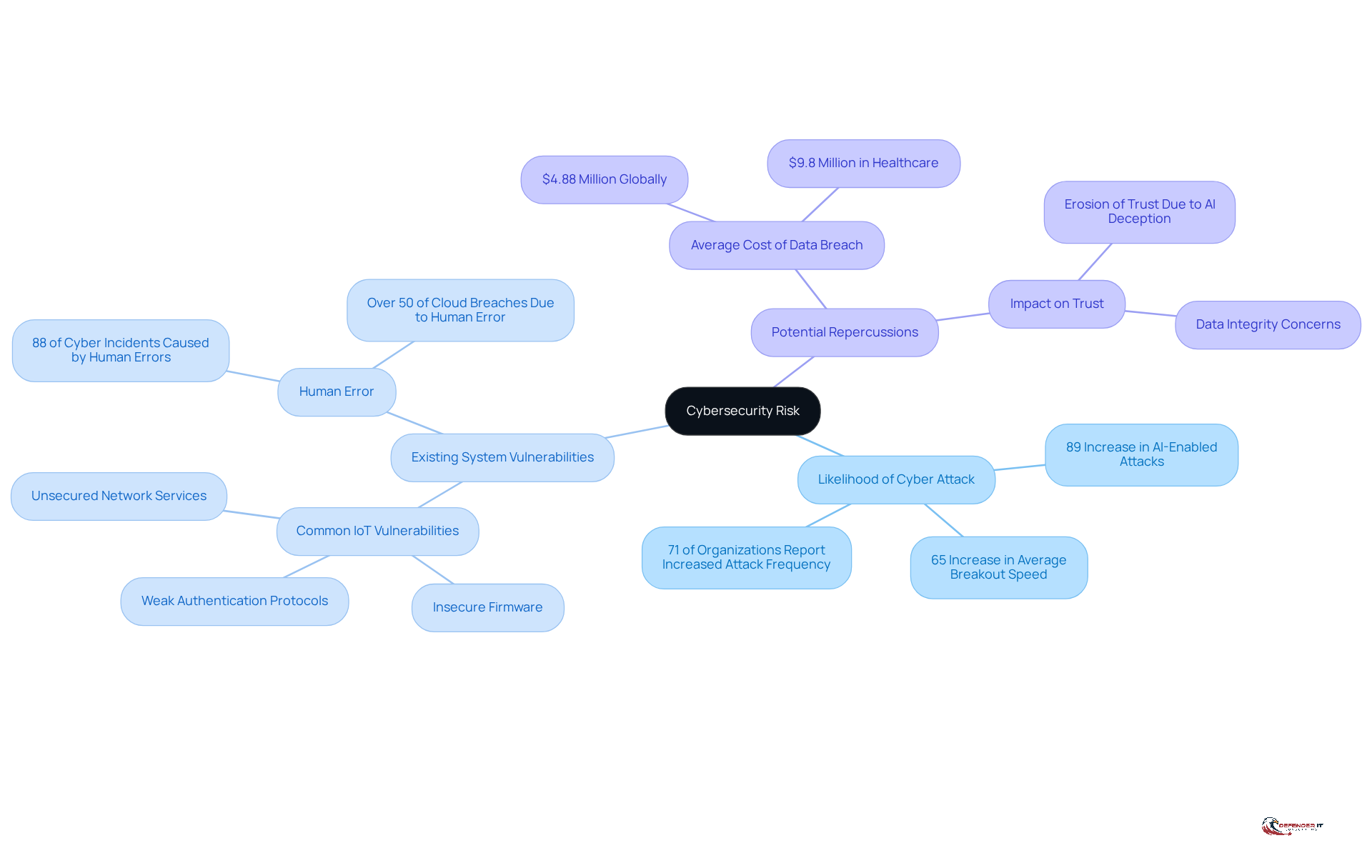
Organizations are increasingly vulnerable to cyber threats, which can lead to severe financial and reputational damage. Understanding what is cybersecurity risk includes recognizing various elements, such as:
- The likelihood of a cyber attack
- Existing system vulnerabilities
- The potential repercussions of such incidents
Essentially, information security threats can be expressed as a function of the likelihood of an adverse event occurring and the consequences that would follow. Grasping this definition is crucial for entities to effectively evaluate and handle their security stance, ensuring they are ready for possible dangers. Understanding what is cybersecurity risk is essential for organizations to safeguard their assets and maintain operational integrity.
Context and Importance of Cybersecurity Risk
In the current digital landscape, organizations are increasingly vulnerable to security threats that can have severe repercussions. The proliferation of advanced digital threats, including ransomware and phishing attacks, highlights the urgent need for comprehensive security strategies. Organizations face financial losses, reputational damage, and legal consequences if they fail to protect their data.
In 2026, nearly 40% of corporate counsel reported increased exposure to digital security and privacy disputes, underscoring the legal ramifications of inadequate protection. The financial industry, especially, is subject to strict compliance obligations, making effective digital security management a legal necessity rather than just a best practice. This necessitates a proactive approach to security management.
As cyber threats evolve, organizations need to focus on understanding and addressing these challenges to protect their assets and maintain stakeholder trust. For instance, the Federal Communications Commission has recognized third-party assessment as a fundamental best practice for preventing ransomware attacks, highlighting the interrelation of digital security and operational resilience.
By implementing proactive strategies and promoting a culture of security awareness, companies can reduce threats and improve their overall security stance. Ultimately, the ability to navigate these challenges will determine an organization’s resilience and reputation in the marketplace.

Key Components of Cybersecurity Risk
It is crucial for any organization aiming to strengthen its security posture to understand what is cybersecurity risk, including its dangers, vulnerabilities, and impacts.
What is cybersecurity risk refers to potential events or actions that can exploit vulnerabilities, including malware, phishing attacks, and insider risks. Recent data shows a 44% year-over-year increase in the exploitation of public-facing applications, primarily due to vulnerabilities and configuration errors. As risks evolve, organizations face increasing challenges in safeguarding their assets.
Vulnerabilities refer to weaknesses within a company’s systems or processes that can be targeted by threats. Common vulnerabilities include outdated software, misconfigured systems, and insufficient employee training. In 2025, nearly 40,000 vulnerabilities were tracked, with 56% being exploitable without authentication, highlighting significant security gaps that organizations must address. Modern software systems are interconnected, which can worsen vulnerabilities and lead to cascading risks from insecure components.
Impacts assess what is cybersecurity risk by examining the potential consequences of a successful cyber attack, which can include financial losses, operational disruptions, reputational damage, and legal liabilities. For example, the Equifax breach jeopardized the personal data of roughly 147 million consumers, highlighting the serious consequences of insufficient security measures. Christopher Caridi, a Cyber Threat Analyst at IBM X-Force, emphasized that this breach highlighted the need for comprehensive security configurations and routine security assessments. Moreover, entities that encounter fewer credential-based incidents usually implement strong identity management practices, underscoring the significance of robust security protocols.
By addressing these elements, organizations can significantly enhance their security frameworks and mitigate potential threats.

Origins and Evolution of Cybersecurity Risk
The landscape of online security threats has evolved dramatically with the rise of digital technology. Initially, the focus was on safeguarding physical assets and data from unauthorized access. However, the advent of the internet in the 1990s marked a pivotal shift, leading to a surge in cybercrime and the urgent need for enhanced security measures. Notable data breaches, such as the TJX Companies incident in the early 2000s, exposed significant vulnerabilities within retail systems, resulting in substantial financial repercussions. Consequently, organizations began implementing more robust security frameworks and risk management practices to address these vulnerabilities.
As we approach 2026, organizations are encountering a significantly more complex landscape of online security risks. Advanced persistent threats (APTs) and state-sponsored attacks have become prevalent, reflecting the increasing sophistication of cyber adversaries and the geopolitical factors influencing these threats. Data indicates that 60% of Chief Information Security Officers (CISOs) report an increase in third-party incidents due to restricted visibility across vendors. This necessitates a reevaluation of security protocols to mitigate risks associated with third-party vendors. Furthermore, the ongoing evolution of ransomware tactics, shifting from mere data encryption to data theft and extortion, highlights the necessity for organizations to continuously adapt their security strategies.
It’s clear that the internet has dramatically reshaped online security risks, enabling not just the rise of cybercrime but also the emergence of increasingly sophisticated attack methods. Historical breaches provide essential lessons, leading to the creation of strong security frameworks that emphasize proactive threat management and resilience against new dangers. In this dynamic setting, companies must stay alert and adaptable to the changing characteristics of security threats. As Alex Michaels, Director Analyst at Gartner, aptly states, “Your security perimeter doesn’t end at your firewall,” emphasizing the need for a comprehensive approach to cybersecurity. This reality underscores the imperative for organizations to adopt a holistic cybersecurity strategy that extends beyond traditional boundaries.

Examples of Cybersecurity Risks
Organizations are increasingly vulnerable to various cybersecurity threats, highlighting what is cybersecurity risk, which can disrupt operations and incur substantial costs. Some notable examples include:
- Ransomware Attacks: Cybercriminals encrypt an organization’s data and demand payment for the decryption key, leading to operational disruptions and potential data loss.
- Phishing Scams: Attackers use deceptive emails to trick employees into revealing sensitive information, such as login credentials, which can lead to unauthorized access to systems.
- Data Breaches: Unauthorized access to sensitive data can result in significant financial penalties and reputational damage, as seen in the Equifax breach of 2017.
- Denial-of-Service (DoS) Attacks: These attacks overwhelm a system with traffic, rendering it unavailable to users and disrupting business operations.
Recognizing what is cybersecurity risk enables organizations to implement effective strategies to safeguard their operations and data.

Conclusion
Organizations face significant challenges in managing cybersecurity risks in today’s digital landscape. By recognizing the various components that contribute to these risks, including the likelihood of attacks, existing vulnerabilities, and potential consequences, businesses can take proactive measures to safeguard their assets and maintain operational integrity. Effectively managing cybersecurity risk is crucial, as it impacts an organization’s finances, reputation, and legal standing.
The article highlights key insights into the nature of cybersecurity risks, emphasizing the increasing complexity of threats such as:
- Ransomware
- Phishing
- Data breaches
It underscores the necessity for organizations to adopt comprehensive security strategies that address vulnerabilities and promote a culture of security awareness. As cyber threats continue to evolve, organizations often struggle to keep pace with these changes, which can lead to significant vulnerabilities. Without effective risk management, organizations may face financial losses, reputational damage, and legal repercussions.
In conclusion, prioritizing cybersecurity is not just a regulatory requirement; it is a strategic imperative for sustaining business success. By implementing proactive strategies, organizations can navigate the evolving threat landscape effectively. Embracing a holistic approach to cybersecurity not only protects assets but also positions businesses for success in an increasingly interconnected world.
Frequently Asked Questions
What is cybersecurity risk?
Cybersecurity risk refers to the potential for financial and reputational damage that organizations face due to cyber threats. It encompasses the likelihood of a cyber attack, existing system vulnerabilities, and the potential repercussions of such incidents.
Why is understanding cybersecurity risk important for organizations?
Understanding cybersecurity risk is crucial for organizations to effectively evaluate and manage their security posture, ensuring they are prepared for potential threats and can safeguard their assets while maintaining operational integrity.
What are some common types of cyber threats organizations face?
Organizations commonly face advanced digital threats such as ransomware and phishing attacks, which can lead to significant financial losses, reputational damage, and legal consequences.
How can inadequate cybersecurity lead to legal ramifications?
Inadequate cybersecurity can expose organizations to legal disputes, particularly as reported by corporate counsel, with nearly 40% indicating increased exposure to digital security and privacy issues. This is especially critical in industries like finance, which have strict compliance obligations.
What proactive strategies can organizations implement to manage cybersecurity risk?
Organizations can implement proactive strategies such as conducting third-party assessments, promoting a culture of security awareness, and developing comprehensive security management practices to reduce threats and enhance their overall security stance.
How does the evolution of cyber threats impact organizations?
As cyber threats evolve, organizations must continuously adapt their security strategies to address new challenges, which is essential for protecting their assets and maintaining stakeholder trust.
What role does the Federal Communications Commission (FCC) suggest in preventing ransomware attacks?
The FCC recognizes third-party assessments as a fundamental best practice for preventing ransomware attacks, highlighting the importance of digital security in maintaining operational resilience.
List of Sources
- Define Cybersecurity Risk
- cybersecuritytribe.com (https://cybersecuritytribe.com/articles/what-are-the-biggest-threats-to-organizations-in-2026)
- crowdstrike.com (https://crowdstrike.com/en-us/global-threat-report)
- Top Cybersecurity Threats [2025] (https://onlinedegrees.sandiego.edu/top-cyber-security-threats)
- Cyber threats to watch in 2026 – and other cybersecurity news (https://weforum.org/stories/2026/02/2026-cyberthreats-to-watch-and-other-cybersecurity-news)
- 205 Cybersecurity Stats and Facts for 2026 (https://vikingcloud.com/blog/cybersecurity-statistics)
- Context and Importance of Cybersecurity Risk
- csoonline.com (https://csoonline.com/article/4146429/cybersecurity-and-privacy-priorities-for-2026-the-legal-risk-map.html)
- wtwco.com (https://wtwco.com/en-us/insights/2026/03/top-six-risks-for-financial-institutions-in-2026)
- gartner.com (https://gartner.com/en/newsroom/press-releases/2026-02-05-gartner-identifies-the-top-cybersecurity-trends-for-2026)
- jackhenry.com (https://jackhenry.com/fintalk/top-cybersecurity-trends-for-2026-every-financial-leader-must-know)
- Key Components of Cybersecurity Risk
- Cybersecurity Forecast 2026 (https://cloud.google.com/security/resources/cybersecurity-forecast)
- Cyber threats to watch in 2026 – and other cybersecurity news (https://weforum.org/stories/2026/02/2026-cyberthreats-to-watch-and-other-cybersecurity-news)
- Cybersecurity Trends 2026 | IBM (https://ibm.com/think/insights/more-2026-cyberthreat-trends)
- thebeckagefirm.com (https://thebeckagefirm.com/65146-2)
- Top Cybersecurity Threats [2025] (https://onlinedegrees.sandiego.edu/top-cyber-security-threats)
- Origins and Evolution of Cybersecurity Risk
- panorays.com (https://panorays.com/blog/cyber-threat-landscape-2026-emerging-risks)
- gartner.com (https://gartner.com/en/newsroom/press-releases/2026-02-05-gartner-identifies-the-top-cybersecurity-trends-for-2026)
- Cyber threats to watch in 2026 – and other cybersecurity news (https://weforum.org/stories/2026/02/2026-cyberthreats-to-watch-and-other-cybersecurity-news)
- Cybersecurity Trends 2026 | IBM (https://ibm.com/think/insights/more-2026-cyberthreat-trends)
- cyberthreatalliance.org (https://cyberthreatalliance.org/threats-and-cyber-attacks-in-2026-which-will-be-the-most-complex-and-have-the-greatest-impact-expected-or-not)
- Examples of Cybersecurity Risks
- acilearning.com (https://acilearning.com/blog/the-biggest-cybersecurity-breaches-of-2026-so-far-and-the-training-that-could-have-prevented-them)
- scworld.com (https://scworld.com/perspective/how-phishing-changed-in-2025-and-what-to-expect-in-2026-and-beyond)
- blackfog.com (https://blackfog.com/the-state-of-ransomware-2026)
- vikingcloud.com (https://vikingcloud.com/blog/ransomware-statistics)
- hoxhunt.com (https://hoxhunt.com/guide/phishing-trends-report)